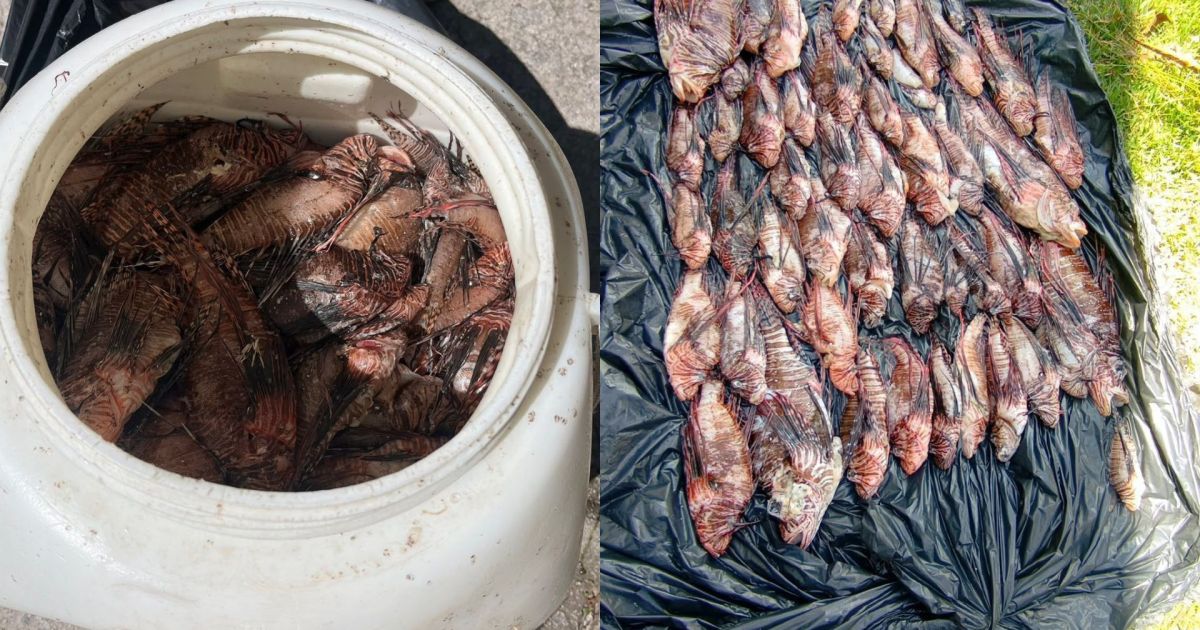
More than 400 invasive lionfish were captured and delivered to the Z-22 Fishermen's Colony in Porto Seguro, in the Brazilian state of Bahia, during August. The municipal campaign aims to curb the expansion of the predatory Indo-Pacific species along the South Atlantic coast, where it threatens marine biodiversity and commercial fisheries.
To encourage removal of the predator, municipal authorities introduced the Municipal Action Plan to Tackle Lionfish. The city government established a temporary financial incentive of R$ 10 for every specimen handed in to the local fishermen's guild, creating an economic incentive for local fishers while building a biological collection for scientific study.
In approximately one month, fishers captured and handed over 442 lionfish during August. The specimens were collected from various areas around the coastal region and transferred to the Federal University of Southern Bahia, a public university known locally as UFSB. Scientists at the institution will perform screening, biometric measurements, and biological analyses to track the invasion.
Risks to marine ecosystems
The lionfish, a predatory species native to the tropical waters of the Indo-Pacific oceans, has raised grave environmental concerns across Brazil due to its rapid adaptability and high predation rates. In non-native Atlantic waters where natural predators are absent, introduced lionfish populations can expand unchecked across delicate coral systems.
Once established in marine habitats, lionfish exert heavy pressure on native populations of small fish and crustaceans. Their feeding habits target ecologically vital reef species that preserve coral health, as well as fish species critical to local commercial and artisanal fishing industries.
Environmental officials warned that once lionfish become established in a coastal environment, complete eradication is virtually impossible. To date, there is no record of a successful lionfish eradication in any region of the world.
Although the fish possess sharp, venomous dorsal spines, authorities noted that they present a reduced risk to regular beachgoers under normal conditions. Lionfish tend to remain hidden in deeper submerged environments such as offshore reefs and rocky seabeds. However, officials stressed that the animals must never be touched or captured by untrained members of the public.
Preventive action and first sighting
Local authorities began preparing for the invasion in 2025, well before any specimens had been reported in the far south of Bahia. During that initial phase, municipal organizers launched educational and awareness campaigns targeting fishermen, scuba divers, and coastal workers. The goal was to train these groups to recognize the species, avoid handling accidents, and report sightings immediately.
The species was formally confirmed in the municipality on June 12, 2026, when the first lionfish was sighted inside the Recife de Fora Municipal Marine Natural Park. The protected area is a Full Protection Conservation Unit managed directly by the local municipal government to safeguard offshore coral ecosystems.
Following that confirmed sighting, municipal officials, researchers from UFSB, local fishers, and coastal stakeholders intensified their planning to organize a coordinated regional response.
Martina Rossato, an oceanographer and manager of the Recife de Fora Municipal Marine Natural Park, said the initiative brings together public authorities, universities, fishermen, dive operators, and other coastal groups to address the environmental crisis.