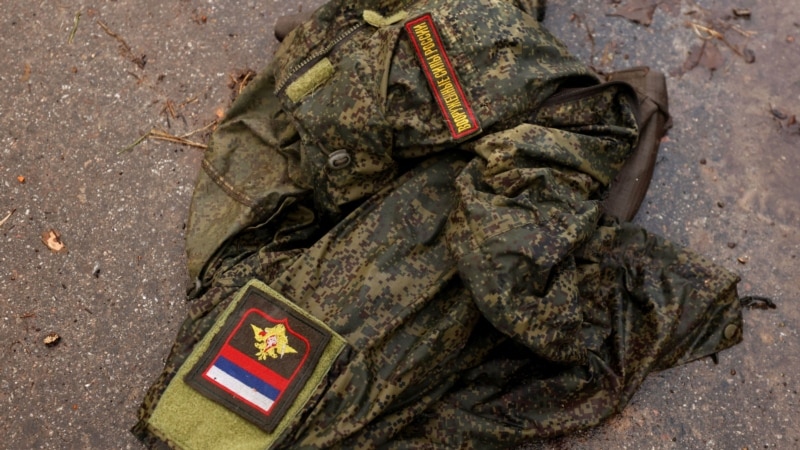
Russia is building and expanding military infrastructure along its border with Finland and Norway to strengthen its forces there once the war in Ukraine ends, the German newspaper Die Welt reported, citing an investigation by Scandinavian and Baltic media outlets that analyzed satellite images with experts.
The images show several sites where military infrastructure is under construction or being expanded, according to Die Welt.
Pechenga base expansion
One of the largest projects is the expansion of a base in Pechenga, in Russia's far north near the Finnish and Norwegian borders, Die Welt reported. Russia's Defense Ministry said Moscow plans to turn the unit stationed there into a full division, raising troop numbers from about 4,000 to 10,000. Satellite images show one square kilometer of forest has been cleared, and more than fifty structures are under construction.
New sites near Kandalaksha and Petrozavodsk
Near Kandalaksha, roughly level with the Finnish city of Rovaniemi, Moscow is building a new base meant to house an artillery brigade and engineering units totaling about 2,000 troops, the report said. A third major site is in Novaya Vilga near Petrozavodsk, where no troops have been stationed for decades; Die Welt reported the garrison could now house a new 44th Army Corps that Russia plans to create in the Republic of Karelia. Matti Pesu, a senior research fellow at the Finnish Institute of International Affairs, told WELT AM SONNTAG that in regions bordering Finland, Russia is building infrastructure so it can station more troops.
Up to 115,000 troops planned
Experts cited in the report estimate Russia plans to deploy as many as 115,000 troops in the region, roughly the Cold War level, up from about 20,000 currently. Pesu said the buildup is part of a broader postwar reorganization in which brigades, the common unit type until now, are being replaced by larger formations. Some observers see it as preparation for a full-scale conventional war, Die Welt reported. Thomas Nilsson, head of Swedish military intelligence, was quoted saying the troops are not being deployed for show but so Russia can later confront NATO in a large conflict. Nilsson and other experts called the next three years the most dangerous, since European NATO members' defenses are still being built up.
ISW analysis and the Kola Peninsula
The Institute for the Study of War reviewed the same images and concluded Russia is building infrastructure to support possible future operations against NATO, though Die Welt noted ground operations remain unlikely and NATO must still be ready to respond quickly once fighting in Ukraine ends. After Sweden and Finland joined NATO in 2024, Moscow revived the Leningrad Military District covering the entire northwest border region. The Kola Peninsula, linked to the mainland by a narrow strip, hosts Russia's Northern Fleet, key to Moscow's nuclear retaliation capability. Pesu said purely defensive aims are possible, but Russian thinking also holds that defensive measures can be carried out on neighboring territory, which he said makes this a matter of survival for Finland. Die Welt added Russia could also be planning a diversion for an attack on the Baltic states, since Finland would support the Baltics in an emergency.
Finland lifts nuclear weapons ban
Finland's government responded by lifting a decades-old ban on nuclear weapons, Die Welt reported, so transit and temporary storage of such weapons is now allowed for defense purposes. Alexei Zhuravlev, deputy chair of the Russian parliament's defense committee, accused Finland of provoking Russia and leading itself "into the abyss," claiming the country was becoming a second Ukraine since joining NATO and that Russia had enough forces on the border to blow up half of Finland. Pesu said the statements targeted Russia's own population but also carried a worrying element, since they could theoretically justify future aggression against Finland.
Border defenses across the region
UNIAN previously reported that French OSINT analyst Clément Molin said NATO's shared border with Russia remains largely unprotected despite political statements, with Poland having fortified only a small part of its border with Kaliningrad and Lithuania at greatest risk. Latvia has gone furthest, installing anti-tank obstacles and clearing a border strip, while Finland is building infrastructure and border barriers. UNIAN also reported that Colonel Martin O'Donnell, a NATO spokesman, said Poland and NATO activated air defenses after a Russian missile fell on Polish territory, scrambling Polish F-16s, an Airbus A330 tanker, a Saab 340 early-warning aircraft and a Mi-24 helicopter. General Alexus Grynkewich, NATO's Supreme Allied Commander Europe, said the alliance would keep taking all necessary measures to defend its territory.