

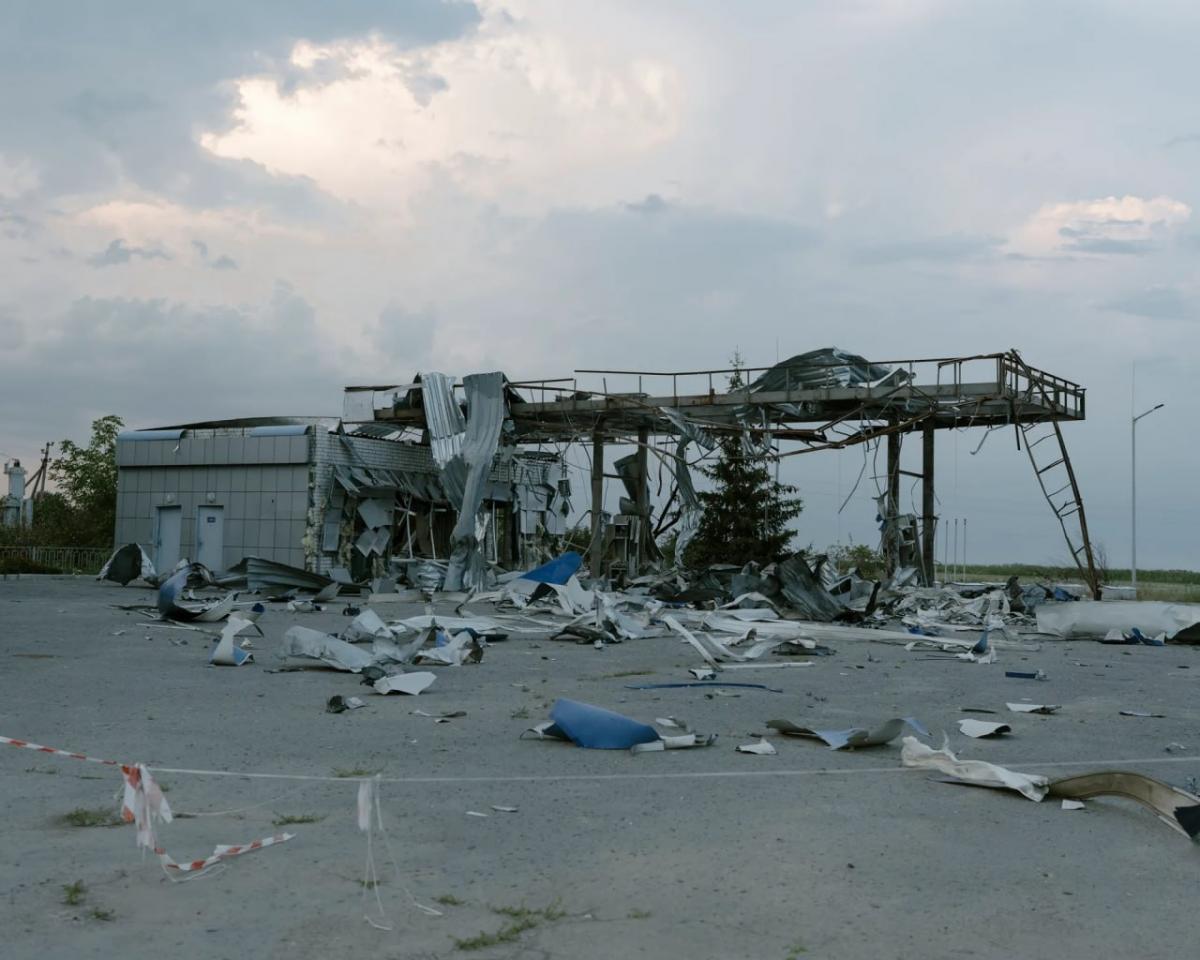
Russia has attacked more than 200 petrol stations across Ukraine since April using drones, cruise missiles and glide bombs, according to German publication Der Spiegel.
At least 80 of the targeted fuel stations are located in the eastern Kharkiv region, where heavy bombardment has repeatedly hit civilian infrastructure.
Ukrainian officials believe the systematic strikes are direct retaliation by Moscow following successful Ukrainian attacks against oil refineries and storage terminals deep inside Russian territory.
Vitaliy Dyakivnych, the head of the Poltava Regional Military Administration, said Russian authorities had taken the position that if Russia had run out of petrol, Ukraine should not be allowed to continue operating as normal.
While Russian oil refineries are mostly owned by state enterprises or large corporations, petrol stations in Ukraine are frequently operated by independent businesses. Unlike energy refineries, these retail stations are constantly visited by civilians.
Propaganda and terror goals
Serhiy Kuyun, an expert on the Ukrainian fuel market, explained that Moscow has two primary objectives behind the campaign. He stated that the first goal is to spread terror and break the spirit of resistance among ordinary citizens, while the second objective is propaganda.
Kuyun noted that when Russian kamikaze drones crash into Ukrainian fuel stations, onboard cameras record video footage that is subsequently circulated on the internet.
For many Ukrainians, petrol stations serve as more than just places to refuel vehicles. They function as important social institutions and community meeting spots where people gather to eat hot dogs and spend time with friends.
East of Poltava along the M-03 highway, a major transport route connecting the capital city of Kyiv to Kharkiv, only a few undamaged petrol stations currently remain standing.
Rebuilding fuel infrastructure
Despite the damage, major Ukrainian fuel networks are managing to restore around 80 percent of the attacked stations. Operators are focusing on restoring basic functionality rather than rebuilding complete architectural structures.
Workers are reinforcing the sites using sandbags, heavy concrete blocks and protective anti-drone netting. Because most fuel storage tanks are situated underground beneath thick concrete slabs, they generally survive the missile and drone strikes.
As a result, while the Russian strike campaign has caused economic hardship and spread fear among motorists, it has not created widespread fuel shortages across Ukraine.
Supply routes and border threats
A recent development marked a potential shift in tactics when an artificial intelligence drone struck a fuel tanker truck near the border with Romania, a key entry point for Ukrainian fuel imports.
Kuyun explained that drivers are becoming unwilling to travel along those import routes because of the extreme danger. He cautioned that persistent strikes against tanker trucks could disrupt overall fuel delivery and distribution, adding that attacks on retail petrol stations represented a less severe threat by comparison.
Fuel shortages in Russia
The campaign against Ukrainian stations comes as Russia experiences its own domestic fuel difficulties following Ukrainian strikes on Russian oil infrastructure.
At the beginning of August, a new wave of fuel shortages hit the Russian Federation. Residents in multiple regions, extending from the southern provinces to Primorye in the Far East, reported standing in hours-long queues at filling stations. Several Russian regions have responded by reintroducing restrictions on the amount of petrol sold to individual customers.


