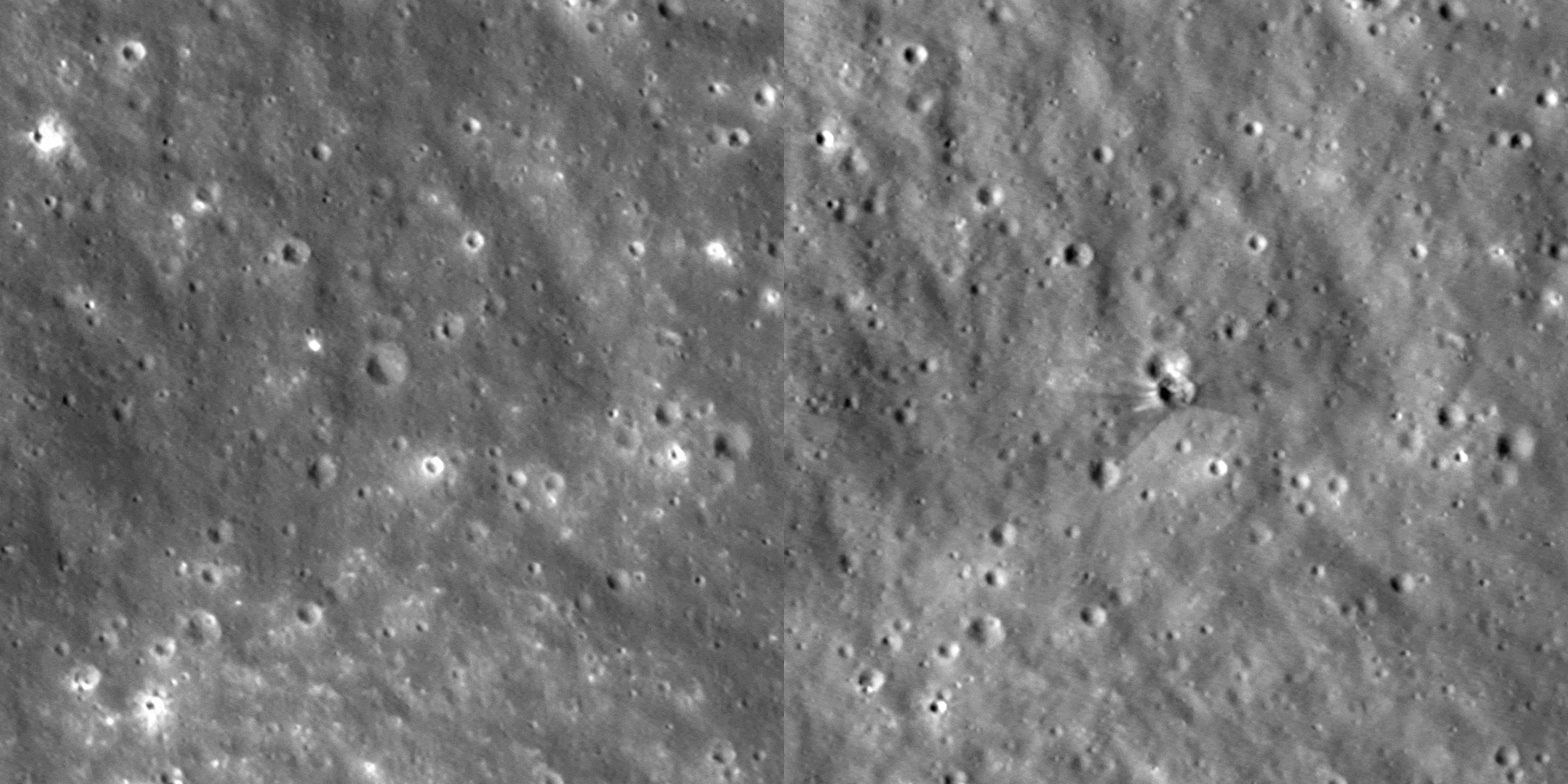
An upper stage from a SpaceX Falcon 9 rocket has crashed into the lunar surface at 8,700 kilometres per hour, leaving a crater approximately 18 metres wide that NASA photographed six days after the impact.
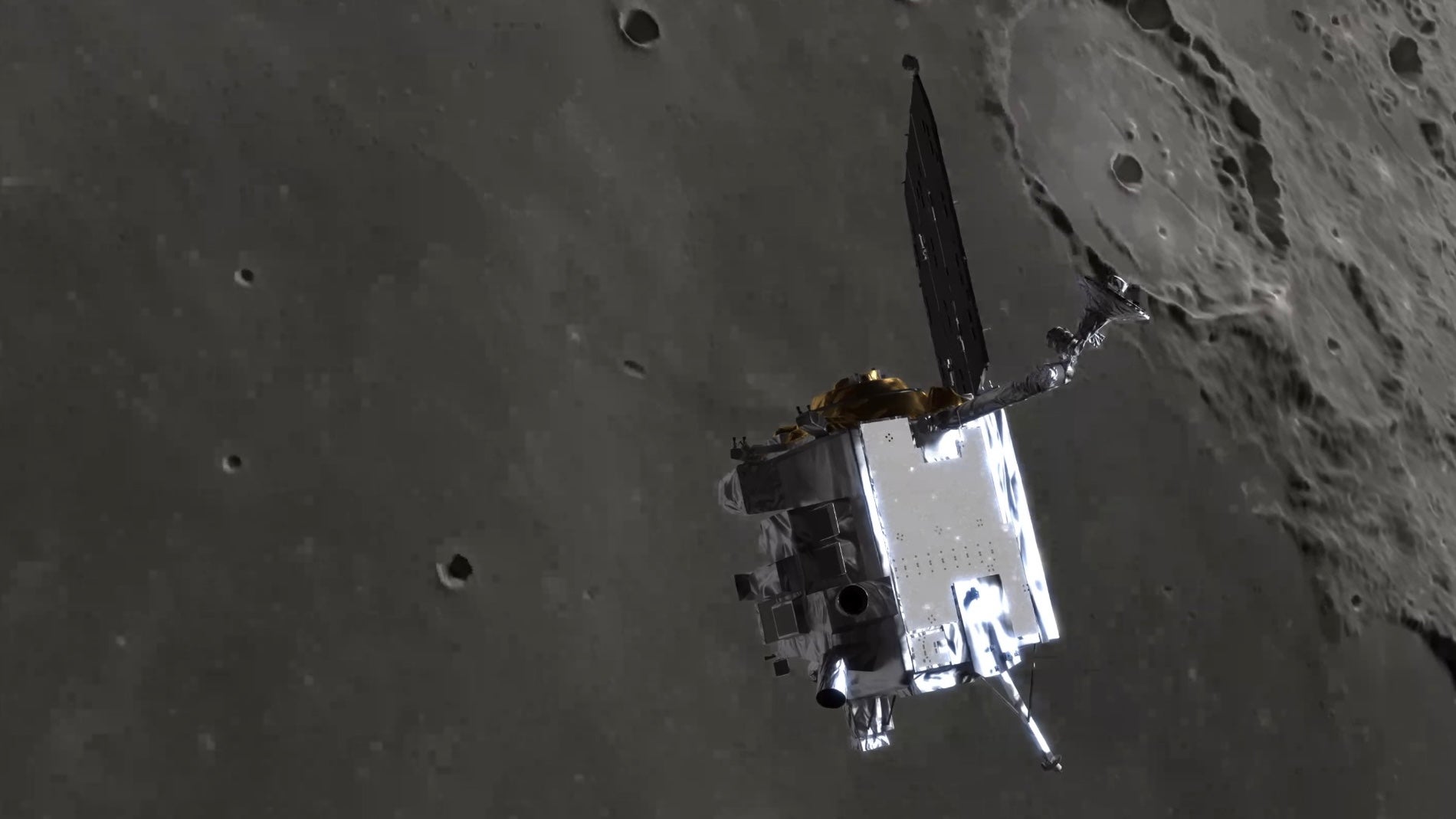
The National Aeronautics and Space Administration captured images of the fresh collision site between August 11 and August 12 using its Lunar Reconnaissance Orbiter, enabling scientists to observe how lunar geology evolves over time.
Rocket launch and lunar impact
The spent rocket part originally launched on January 15, 2025, carrying the Blue Ghost 1 lunar lander built by Firefly Aerospace. After completing its required function in the mission, the upper stage remained abandoned in space until a combination of solar activity and gravitational forces pushed it into a collision course with the Moon.
Because the Moon lacks an atmosphere to burn up incoming space debris, objects strike its surface regularly. Natural meteoroids of a size comparable to the Falcon 9 stage impact the Moon roughly every six days. Human-made impacts occur much less frequently, giving researchers a rare opportunity to track and study how new craters form.
International tracking effort
Before the impact, an international tracking effort began when independent astronomers used public data to reconstruct the trajectory of the rocket stage. The Center for Near-Earth Object Studies subsequently refined the path calculations.
Scientists forwarded the predicted impact coordinates to the team controlling South Korea's Danuri lunar probe. Danuri successfully photographed the new crater with a high-resolution camera just hours after the collision took place.
Orbiter maneuvers and camera precision
The Danuri team shared the exact coordinates with NASA flight controllers, allowing them to plan detailed follow-up observations with the Lunar Reconnaissance Orbiter. Capturing the site required complex orbital maneuvers from the spacecraft.
Engineers tilted the orbiter so its camera could view the crater while passing 96 kilometres above the lunar surface at a speed of 1.6 kilometres per second. The probe completes a polar orbit every two hours, forcing controllers to wait until the slow rotation of the Moon brought the impact site directly underneath its flight path.
Timing required exact synchronization, as turning on the camera a few seconds too early or too late would have left the crater outside the center of the frame. The narrow-angle camera on the orbiter can resolve features as small as 90 centimetres across.
Shadow measurements from the high-resolution images indicate the 18-meter crater has a depth of less than 3 metres. Because the orbiter has been actively mapping the Moon since 2009, researchers used its extensive image archive to make precise before-and-after comparisons and isolate the exact changes caused by the rocket impact.