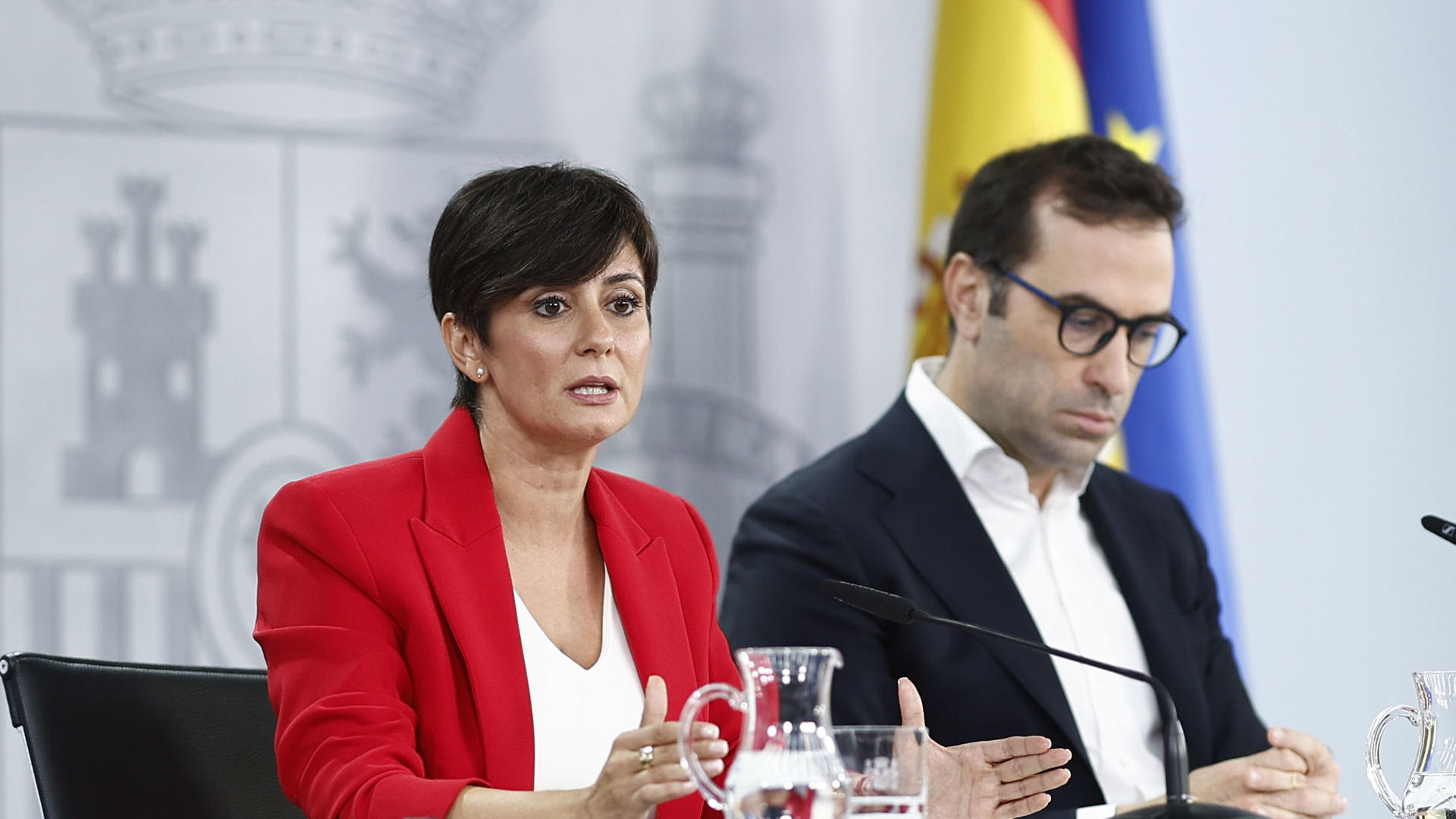
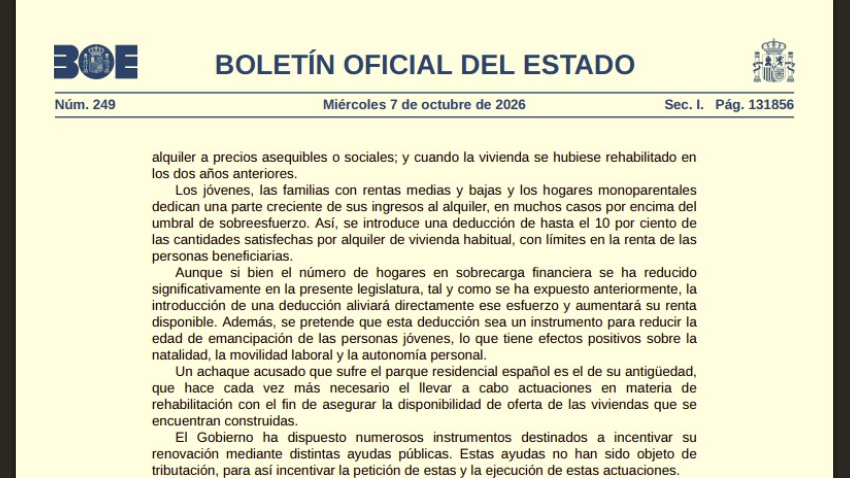
Low-income renters in Spain will be able to deduct 10% of their payments from their income tax under a broad new housing decree published in the official state gazette.
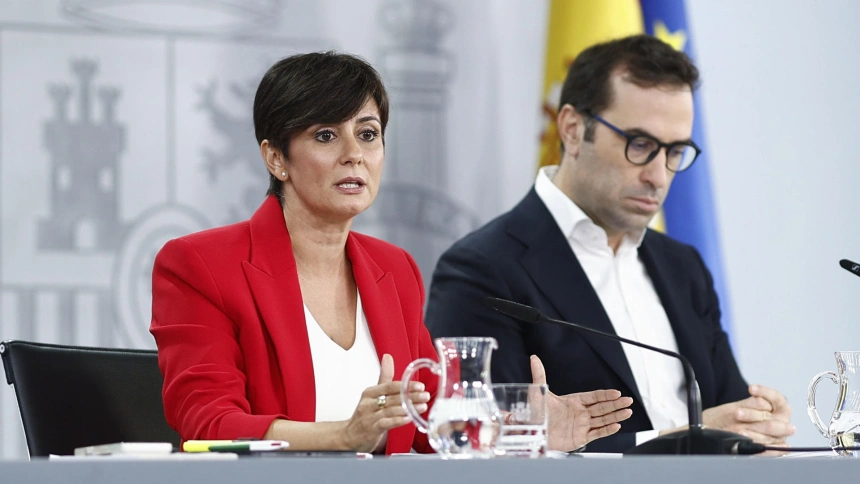
The main decree, which enters into force on Thursday, allows tenants earning under 33,007.20 euros a year to deduct 10% of their rent on their tax returns, up to a maximum base of 11,630 euros.
The tax break is retroactive to Jan 1, 2026, meaning eligible renters will receive the deduction when they file their returns between April and June 2027.
The measures were approved by the Council of Ministers and await validation from the Permanent Deputation, the body that acts as parliament when the legislature is not in session.

Landlords who lower their rents by more than 5% in designated stressed zones will be eligible for income tax reductions of up to 100%, and up to 70% for social rentals.
Capital gains from selling empty apartments to public entities will be exempt from tax until the end of 2027, up to a limit of 800,000 euros.
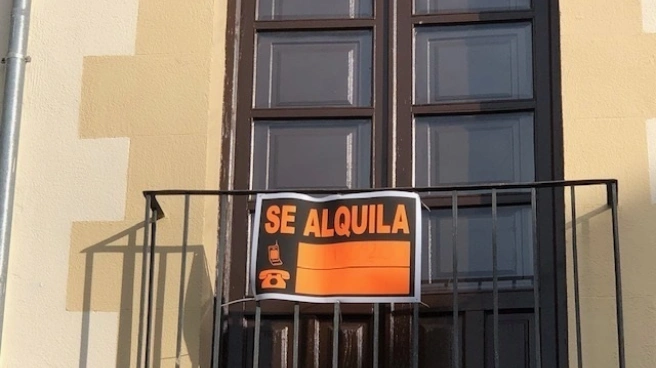
Eviction protections
The legislation gives the public administration two months to offer alternative housing to vulnerable families facing eviction for unpaid rent. If the government fails to find a home, it must pay the debt to the landlord, and the eviction is halted as long as the family remains vulnerable.
Evictions pushed by debt buyers and investment funds against vulnerable people are paused until Dec 31, 2030.

The rules also target temporary and room rentals. Without a justified cause, or if more than two contracts are signed consecutively, a short-term let will automatically convert to a standard residential lease. The total rent charged for individual rooms cannot exceed the price of renting the entire property.
Some of the regulations have already prompted a reaction in the market. More than 5,000 homes have been withdrawn from the rental market since the decrees were announced, according to Cristina Argerich, a civil law professor at the Complutense University of Madrid.
Subsidised loans

The legislation mobilises a housing program backed by 10 billion euros to offer zero-interest loans of up to 50,000 euros, aimed at buyers with stable incomes but no savings for a deposit, according to Ricardo Rodríguez, head of politics for the COPE radio network.
The plan includes 280 million euros in state-backed guarantees for industrialised building and 400 million euros for a social impact housing fund.
A second decree, taking effect on Nov 15, will impose mandatory lease extensions of five to seven years when contracts end. Landlords who refuse to renew without a justified reason will have to compensate the tenant.

Political opposition
The measures drew criticism from business leaders and opposition parties. Antonio Garamendi, president of the CEOE employers association, opposed the government's voting strategy for the decrees, while real estate groups Fadei and AMADEI warned of legal insecurity.
Ester Muñoz, spokesperson for the conservative People's Party, dismissed the package as propaganda for Prime Minister Pedro Sánchez.
Madrid's regional president Isabel Díaz Ayuso said she would launch legal appeals against the measures, and far-right Vox spokesperson Pepa Millán called the use of the Permanent Deputation an abuse of power.