Spanish Prime Minister Pedro Sánchez's government has declared a national security situation in Ceuta to take direct control of the migration crisis, while admitting officials still do not know how many migrants remain in the enclave.
The central government in Madrid estimates that roughly 5,000 people who crossed illegally from Morocco are currently in the autonomous city, though local authorities in Ceuta believe the figure is higher.
Sources at the Moncloa, the seat of the Spanish government, acknowledged that neither central nor regional authorities can provide an exact headcount. Officials attributed the uncertainty to migrants remaining scattered, staying in hiding, or returning voluntarily across the Moroccan border without formal record.
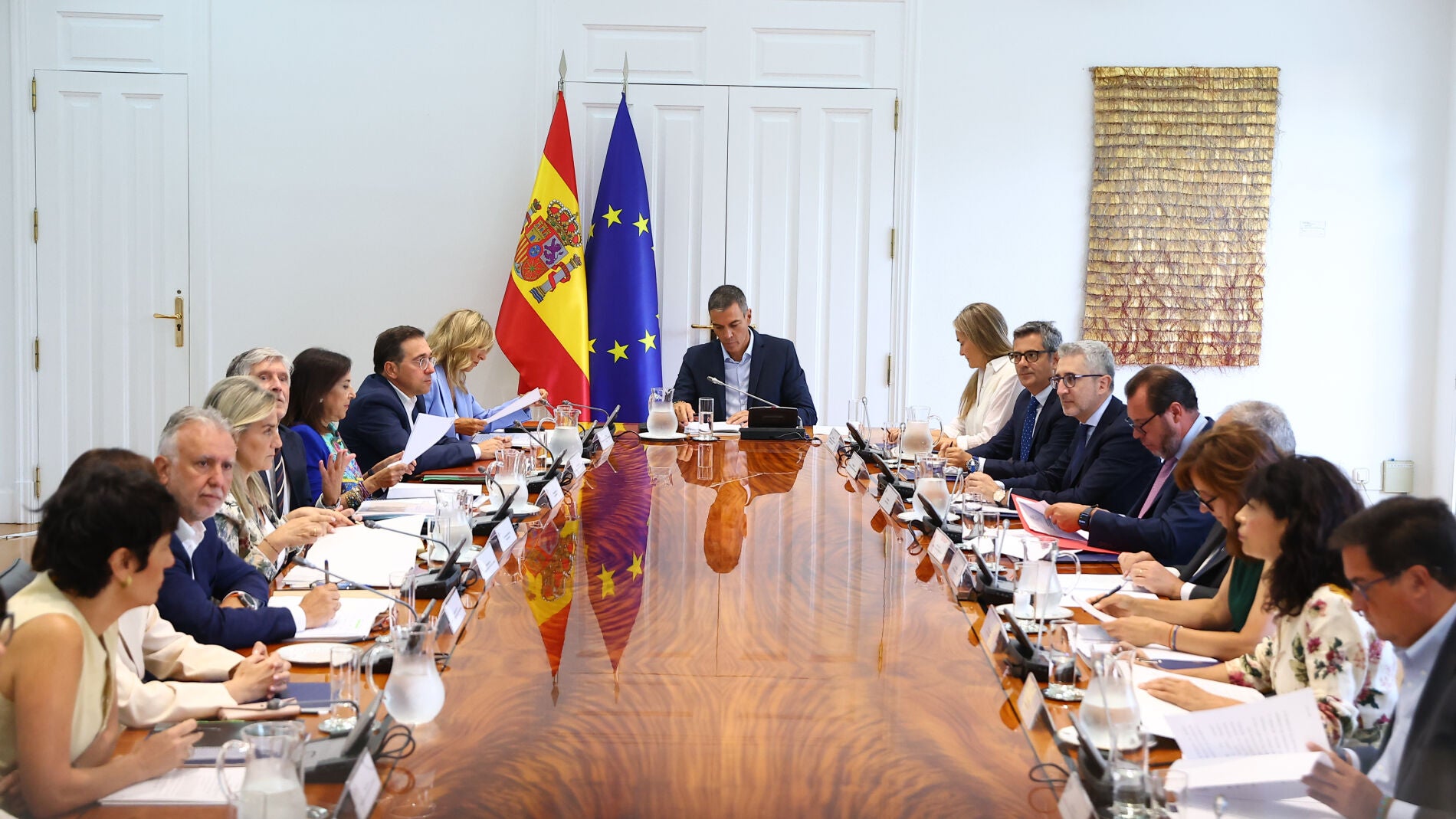
Territorial Policy Minister Ángel Víctor Torres was named as the functional authority to head a single command coordinating all state and local resources. The central government foresees that the special security management structure will remain active until December 31.
Dispute over the delayed response
The central decision to establish a single command came 26 days after the border collapsed on July 30, when more than 72,000 people crossed into the Spanish territory from Morocco over a single emergency period.
Moncloa sources defended the delay by claiming that Juan Jesús Vivas, the regional president of Ceuta, initially requested state intervention but stopped asking after central officials outlined what surrendering local authority entailed. According to Madrid officials, once the conditions of unified command were explained, including state control over security forces and resource allocation, the topic was not raised again until Vivas renewed his request last week.
While admitting that Vivas never explicitly declined central control, government officials maintained that the 26-day gap did not create coordination failures. Central government representatives stated that Ceuta would be in a similar position today even if unified command had been invoked on August 2, two days after the initial border surge, despite the official declaration citing a need to reinforce inter-agency coordination.
Operations and committee structure
Under the new national security framework, Torres will lead a specialized committee designed to centralize administration, strengthen urban and border security, and manage migrant processing. The body includes representatives from the autonomous city of Ceuta, key central ministries, the Department of National Security, and the Centro Nacional de Inteligencia, Spain's national intelligence agency.
Operational teams will focus on locating and gathering scattered migrants, verifying their identities, creating formal records, and processing individual administrative cases. Officials aim to establish an accurate assessment of the moving population while managing border security.
Shift in return policy and legal hurdles
The government has also adjusted its public position regarding migrant returns. While ministers initially stated that all irregular arrivals would be returned to Morocco, Moncloa officials now acknowledge legal limitations to that objective.
Government sources clarified that while the objective remains returning those who entered illegally, individuals with legal rights to remain will be allowed to stay. Furthermore, officials highlighted that unaccompanied minors cannot be subjected to ordinary expulsion procedures and must have their cases processed individually in accordance with the best interests of the child.
The crisis coincides with two new draft bills presented by the Ministry of the Interior to reform Spain's asylum rules and modify the Organic Law on Foreigners. The legislation aims to align national law with the European Pact on Migration and Asylum, the European Union framework governing regional migration and asylum policies.
Moncloa insisted that the legislative proposals were prepared prior to the July 30 border surge, having passed through the committee of state secretaries before the crisis began. However, the government faces significant hurdles in Congress, where it lacks a guaranteed parliamentary majority and must negotiate with allied political groups holding conflicting views on immigration, asylum, and returns.