Swiss scientists led by Franz Bender have buried more than 2,000 cotton garments across Switzerland to test the biological activity of soil.
About 1,000 volunteers participated in the study by burying underpants and bras in roughly 1,000 different locations throughout the country. Participants retrieved the garments after 30 or 60 days, photographed them, and sent them to researchers along with soil samples to measure how much fabric had degraded.
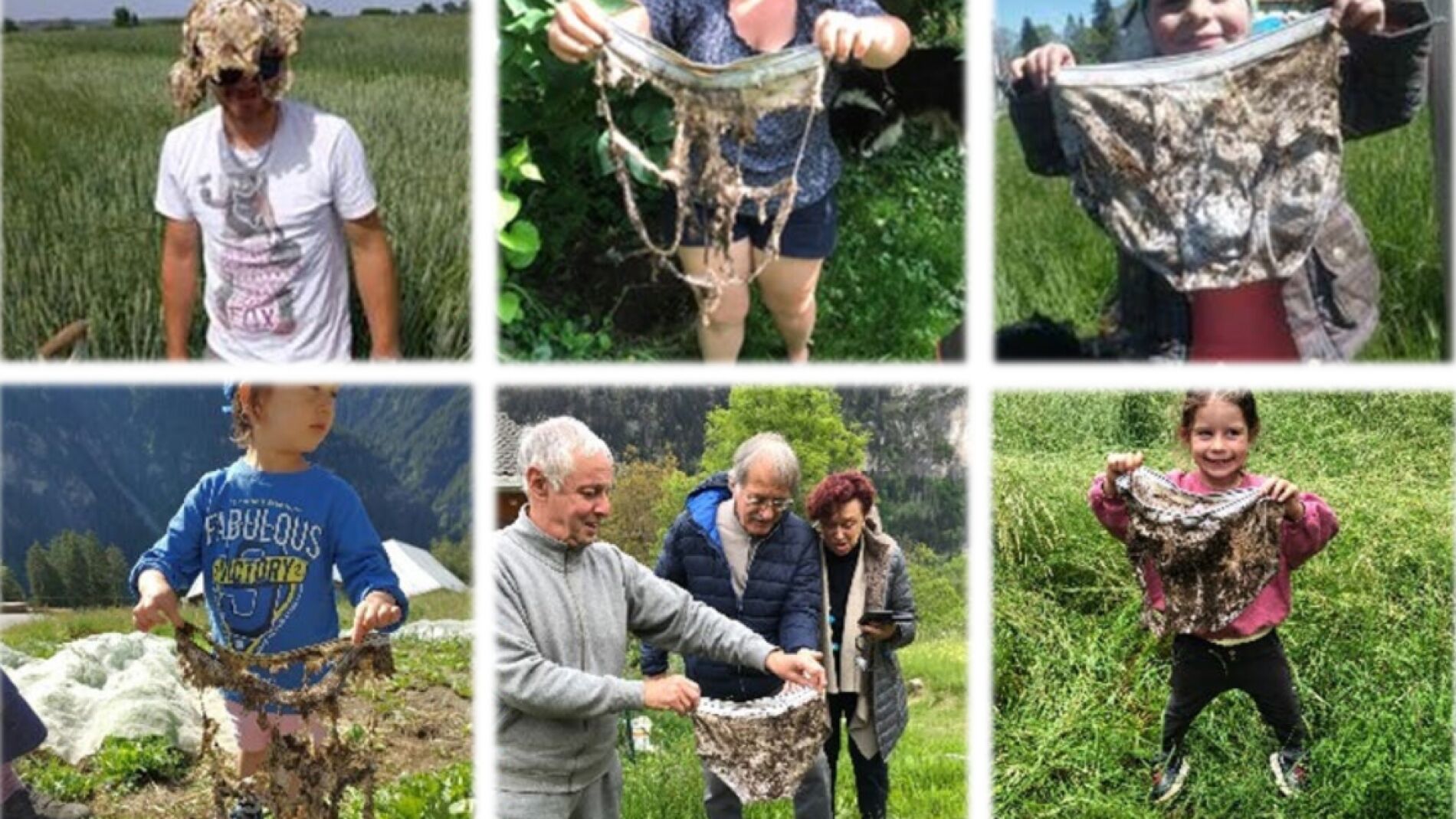
The findings, published in the scientific journal Plants, People and Planet, aimed to establish how rapidly soil organisms break down organic material in different environments. Cotton is composed primarily of cellulose, an organic polymer that serves as an energy source for subterranean bacteria, fungi, and other organisms involved in natural nutrient recycling.
Researchers consider a rapidly decomposing garment to be a direct indicator of high underground biological activity. The experimental method, known as the Underpants Index, was inspired by the Tea Bag Index, an established scientific technique that measures organic decomposition by burying tea bags and recording their weight loss over time.
The Underpants Index method
Using everyday cotton clothing allows researchers to transform an invisible ecological process into a visual result that non-scientists can observe directly. Rather than requiring complex laboratory equipment to evaluate decomposition rates, volunteers can simply unearth the buried clothing to examine how much fabric remains.
Soil is a complex living ecosystem made up of microorganisms, fungi, small subterranean animals, and plant roots. These organisms form an extensive network that breaks down plant and animal remains, releases essential nutrients, aids carbon storage, and supports overall plant growth across ecosystems.
Decomposition rates across Swiss habitats
The experiment revealed clear differences in biological activity depending on where the garments were buried. After 60 days underground, cotton underpants buried in private residential gardens had lost approximately 58 percent of their fabric weight.
Garments buried beneath grass lawns lost roughly 40 percent of their material over the same timeframe. Agricultural fields and natural meadows recorded intermediate levels of fabric breakdown, demonstrating that soil organisms operate at varying intensities across different land uses.
Bender and his team compared the Underpants Index measurements directly with results from the Tea Bag Index. The statistical relationship between the two methods proved significant, confirming that both approaches effectively capture related organic matter decomposition processes.
Soil fertility and phosphorus levels
While private gardens recorded the fastest rates of cotton breakdown, researchers discovered that these soils also contained elevated concentrations of phosphorus. The study team noted that some residential gardens may be receiving larger quantities of fertilizer than necessary.
High microbial activity and rapid organic decomposition do not automatically mean that a soil ecosystem is balanced in every respect. Consequently, the authors emphasized that the Underpants Index should be interpreted as a measure of soil fertility and decomposition activity rather than a universal indicator of overall soil health.
Citizen science at a national scale
Evaluating soil conditions across thousands of distinct sites presents a major logistical challenge for traditional scientific studies. Standard laboratory analysis offers high precision for individual samples, but capturing regional variations across diverse landscapes requires broader sampling methods.
By engaging members of the public in citizen science, researchers successfully gathered data from approximately 1,000 locations across Switzerland. Volunteers received the garments, followed simple burial instructions, and logged their observations, demonstrating that accessible everyday items can serve as effective scientific tools.