


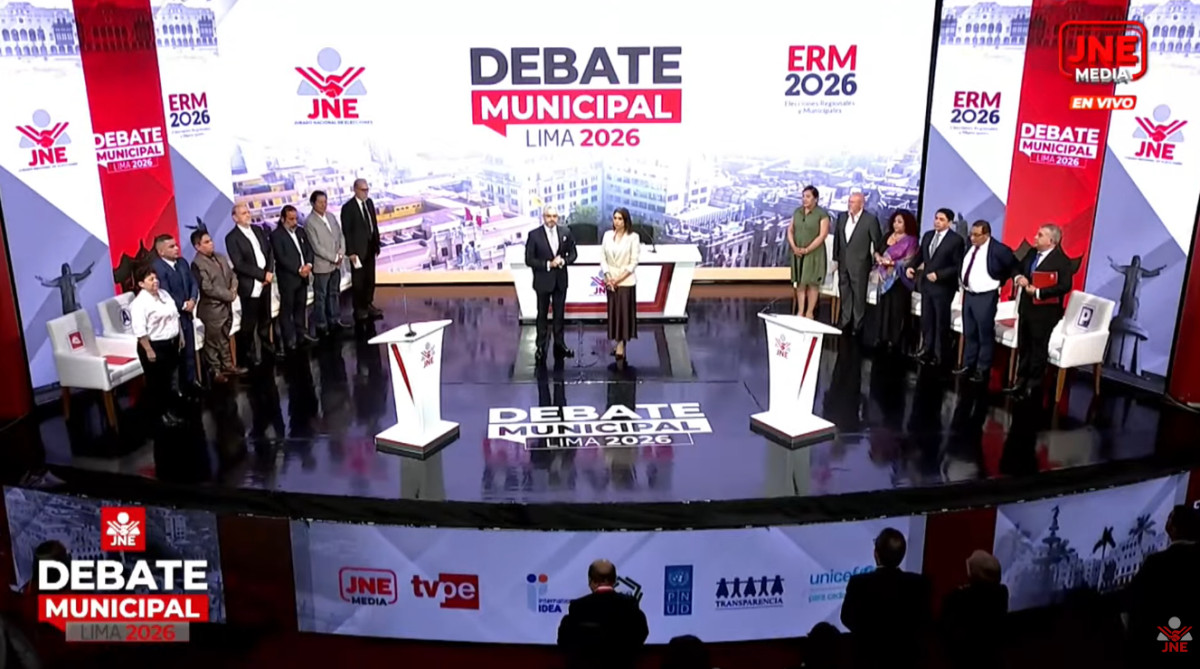
Thirteen candidates for mayor of Metropolitan Lima faced off on September 21 during the first official municipal debate held at the National Library of Peru.
Organized by the National Jury of Elections (JNE) ahead of Peru's Regional and Municipal Elections, the live televised event provided candidates a platform to outline their visions for crime, public transport, health, and urban infrastructure.
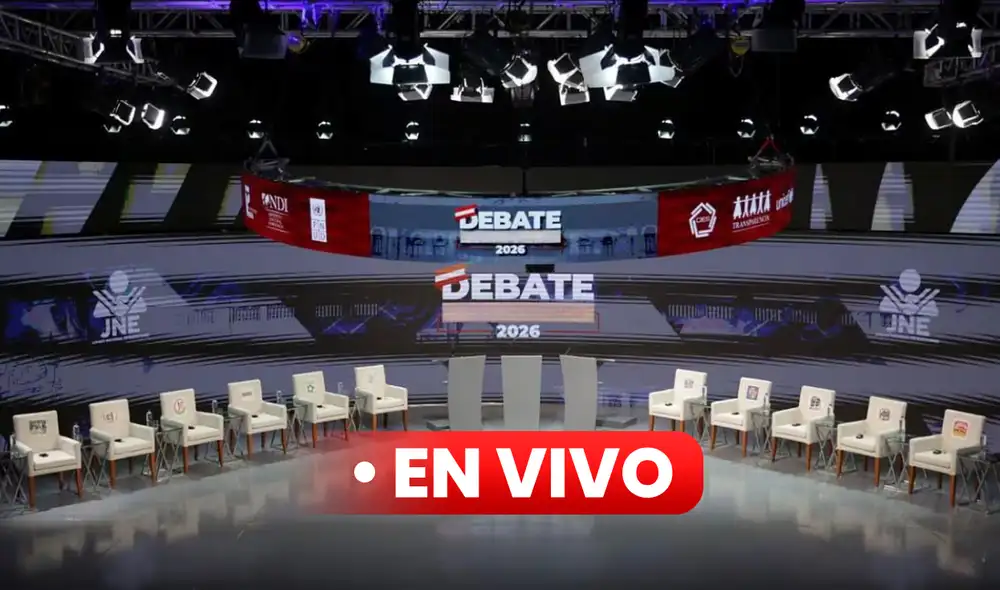
The debate broadcast live at 8:00 p.m. via the official JNE YouTube channel as well as news outlets including La República. The structure was divided into five distinct blocks: opening presentations, direct head to head exchanges, citizen questions, a quick fire yes or no section called Sin Rodeos, and final closing remarks.
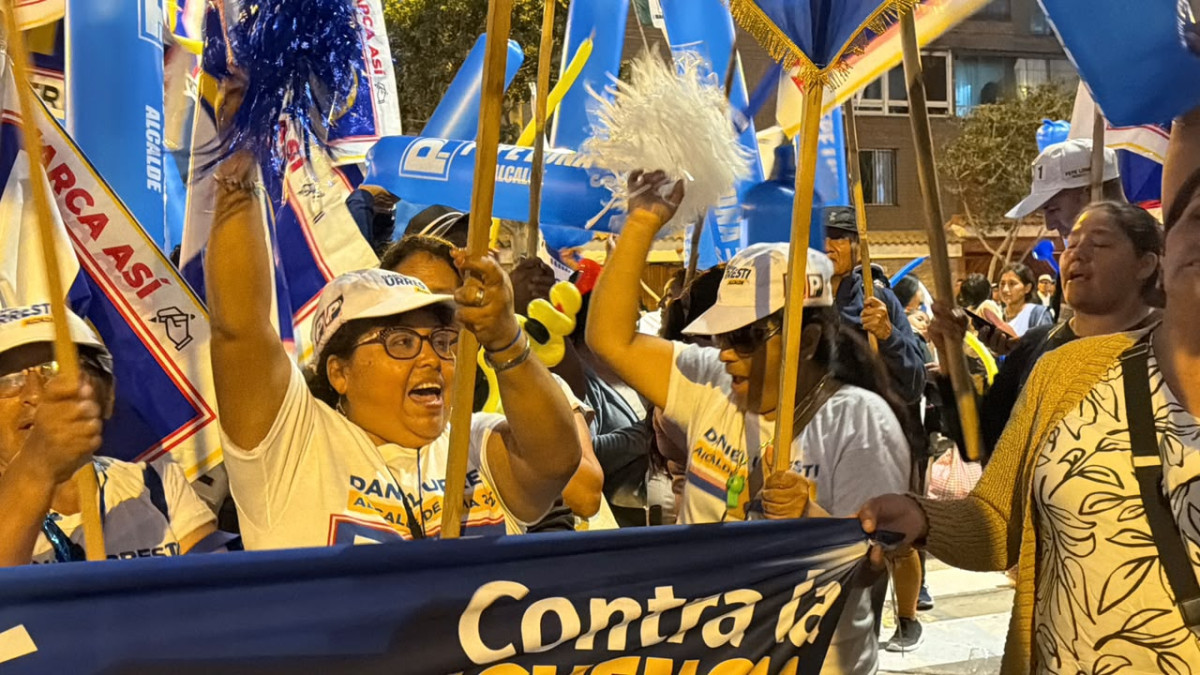
Outside the venue in the San Borja district of Lima, political party supporters gathered to cheer on their respective contenders throughout the evening.
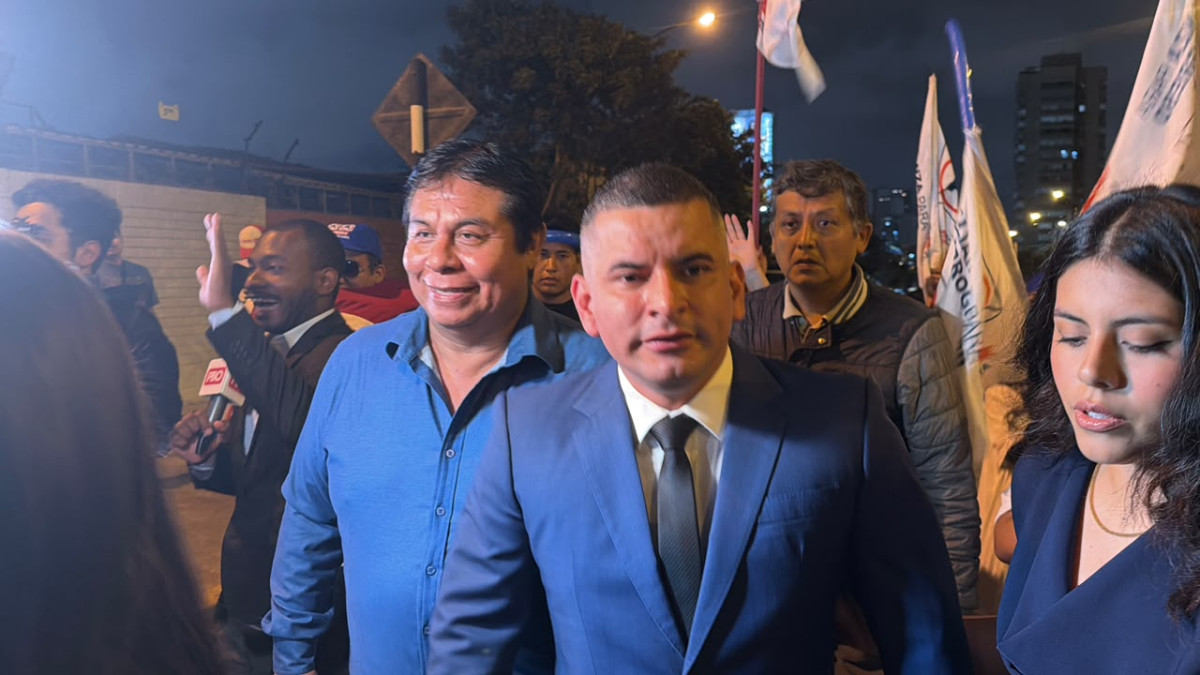
Arriving at the National Library, Carlos Bruce of Somos Perú refrained from detailing his specific proposals ahead of the event but noted that high expectations surrounded the debate. Bruce pointed out that 14 days remained before election day and urged voters to evaluate leadership styles, stating that Lima requires a mayor who unifies all citizens rather than one who discriminates or insults.
Elio Riera, representing Alianza para el Progreso (APP), also arrived at the National Library to participate in the broadcast.
Before the formal debate began, organizers held a minute of silence for Susy Isabel Aponte Polo, also known as La China Polo. A journalist and candidate for the Regional Government of Áncash under the Socios por Áncash movement, Aponte Polo was shot to death on Saturday, September 19, while conducting campaign events in Caraz, located in Huaylas province.
Opening Statements and Assessments of Lima
During the first block of the debate, candidates offered starkly contrasting assessments of the capital city's current condition.
Ricardo Belmont of the Cívico Obras party described Lima as a disaster and recalled public infrastructure works that had remained unfinished for 30 years.
Carlos Bruce warned that the current municipal administration was leaving behind a massive public debt of 5 billion soles.
Elio Riera stated that he understood what it takes to defend just causes.
Susel Paredes of Ahora Nación described the capital as a city abandoned to its fate, severely hit by rising crime rates and heavy traffic congestion.
Daniel Urresti of Podemos Perú presented himself as the single candidate who understood what must be done to halt the ongoing killings across Lima.
Clashes Over Public Safety and Crime Prevention
Public safety emerged as a central focus throughout the debate, with candidates putting forward drastic proposals to combat crime.
Daniel Urresti asserted that he personally represented security and claimed to be the only candidate with a precise plan to halt the killings. Urresti promised that under his administration, the Metropolitan Municipality of Lima would arrest 100 criminals every day, totaling 3,000 arrests per month. When asked about potential prison overcrowding resulting from such arrests, Urresti stated that he did not care about the issue.
Urresti also launched a direct attack on current Lima mayor Rafael López Aliaga, accusing him of abandoning the city to pursue his own presidential ambitions. Urresti claimed that this political abandonment cost the lives of more than 2,000 Limeños, asserting that victims were killed not only by hitmen's bullets but also by López Aliaga's indifference and political ambition.
In the direct confrontation block, pairings drawn by lot gave candidates three minutes for questions, answers, and rebuttals. One head to head match featured Sandro Caller of the Partido Patriótico del Perú facing Daniel Urresti, while another featured Yehude Simon of Tierra Verde paired against Carlos Bruce.
Oswaldo Vargas of Juntos por el Perú reported that residents repeatedly identified security as the city's main problem during his campaign walks. Vargas proposed constructing retaining walls in vulnerable areas and establishing dedicated programs to serve populations lacking access to drinking water.
Victoria La Cruz of the Partido Morado proposed convening all 43 district mayors of Lima to align their security strategies. She also advocated using artificial intelligence facial recognition algorithms as part of crime prevention, adding that people frequently treat rules as mere decorations.
Segundo Valdez of Frepap proposed creating operational centers with direct participation from the Public Ministry to address insecurity, asserting that defending life requires timely care rather than merely catching thieves.
Infrastructure, Transport, and Municipal Spending
Candidates also addressed municipal spending, traffic congestion, and transport regulations across the capital.
Ricardo Belmont questioned the high cost of minor public works projects in Lima, stating that small projects now cost as much as 100 million soles. Belmont asserted that someone was stealing money from city coffers. Turning to transport, Belmont highlighted the plight of workers who leave home for work and never return, noting that traveling from San Martín to Chorrillos takes two and a half hours, which he termed inhumane. He stressed that citizens must be guaranteed a city where they feel safe.
Susel Paredes targeted the Urban Transportation Authority (ATU), noting that the entity was created by Carlos Bruce in 2018. Paredes proposed eliminating the driver's license mafia connected to municipal functions and offering administrative support to taxi drivers to prevent municipal abuses.
Education, Health, and Social Proposals
Public health and education formed another major section of candidate proposals during the debate, which drew citizen input from 4,921 questions submitted to the JNE.
In response to a health query from Victoria La Cruz, Ricardo Belmont stated that during his previous mayoral administration he established medical posts within eight minutes of residents' homes to bring care closer and ensure patients were treated by doctors who knew them personally.
Victoria La Cruz proposed establishing citizen schools in coordination with parents' associations (Apafas) and local education management units (UGEL). She also proposed adaptive learning platforms powered by artificial intelligence and highlighted educational deficiencies, noting that Peru ranks last in the international PISA exam.
Susel Paredes noted that the poorest children in Lima fail to complete school. She proposed demanding jurisdiction over education to ensure quality instruction from early childhood through technical education.
Segundo Valdez outlined a comprehensive social platform for Frepap, proposing a program to combat anemia, integration centers offering technical training, medical care, and rehabilitation for youth, seniors, and families, as well as water and sewerage projects. In environmental policy, Valdez proposed restoring the Chillón River and creating a network of veterinary hospitals to manage stray dog populations.
Cultural and social debates also sparked direct exchanges. Samir Quispe of Batalla Perú questioned candidates whom he accused of attempting to impose woke gender ideology in Lima. Flor de María Hurtado of the Partido Demócrata Verde responded by proposing a city for everyone without racism, classism, or ideological differences, reminding Quispe that behind anyone he looks down on is someone's child.
The lineup of 13 candidates on stage was completed by Luis Huette of Pueblo Consciente, as candidates concluded the five-block event with their final messages to the electorate.


