An uncrewed United States military barge has landed and refueled a US Special Forces MH-47G Chinook helicopter at sea for the first time.
The successful test marks the first time details of an operational trial involving an American military helicopter and an uncrewed refueling vessel have been made public.
The trial was conducted using the SM300 autonomous vessel control system, developed by maritime technology company Sea Machines Robotics. The Boston-based technology company has been working on the project with the United States Department of Defense since early 2021 under a contract totaling 3.1 million dollars.
According to a report by defense publication Galaxia Militar, the SM300 system relies on a standardized hardware and software architecture. The system is designed to convert conventional, crewed vessels into autonomous platforms without requiring military forces to construct dedicated uncrewed ships.
The control technology is adaptable across vessels of varying sizes and operational capabilities. Sea Machines Robotics has demonstrated the SM300 system on small motorboats measuring between 20 and 30 feet in length, as well as on large sea barges capable of accommodating heavy-lift military aircraft.
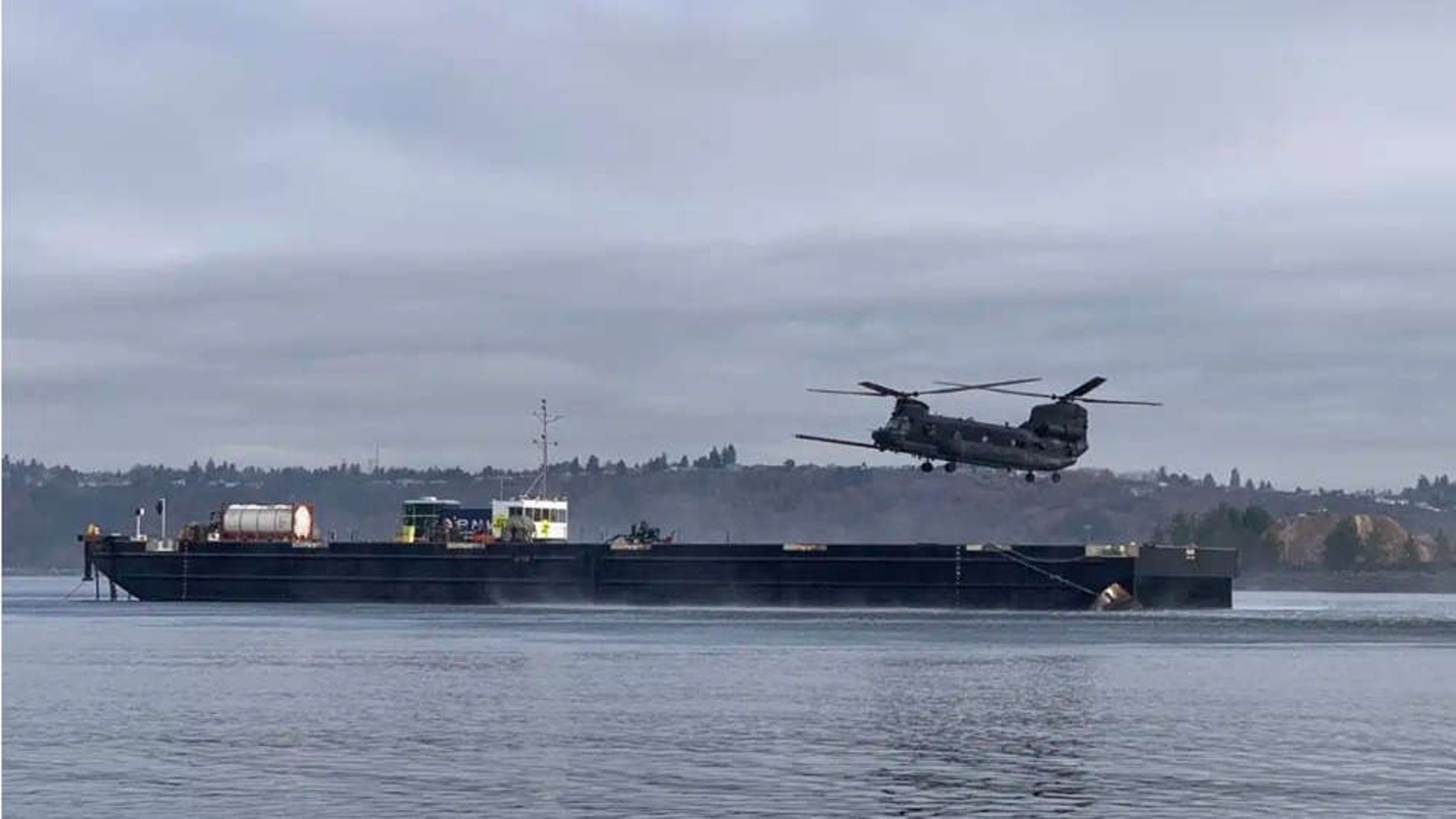
The aircraft used in the demonstration belonged to the 160th Special Operations Aviation Regiment, the elite helicopter unit of the United States Army responsible for high-risk special operations worldwide. Known as the Night Stalkers and headquartered at Fort Campbell, Kentucky, the regiment operates specialized variants of military helicopters. Testing the SM300 with an MH-47G Chinook proved that the autonomous barge platform can support heavy operational aircraft rather than small experimental craft.
Automation is not entirely new to the MH-47G Chinook aircraft itself, which can already land autonomously using the military A2X control system, which assists pilots during landings in challenging environments.
In this demonstration, however, the primary technical milestone took place on the water platform below. The uncrewed barge navigated independently to the designated rendezvous location at sea, received the incoming helicopter, and refueled the aircraft without any crew members onboard.
Capabilities of the SM300 Autonomous System
In addition to receiving helicopters, vessels equipped with the SM300 system can transfer fuel to surface warships and coastal installations. The capability enables defense commanders to deploy an autonomous barge as a mobile refueling station, sending fuel directly to locations where it is needed without assigning a ship crew.
Eliminating human crews from routine supply missions reflects broader Pentagon efforts to automate maritime logistics and reduce personnel risk. The demonstration builds on previous naval trials, including a test conducted several weeks ago by the United States Navy that demonstrated uncrewed ship-to-ship refueling using robotic fuel transfer systems between surface vessels.
The latest trial extends automated maritime refueling technology from surface ship operations directly to rotary-wing aircraft operating over open waters.
Tactical Advantages in Modern Combat Zones
Automating sea-based refueling provides key tactical advantages in modern combat zones. The rapid proliferation of short-range anti-ship weapons and low-cost interceptor drones has made maintaining crewed support vessels and personnel near active battle zones increasingly dangerous.
Deploying an autonomous refueling barge allows military forces to position fuel supplies closer to combat operations while keeping sailors out of target areas. The mobile platform also allows commanders to relocate fuel nodes quickly as operational requirements shift.
Although the joint development project between Sea Machines Robotics and the Department of Defense has been underway since early 2021 with minimal public detail, the latest trial demonstrates that standard barges can be converted into autonomous offshore refueling hubs without requiring a single sailor on board.