Progressive critics and international bodies are seeking to ban war-themed video games and impose inclusive character redesigns across the gaming industry. Journalist Emily Watkins wrote in an opinion column for the progressive newspaper The Guardian that games were the opposite of fun and stated she would ban them for anyone over 12 years old. Her critique extended beyond gaming consoles and personal computers to include all competitive play, such as board games like Scrabble, traditional card games, and sports such as ping-pong. Watkins explained that during social gatherings she preferred to collaborate and converse over coffee or a glass of wine rather than compete against friends. Her article has raised questions about whether political progressives object to cultural activities where they cannot enforce their political beliefs.
Roblox regulations and online safety concerns
The broader debate surrounding video game restrictions has intensified worldwide as governments consider bans on the online gaming platform Roblox following reported cases of sexual harassment against teenage users. The European Union has subjected Roblox to the Digital Services Act, creating the risk of fines reaching up to 6 percent of global revenue for companies distributing software deemed harmful. Filtering remains difficult due to the vast volume of user-generated material on Roblox, which includes replicas of illegal virtual casinos targeted at minors, sexual content rooms known as condos, and terrorist simulations.
Safety concerns also intersect with political debates over online content. A 2024 report by the Global Project Against Hate and Extremism claimed that far-right groups use video games to spread hate propaganda among minors. Analysts question whether such measures aim to protect young users or suppress information regarding right-wing political parties growing across Europe.

United Nations campaign against war games
International initiatives are also seeking to restrict video game content. Former Spanish minister Miguel Angel Moratinos, serving as High Representative for the United Nations Alliance of Civilizations under the legacy of former Spanish prime minister Jose Luis Rodriguez Zapatero, launched a global United Nations campaign titled #PlayForPeaceNotWar. Presented in Luanda, Angola, the initiative seeks an international debate to limit or ban war-themed video games focused on killing, destruction, and turning armed conflict into play.
Under a campaign slogan asserting that war is not a game, the United Nations and Moratinos argued that real armed conflicts cause genuine suffering and victims that should not be trivialized as interactive entertainment. The campaign calls on software creators, developers, and players to reconfigure the industry to foster empathy, dialogue, and peaceful conflict resolution instead of mass destruction. United Nations officials stated that the measure responds to a global rise in armed conflicts affecting millions of minors living in violent environments, making coexistence values a priority. Critics ask whether applying similar restrictive criteria to novels, cinema, and fine art would be considered absurd.
GamerGate and diversity initiatives in gaming
Efforts to control gaming content also stem from changes within private industry following the 2014 GamerGate controversy. The controversy began with a lengthy post by Eron Gjoni, the ex-boyfriend of indie developer Zoe Quinn, accusing her of having relationships with journalists in exchange for favorable coverage of her game Depression Quest. The viral post led to complaints regarding conflicts of interest, undisclosed relationships, and biased reviews in gaming journalism, alongside severe harassment, doxxing, and threats directed at several individuals.
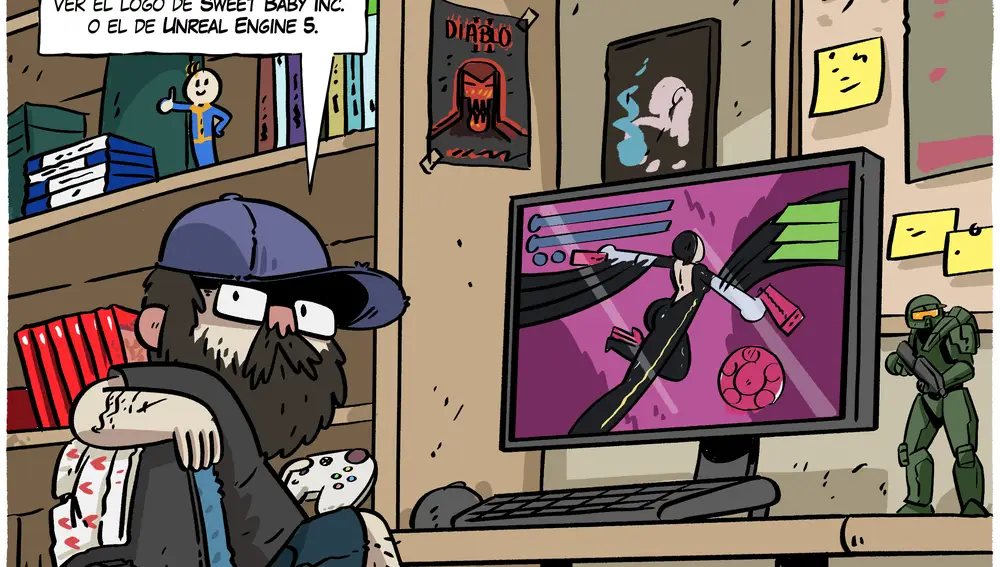
Following the controversy, major game developers introduced Diversity, Equity, and Inclusion departments, which critics claim allowed radical feminist perspectives to alter major AAA titles. Industry changes included reducing the bust size of character Lara Croft, adding transgender characters, portraying white male characters as villains, and replacing traditional male and female options with Type A and Type B designations to eliminate binary language. Progressive consulting firms such as Sweet Baby Inc, based in Canada, spearheaded these changes, shifting game design from entertainment toward moral instruction.
Character redesigns in video game remakes
Recent video game releases highlight the extent of character modifications. A summer remaster of the 2001 game Halo: Combat Evolved introduced a new female character who ridicules protagonist Master Chief John-117, whose name references Revelation chapter 1 verse 17 and who embodies traditional male values of effort, sacrifice, and honor. A remake of Assassin's Creed: Black Flag removed the low neckline of a female pirate character and replaced prostitutes with overweight women. In the latest entry of the Bayonetta series, the protagonist witch was largely replaced by a daughter wearing male-style clothing, while Harley Quinn in Suicide Squad: Kill the Justice League explicitly discarded her sexy attire for softened body curves. Social media account @Pirat_nation on X actively archives these modifications across the industry.
The video game industry has shifted significantly from its golden era, when titles were created by basement metalhead enthusiasts who were sometimes mildly misogynistic. Today, development is largely driven by postmodern left-wing activists with dyed hair, millennials without testosterone, and corporate bureaucrats conforming to politically correct guidelines.