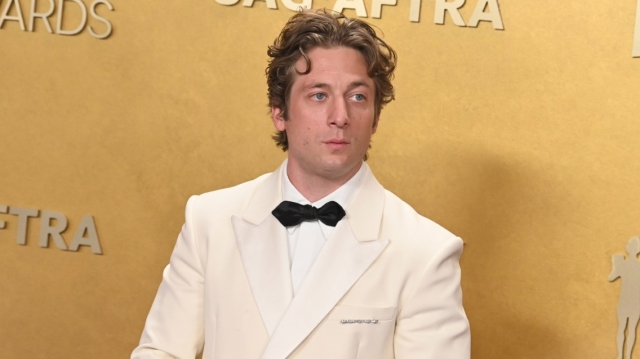
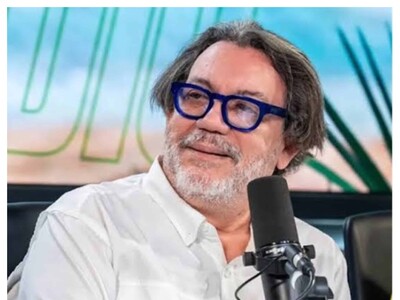
A repressed power struggle between a man and a woman, disguised as a dispute over their daughter's future, sits at the heart of "O Pai" (The Father), August Strindberg's play that Gonçalo Waddington directs and stars in at the São Luiz Teatro Municipal in Lisbon.
Written in 1887, the play by the Swedish dramatist opens on Wednesday and pits the Captain against his wife, Laura, in a conflict over the upbringing of their daughter, Berta. For Waddington, what is really at stake runs deeper than a custody dispute.
He described the play, speaking to journalists after a press rehearsal, as being about a couple's relationship and how a supposed argument over authority over their daughter conceals an even more repressed and more powerful power struggle.
Waddington compared that struggle to a kind of hidden lava that is now erupting, saying the text places particular importance on what is hidden and not shown, yet remains beneath the surface of the action throughout.
In the play, the Captain decides to send Berta away to the city, against Laura's wishes. Facing her husband's attempt to impose his authority, Laura plants doubt about the girl's paternity, triggering the Captain's mental breakdown.
As the confrontation escalates, the daughter ceases to be the real centre of the dispute, and the play lays bare the power dynamics between two people starting from deeply unequal positions.
Unequal footing between the Captain and Laura
The Captain occupies the position of authority that late 19th century society reserved for men, even though he is unprepared to exercise that authority within the family, Waddington explained.
He is the man, he is the one who earns the money, he is a military officer, he holds a position in society, and he is expected to exercise authority, Waddington said, adding that unlike the military institution, the family does not follow that same hierarchy.
Laura, by contrast, does not have the same weapons as her husband. She has no money, because the money belongs to him, no job, no career, and no vote, Waddington said, but that does not make her a passive character or simply a victim.
He said she has just as much right to be her mother's daughter as he has to be his father's son, stressing that both characters fight with everything they have.
Confronting Strindberg's reputation for misogyny
The violence of that confrontation raises the question of the misogyny attributed to Strindberg, who left behind writings deeply hostile to women and viewed relations between the sexes as a struggle for power.
Waddington does not sidestep the playwright's misogyny, but argued that the character of Laura complicates that reading, because her strength lies precisely in standing up to her husband despite the social and economic inequality between them.
In one exchange, at a point when the Captain's descent into madness, driven by his persistent doubt over paternity, is already well advanced, Laura tells him he must have realised her intelligence matches her will, and that she is superior.
Strindberg was misogynistic, but not so much in this particular play, Waddington said, arguing that the playwright created some of the most extraordinary female characters in theatre.
No modern update, but a text that still resonates
Written nearly 140 years ago, "O Pai" reaches the stage without updating its action to the present day, despite a modern set design, a choice Waddington justified by pointing to the original text's own capacity to confront a contemporary audience.
For the director, the relevance or modernity of a text does not depend on transplanting the story into the present, since what is genuinely current here is precisely confronting the audience with a text from 1887 and having it still reverberate today.
Waddington was emphatic that what interests today's audience most is the text and the people in it, stressing that he has no ambition to deliver messages through the play, since he uses Instagram for that.
His aim instead is to reproduce in the audience the impact he felt when he first read "O Pai": he said he read it very quickly because it is intense and powerful, and that finishing it left him with very few certainties, full of doubt, and thinking it was incredible.
Cast and production details
Besides directing, Waddington plays the Captain, a decision he made as soon as he chose the play. He recalled thinking, upon reading it, that he was not going to wait for someone else to invite him to play such a role.
On stage, he shares scenes with Carla Maciel, who plays Laura and with whom he also co-directs the theatre company behind the production.
The rest of the cast includes Cecília Borges, Hugo Narciso, Joana Bárcia, João Pedro Vaz and Miguel Sopas.
The production features a translation by António Cabrita and Luis Miguel Cintra, set and costume design by Ângela Rocha, lighting design by Daniel Worm and sound by Miguel Raposo Lima.
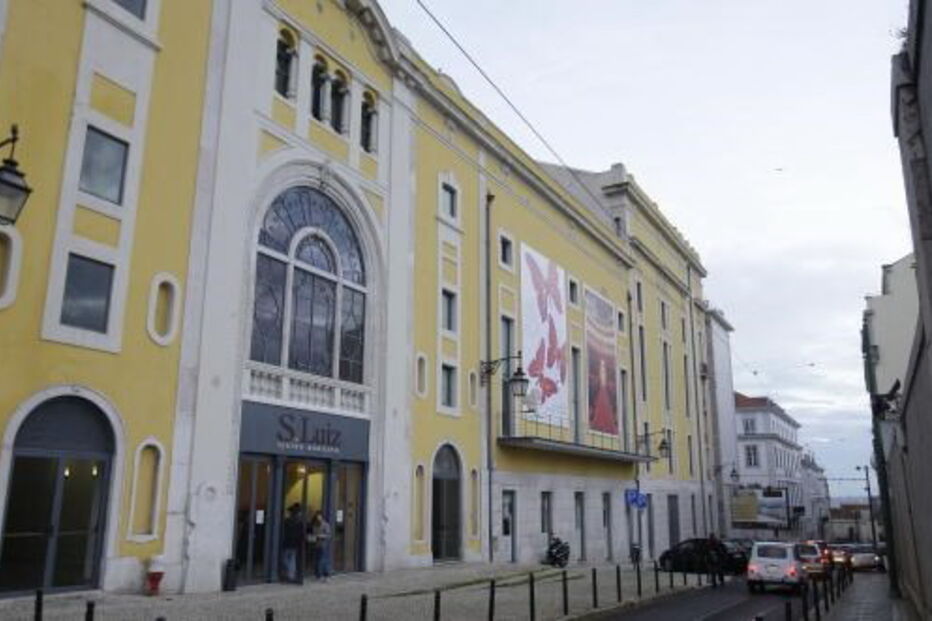
"O Pai" opens on Wednesday and runs until 27 September in the Sala Luís Miguel Cintra at the São Luiz Teatro Municipal. The production then transfers to the Teatro Nacional São João in Porto, where it will run from 8 to 18 October.