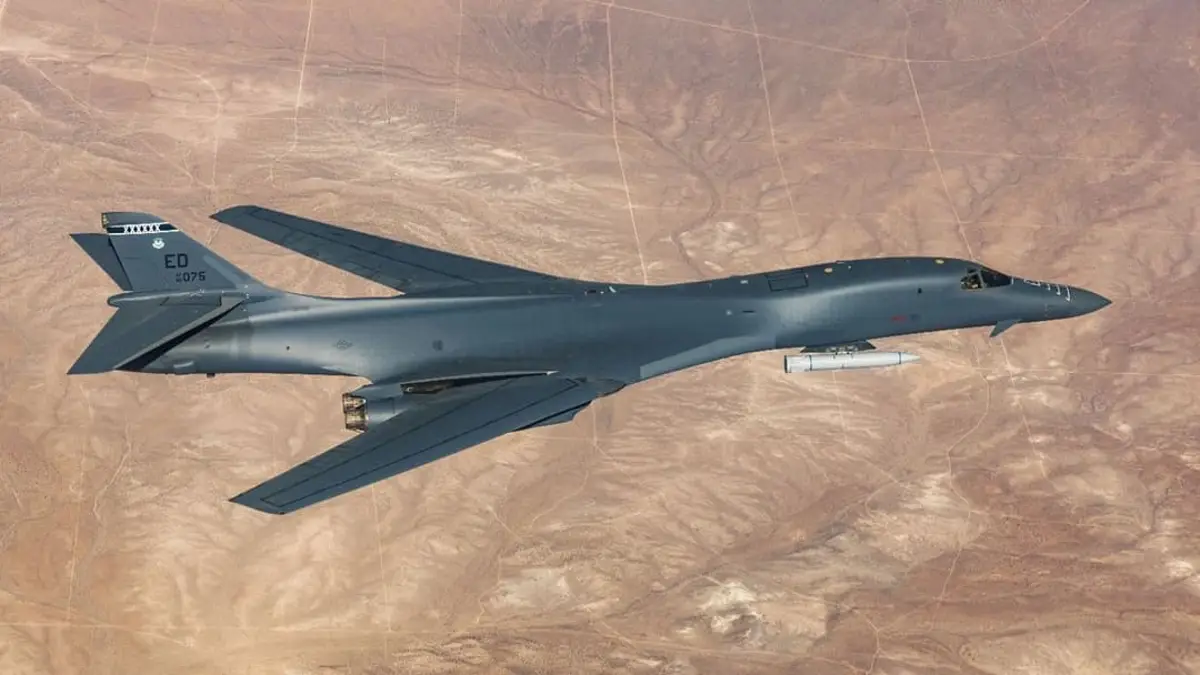
Boeing has passed a critical design review for a new external pylon that will let the B-1B Lancer bomber carry hypersonic missiles, the company said, a modification that could eventually double how much weaponry the aircraft can carry.
According to a report by Interesting Engineering, the new Load Adaptable Modular pylon, known as LAM, can now move into the manufacturing and testing phase after clearing an earlier review in May. The milestone does not yet mean the bomber can use the new weapons, but it means Boeing has a finished design ready for building the necessary components.
A Cold War bomber regains old attachment points
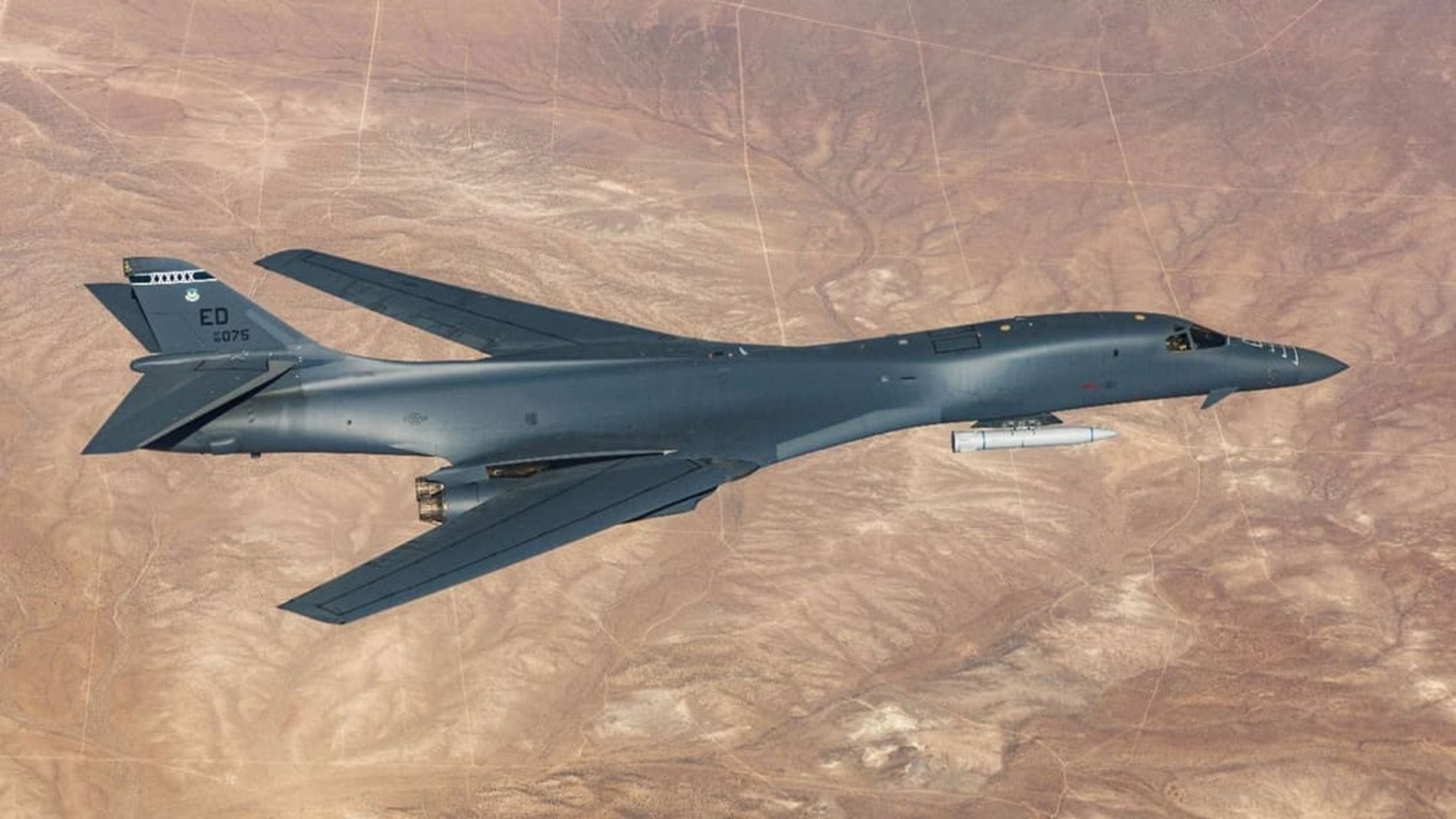
The B-1B Lancer, nicknamed "The Bone," is a supersonic bomber that entered service in 1986, while the Cold War was still underway. It was originally built to carry nuclear weapons before later being converted for conventional use. It can currently carry up to 34 tonnes across its three internal weapons bays, but some of the newer American weapons are too large to fit inside them.
To solve that, Boeing designed the LAM pylon to be fitted beneath the fuselage. The work will not require new attachment points to be cut into the airframe, since the pylon uses six mounting points already built into the bomber's original design, points that have gone unused for decades.
Those six points were originally meant for air-launched cruise missiles, but fell out of use once the United States stripped the B-1B of its nuclear role to comply with arms control agreements. With new hypersonic weapons now in development, the U.S. Air Force wants to bring back attachment points that had been disabled under disarmament treaties.
The project was developed by a Boeing engineering team in Oklahoma City led by Tristin Lam, after whom the pylon is named. By the company's calculations, the B-1B's total payload could double if the weapons carried in its internal bays are combined with those mounted on the new external pylons.
Testing is still incomplete
That doubled-capacity figure is still an estimate, however. The bomber has already taken part in demonstrations at Edwards Air Force Base in California, carrying conventional bombs and full-size mockups of hypersonic weapons, but integration and functional testing still need to be completed before the pylon can be used normally.
The upgrade arrives as the United States tries to speed up its hypersonic weapons programs after delays affecting projects such as the Army's Dark Eagle missile. Russia and China have also spent years developing their own hypersonic weapons, whose importance has grown alongside rising international tensions and the war in Ukraine.
Hypersonic weapons travel faster than Mach 5, equivalent to more than 6,000 kilometres per hour under certain conditions. Some can also change course mid-flight, making them harder for current defence systems to intercept. They are not impossible to shoot down, but doing so is considerably more difficult.
Several B-52 Stratofortress bombers, traditionally used to test this kind of weaponry, are currently going through engine and radar modernization programs. That means the B-1B could take on part of the hypersonic testing workload while those aircraft are upgraded, without the Air Force having to wait for new bombers to become available.
A replacement still years away
The B-1B is not the only veteran aircraft being modified to carry next-generation weapons. Nearly 50-year-old American F-16 fighter jets are also being adapted to carry high-speed missiles. In both cases, the Air Force is making use of aircraft already in service rather than waiting for entirely new ones to be built.
For the B-1B, its eventual replacement is still some way off. Northrop Grumman's B-21 Raider is meant to gradually replace the oldest American bombers, but its rollout will take years. In the meantime, the roughly 45 B-1Bs still in the fleet could keep flying at least until 2037, based mainly at Dyess and Ellsworth Air Force bases.
Lynsay Brannock, who leads the B-1 program at Boeing, said the company was beginning a new chapter in the aircraft's development, moving from designing the system to preparing to build and test it. Boeing has not announced when the new pylons will be ready for operational use, so there is still no in-service date.
No specific cost for the modernization has been published either. What is clear is that the United States intends to keep its current bombers flying while newer models are brought in, a strategy that also affects its NATO allies. Adding hypersonic weapons to the B-1B would expand American conventional capabilities, though that will depend on which weapons the bomber can ultimately carry and when they become available.
What happens next
Boeing has not announced when the LAM pylon will be ready for operational use, as integration and functional testing still need to be completed.
Test yourself
What does Boeing's new LAM pylon allow the B-1B Lancer to do?
Why had the six attachment points used by the new pylon gone unused for decades?
Which aircraft is eventually meant to replace the B-1B Lancer?