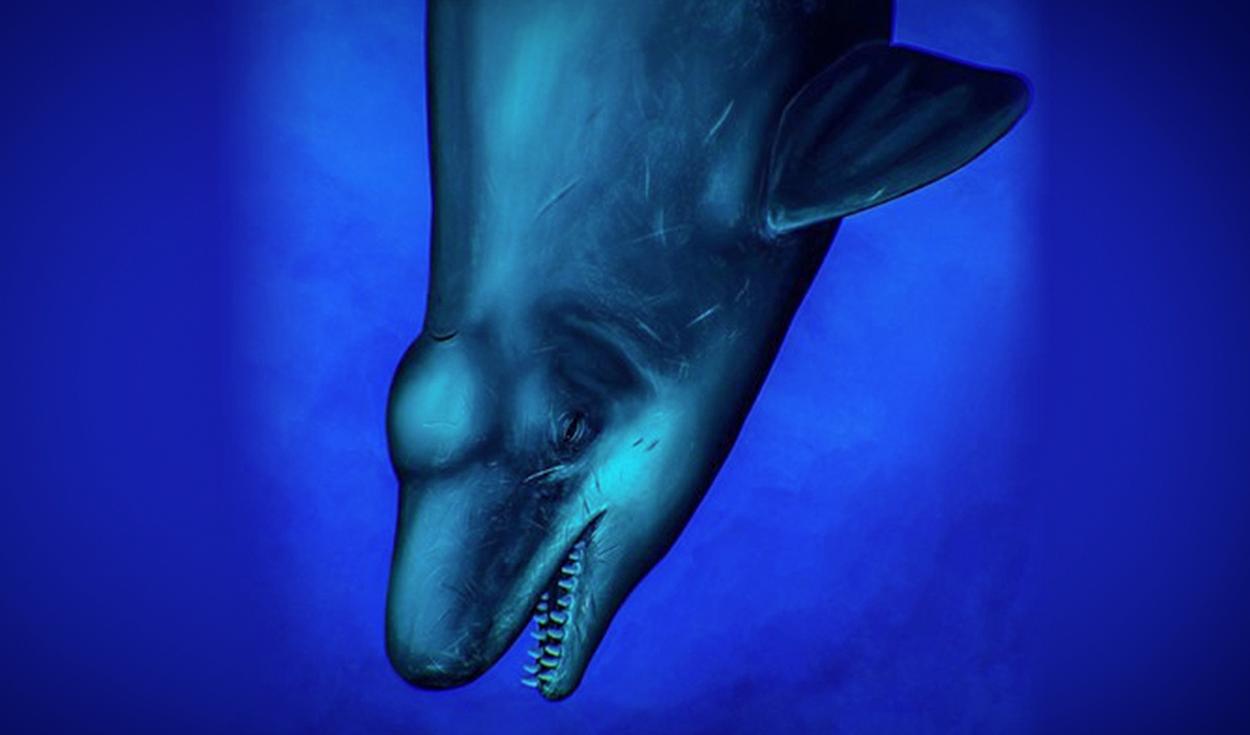
A fossil skull unearthed in southern Peru belongs to the most asymmetrical skull yet recorded among cetaceans, researchers have confirmed, after identifying the specimen as a new species of pygmy sperm whale that lived nearly 6 million years ago.
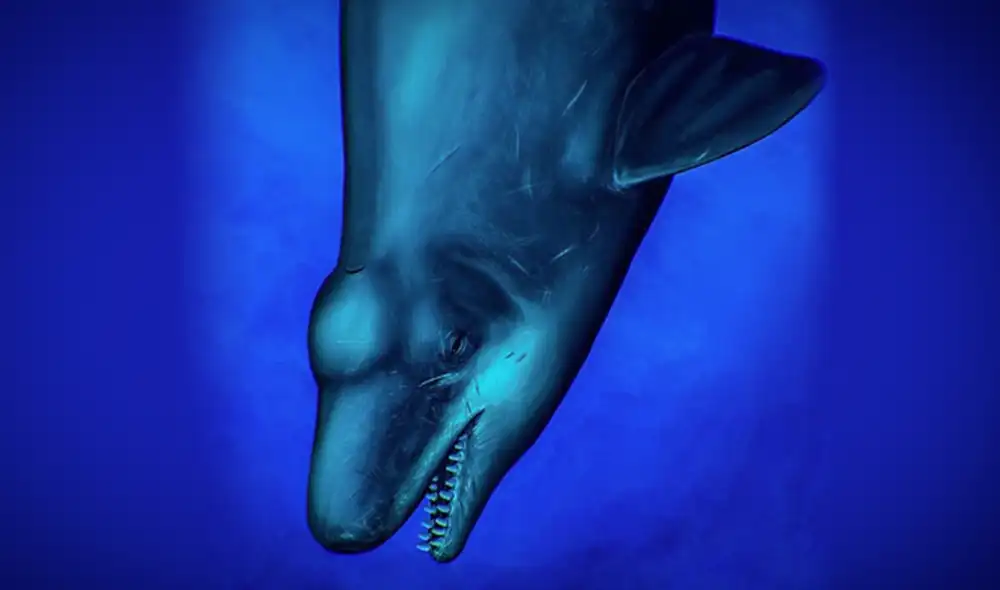
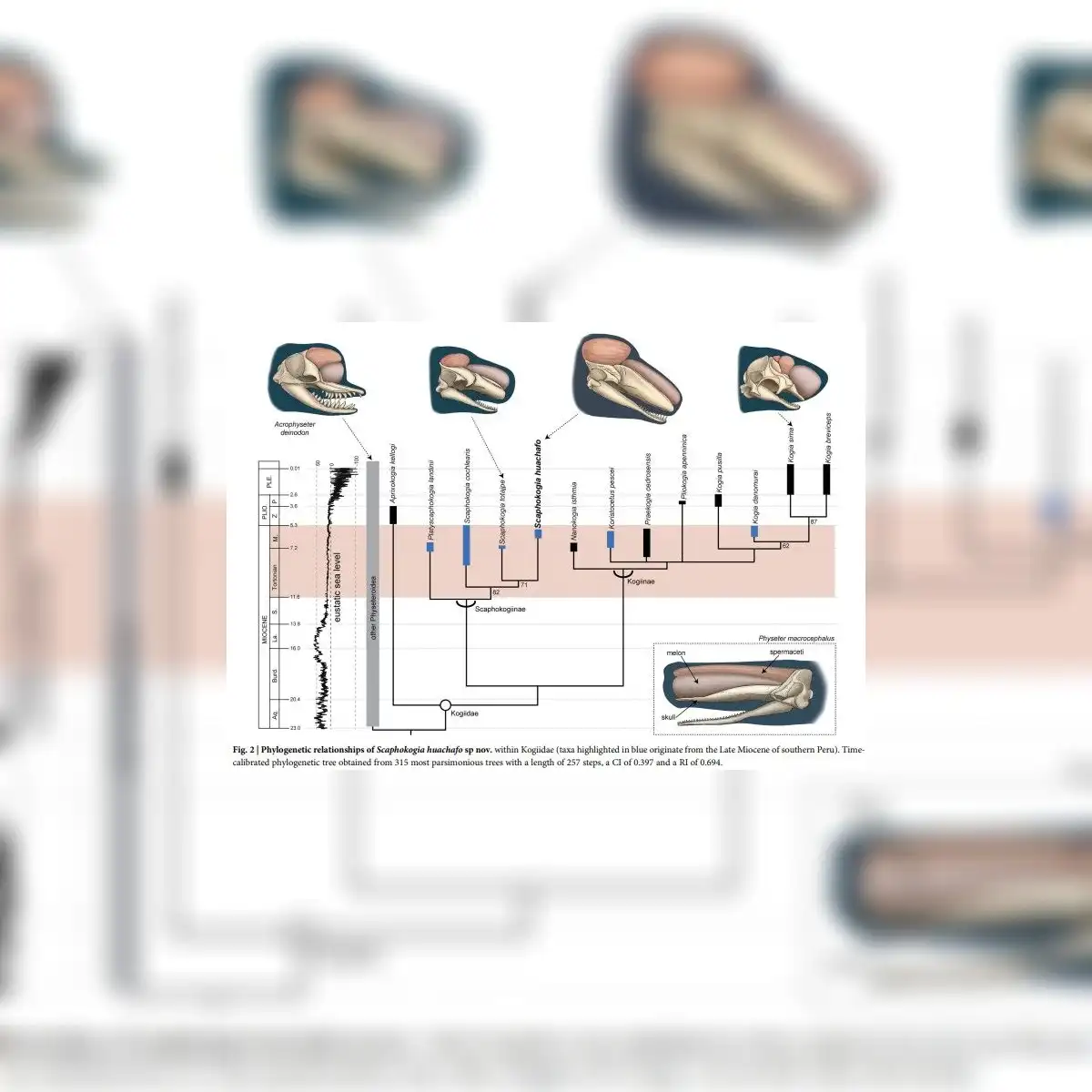
The fossil, named Scaphokogia huachafo, was first discovered by Peruvian paleontologist Mario Urbina in the mid-1990s in the Sacaco basin, at a site called Aguada de Lomas in the Arequipa region of southern Peru. The animal grew to about 2.7 meters long and swam in the waters off what is now Peru between 5.6 million and 6.3 million years ago, during the late Miocene.
The Natural History Museum of the National University of San Marcos (UNMSM) presented the historic specimen to the public in November 2026, at its site in Jesus Maria, Lima. The study found that Scaphokogia has the greatest cranial asymmetry of any genus among the marine mammals examined, and it was published in the journal Communications Biology.
Lead researcher Aldo Benites-Palomino told the official newspaper El Peruano that the species name huachafo refers directly to the extravagant proportions of the animal's head.
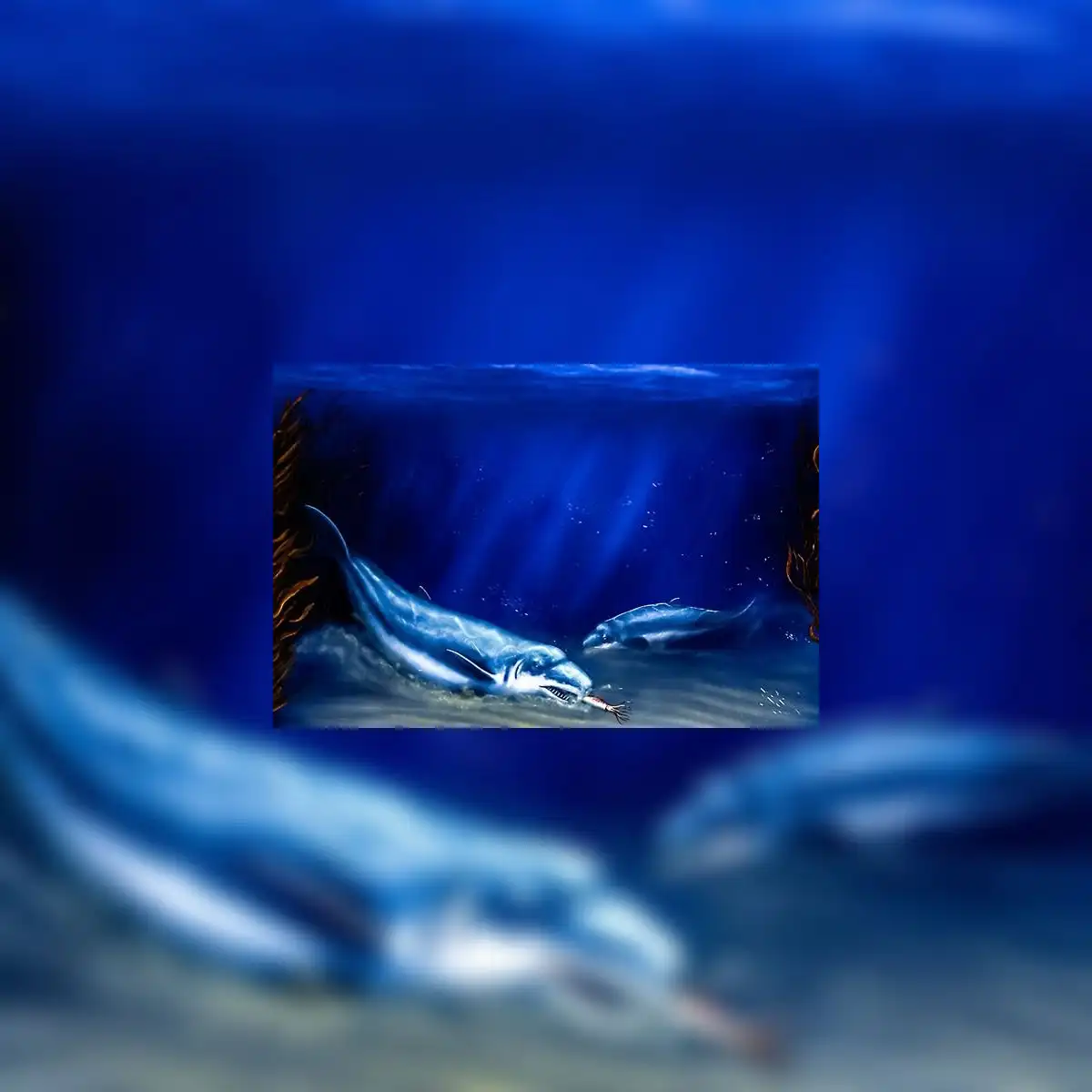
Pygmy sperm whales belong to the family Kogiidae, a group of small toothed whales distantly related to the much larger common sperm whale. Peru's southern coast, and the Sacaco basin in particular, has long been a source of marine mammal fossils from the Miocene epoch, when the region was covered by a shallow sea rich in marine life.
How scientists confirmed the asymmetry was natural
To rule out that the skull's unusual shape was the result of distortion over millions of years, the team built a three-dimensional reconstruction using 37 anatomical landmarks. They compared the fossil's facial structure with 31 groups of living and extinct toothed cetaceans, measuring the bone differences between the two sides of the face and the position of each nasal opening relative to the midline.
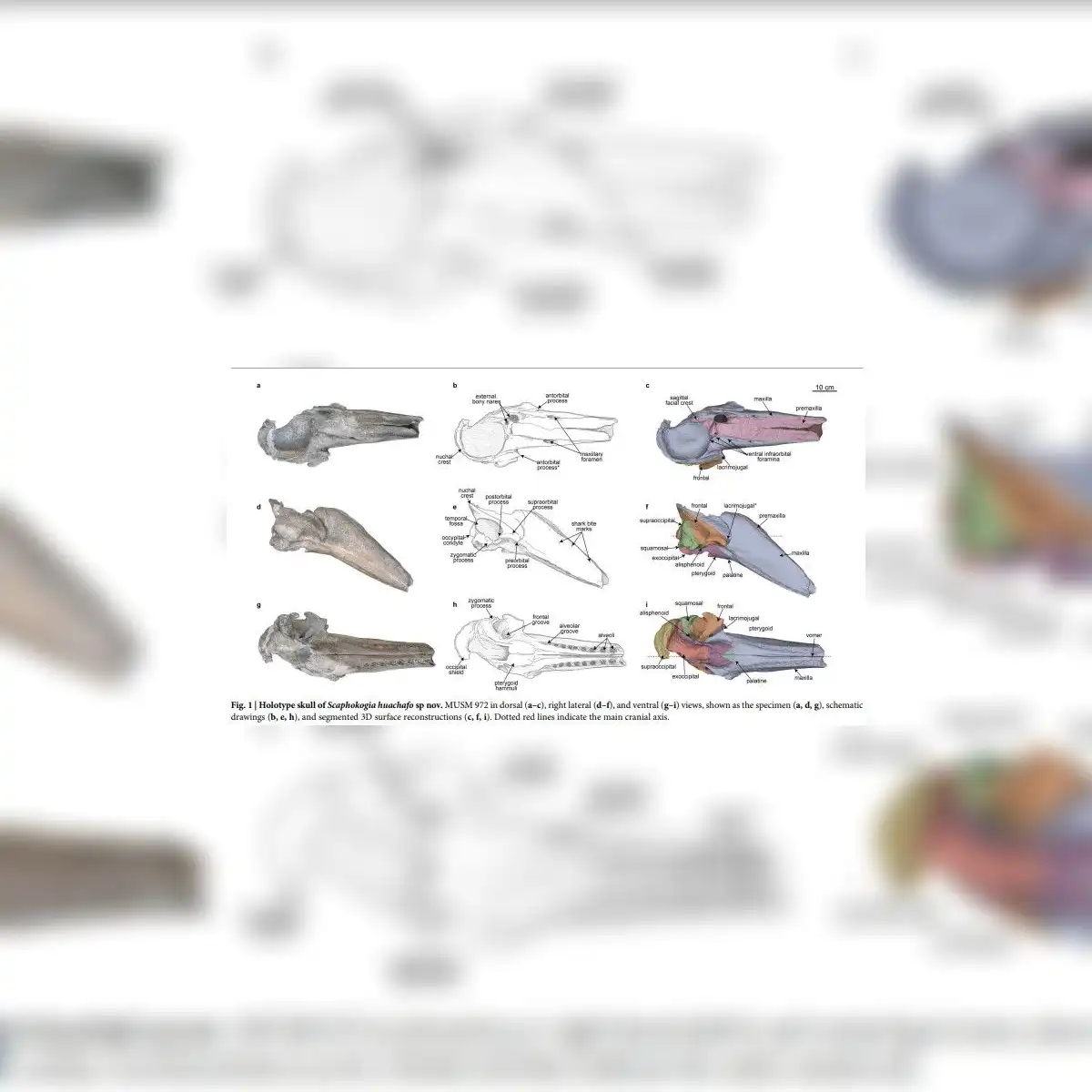
The nostrils were clearly shifted to the left, with a notably wider cavity on that side. This configuration placed Scaphokogia huachafo at the upper limit of asymmetry within its family, though a second species in the same genus, Scaphokogia totajpe, recorded the highest asymmetry index of all when the premaxillary bones were assessed.
The researchers also ruled out the possibility that the weight of sediment had deformed the skull over time. The sutures in the bone were closed, and there were no fractures or pathologies. Urbina told El Peruano that the skull looked like a brick, and that no one could make out its shape just by looking at it.
How the whale hunted along the seafloor
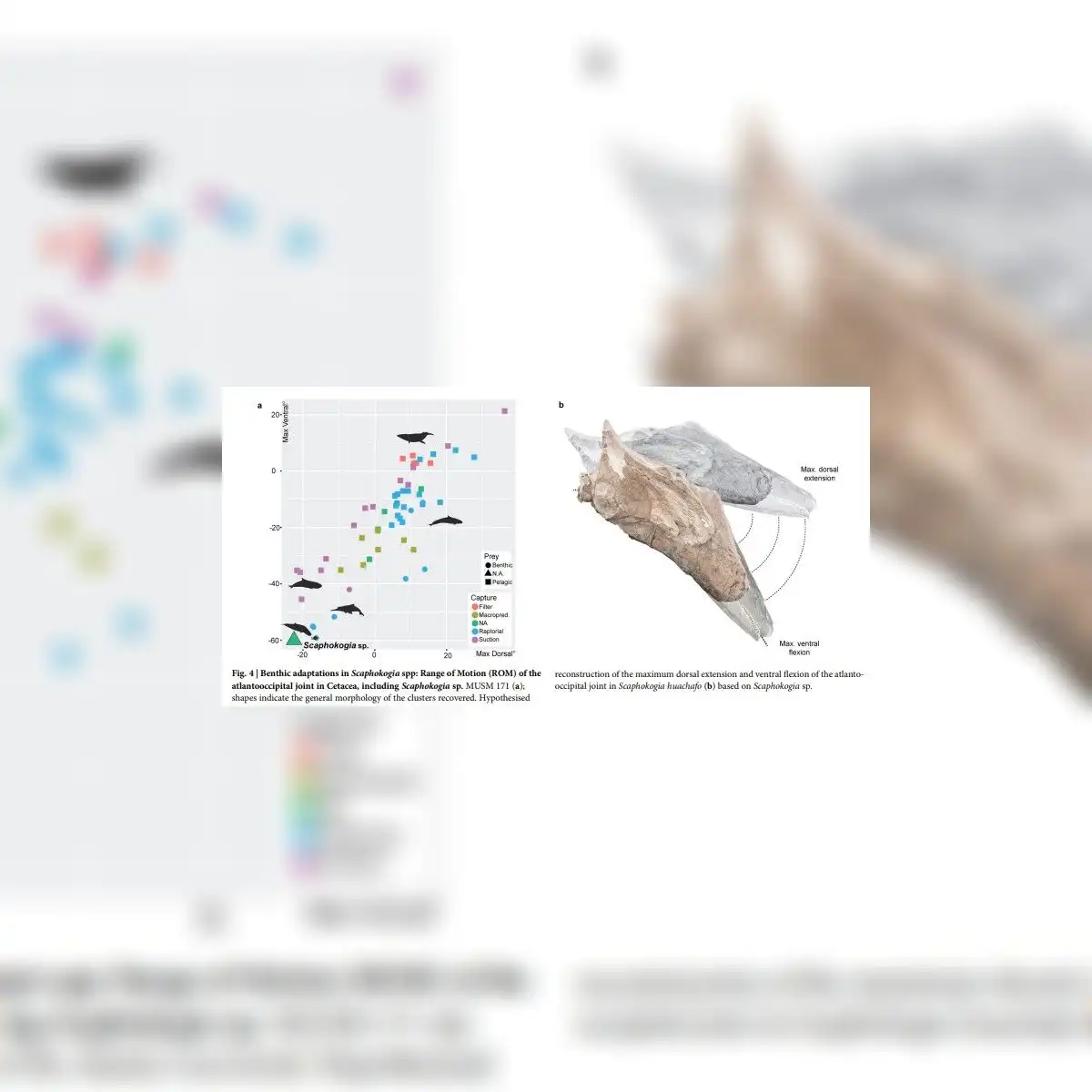
The whale's tubular snout sloped downward at 31 degrees relative to the skull's axis. Strengthened by dense bone and partially ossified cartilage, the structure acted as a natural ballast, shifting the animal's centre of gravity forward. That distribution of mass let the whale keep its face close to the ocean floor as it moved through shallow coastal waters.

To work out how far the whale could move its head, researchers at the University of Zurich reconstructed the neck joint using a second specimen of the same genus that still had its first vertebra preserved. The analysis showed that at maximum flexion, the snout could reach an angle of up to 55 degrees relative to the body axis. Co-author Gabriel Aguirre-Fernandez said the entire skull-and-neck structure had been reshaped to point the snout directly toward the seafloor, according to the findings published in Nature.
A theory on how it fed
Specialists believe the whale used echolocation to scan soft sediment, sending out sound waves toward the seabed and interpreting the echoes to locate prey hidden in the mud. The bone structure points to a highly developed vocal system, but because soft tissue does not survive fossilisation, the exact mechanism the whale used to produce those sounds cannot be confirmed.
Test yourself
Where was the Scaphokogia huachafo fossil discovered?
What does the name "huachafo" refer to, according to lead researcher Aldo Benites-Palomino?
What angle could the whale's snout reach at maximum flexion, according to the University of Zurich reconstruction?
Have your say
How interesting do you find discoveries like this fossil whale skull?
Where it happened
Arequipa, Peru