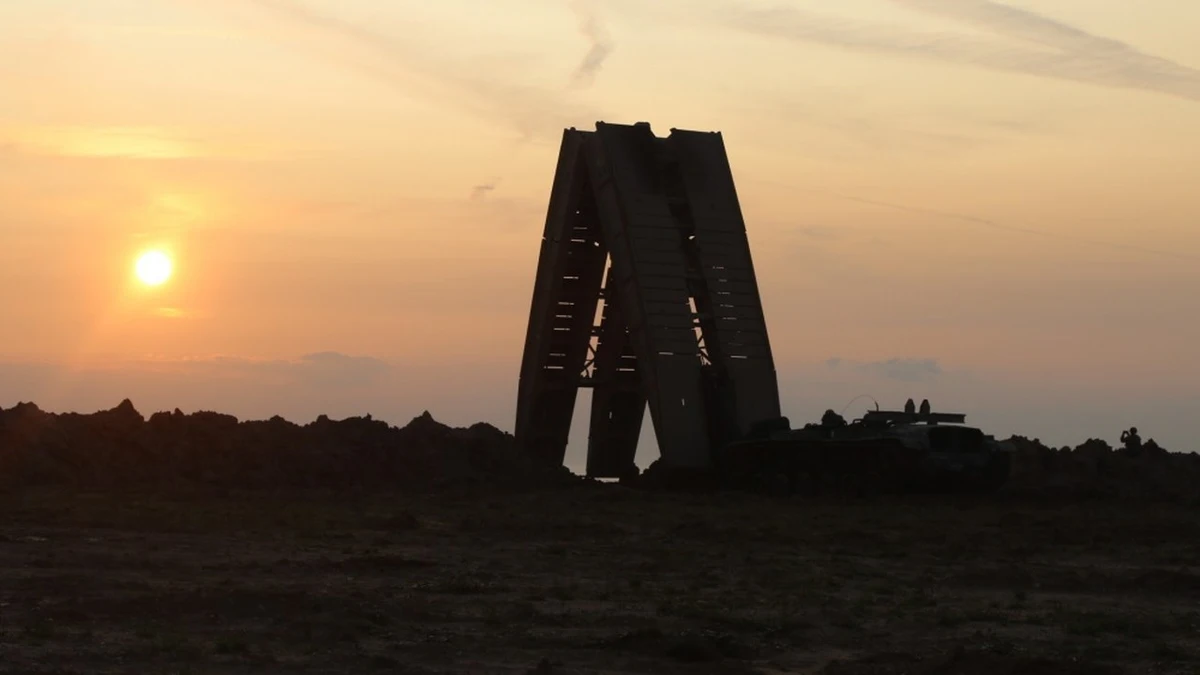
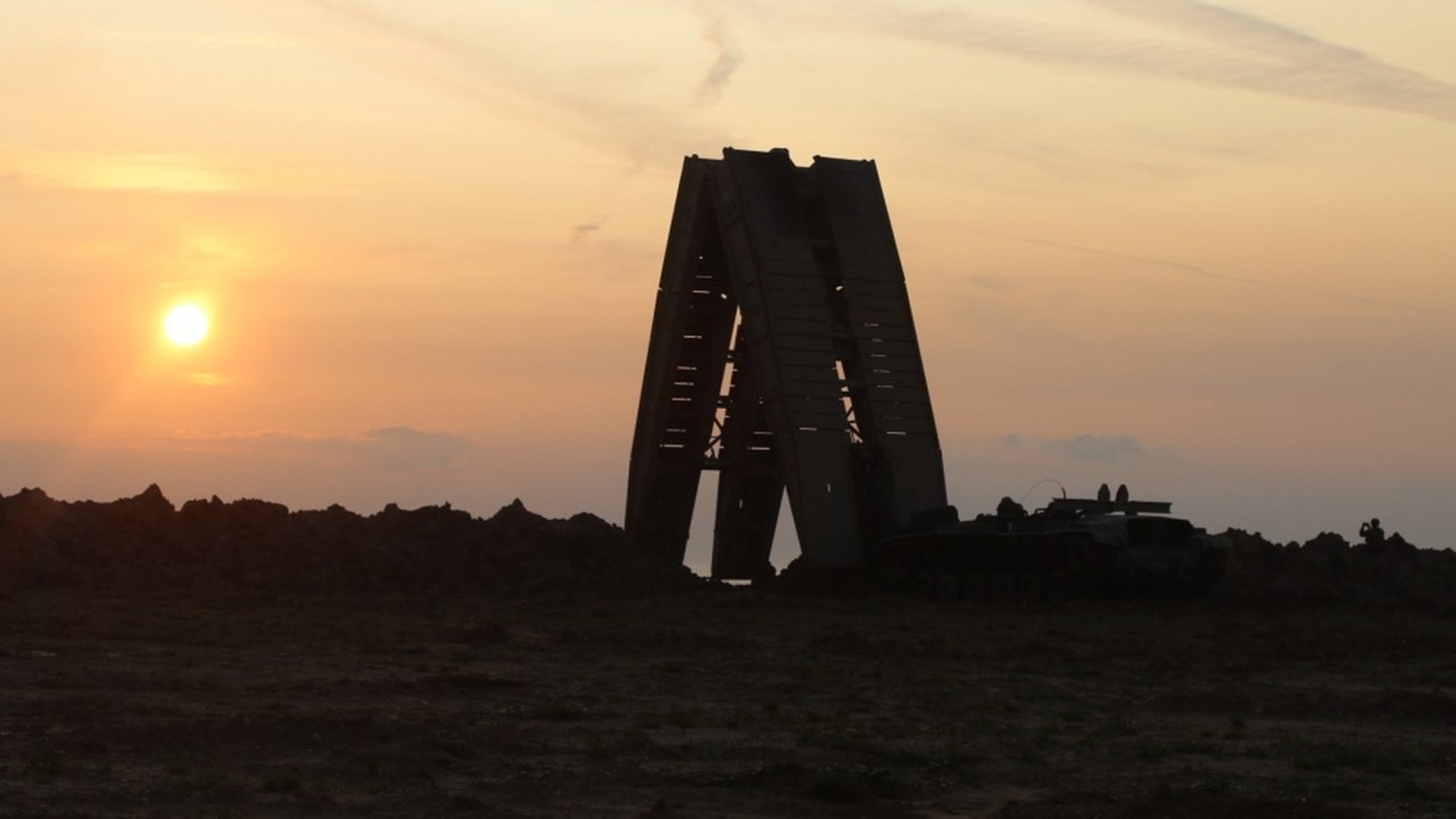
A single soldier will be able to deploy a 24-metre bridge over a river or a collapsed road in under 20 minutes without leaving the driver's seat, according to Spanish defence company Indra, which is developing a new wheeled bridge-laying vehicle for Spain's Army.
The manufacturer's technical specifications describe a truck that pulls up to the edge of a gap and lays a bridge of up to 24 metres across it. The crew is set at two people, but only one is needed to operate the bridge itself. From the protected cab, one of the occupants can control the equipment that places or retrieves the span, and the 20-minute figure applies to that single manoeuvre. A full convoy would still need however long each vehicle takes to cross once the bridge is down.
The Army wants the new vehicle to travel alongside units equipped with the Dragón, Spain's new wheeled armoured vehicle. According to the defence news outlet Defensa.com, the programme covers 32 systems, and the first prototype is expected to be mounted on a truck before the end of 2026. That integration will offer one of the first chances to test the manufacturer's figures against the real performance of the finished vehicle.
A bridge that travels with armoured units
When a road collapses, the gap that blocks traffic can be far smaller than the detour needed to find another crossing. That is the problem the bridge-layer is designed to solve. Indra's specifications cover both water-filled gaps and dry breaks, including ditches. The vehicle is part of a wider modernisation of the Army's equipment, which also requires updating the support vehicles that move with armoured units.
The load rating given to the bridge is MLC 80, a military load classification that Indra applies to both wheeled and tracked vehicles. The number comes from a standard system used to classify bridges and vehicles together, and on its own it is not enough to say whether any given truck of a certain weight can cross. That distinction matters in a fleet that mixes very different vehicles, from tracked armour to wheeled transports.
Monitoring the bridge after it is placed
Indra's technical sheet also covers what happens once the span is in place. The system will monitor the condition of the structure and keep a record of any incidents. For maintenance crews, that log could matter as much as the speed of the first deployment, since a bridge that travels with a unit needs to be ready the next time a road is cut.
Production set for As Pontes from 2027
Each system will include a main vehicle and an auxiliary one. Industry plans place the integration of the bridge-layers at As Pontes, in the province of A Coruña, starting in 2027. Training crews and keeping the vehicles in service are also part of the programme, work that will continue after the first units leave the factory and that ties into the wider training of Army officers and specialists.
A use beyond the barracks
Indra also lists natural disaster response among the vehicle's intended uses, for situations when flooding cuts a road or isolates a town. Emergency services depend on the same access routes as military convoys.
For rescue teams, Indra suggests the bridge's usefulness would be measured in the number of trips it allows. A gap of just a few metres can block the route for ambulances and supply trucks for days. When the nearest crossing fails, aid and the people waiting for it can end up separated by only a couple of dozen metres, on opposite banks.
What happens next
The first prototype is expected to be mounted on a truck before the end of 2026, and production integration of the systems is planned to begin at As Pontes in 2027.
Test yourself
How long does Indra say it takes to deploy the bridge?
How many bridge-laying systems does the programme plan to acquire?
Where is production integration of the vehicles planned to begin in 2027?
Have your say
Should militaries invest in specialised equipment like bridge-laying vehicles that also help during natural disasters?
Where it happened
As Pontes, Spain