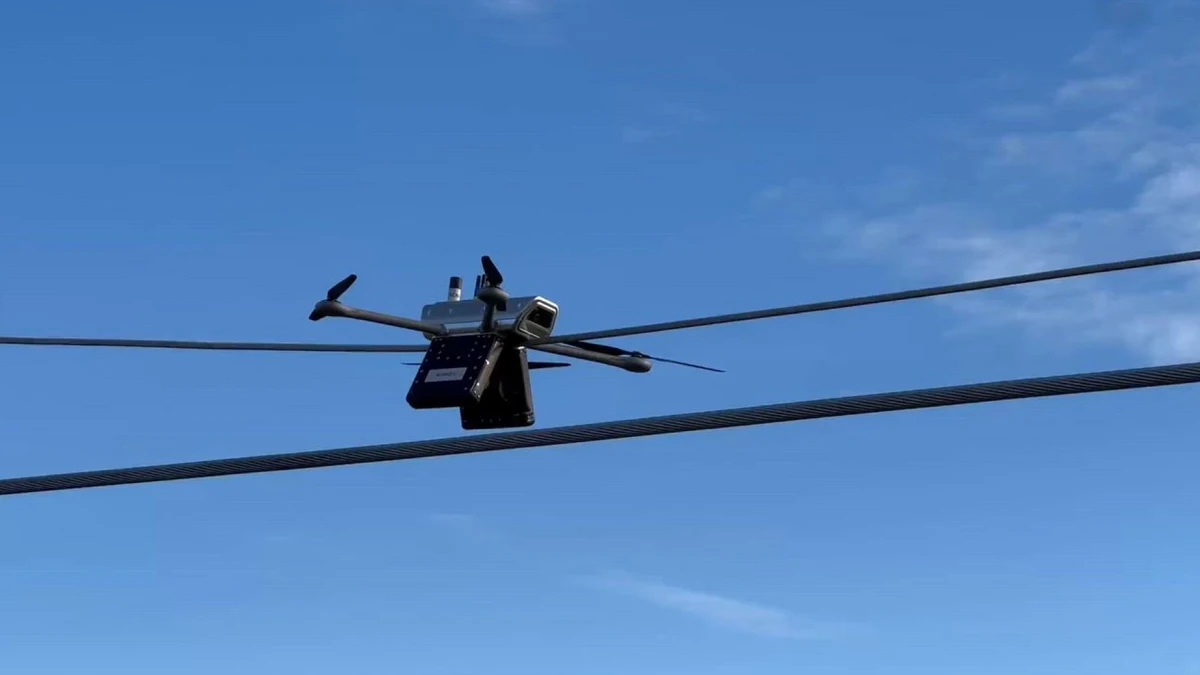
Nomadic, a technology company building autonomous drones for power grid monitoring, says its devices have now logged more than 20,000 hours of operation on electricity networks in the United States, Germany and Norway. The drones attach directly to live power cables and draw their own energy from the lines, letting them take measurements without interrupting the electricity supply.
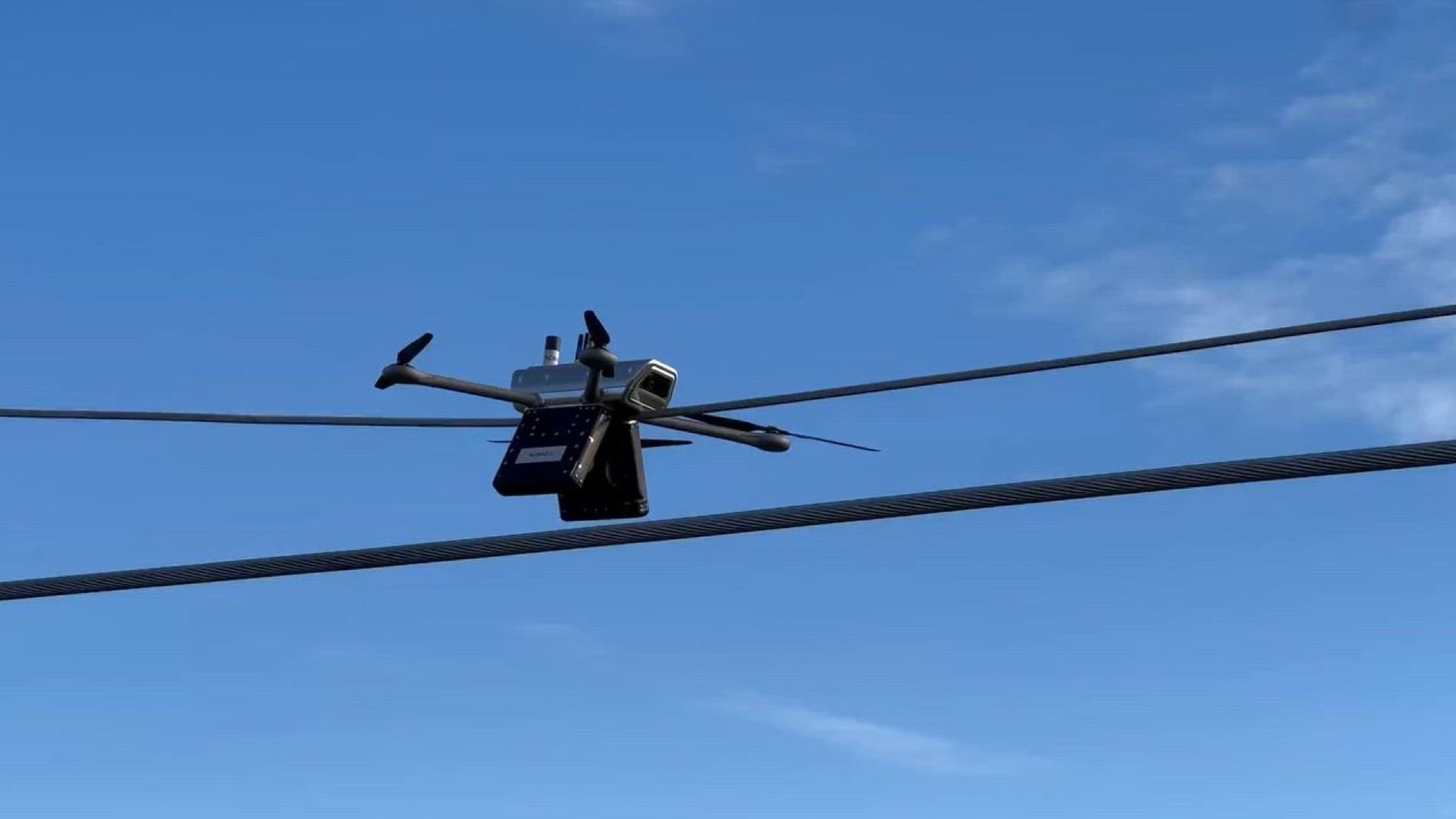
The drones weigh about 4 kilograms and connect to an energized conductor, drawing power through electromagnetic induction, according to the company. That means operators no longer need to swap out batteries or build dedicated charging infrastructure for the devices, and the drones can keep watching transmission conditions continuously.
How the drones work
The aircraft can reach a site within minutes, Nomadic says, cutting out the preparation and temporary line shutdowns usually needed when equipment has to be mounted on an active cable, along with the safety measures that specialist crews normally have to take before working on live lines.
High-voltage transmission lines, the cables that carry electricity over long distances before it reaches homes and businesses, typically run at tens or hundreds of kilovolts. Nomadic says its drones can operate at voltages of up to 420 kilovolts, which it describes as the upper range found in European infrastructure. The devices can also keep working at temperatures as low as minus 25 degrees Celsius, drawing the power they need to stay reliable even in freezing conditions, according to the company.
Covering more ground than fixed sensors
Because the drones move along the lines rather than sitting in one place, Nomadic says they can monitor close to 25 kilometers of transmission infrastructure at a time. That compares with the one to five kilometers typically covered by a fixed monitoring device installed permanently on the grid. The company says this lets operators gather data over longer stretches of line without adding more fixed sensors.
Nomadic has built its own software to analyze the measurements its drones collect. The system also factors in historical data on the power lines, weather conditions and models of how the electrical grid behaves, the company says.
Funding and what comes next
The drone monitoring project is now Nomadic's main focus, and the company has raised $6 million in seed funding. Backers include Foundamental, Verve Ventures and Cyan Ventures, alongside early investors Outlander VC and Asia2G Capital and a number of individual investors, according to Nomadic.
Nomadic's next goal is to expand its drone fleet with electricity providers in more locations across Europe and the United States. The company also wants to offer remote repositioning for some commercial clients, so drones could be redirected to different sections of a power grid without being physically retrieved and redeployed, Nomadic says.
What happens next
Nomadic plans to deploy its drone fleet with electricity providers in more locations across Europe and the United States, and wants to offer remote repositioning so drones can be redirected to different grid sections without being physically retrieved.
Test yourself
How do Nomadic's drones get the power to operate?
How many hours of operation have Nomadic's drones logged across grids in the US, Germany and Norway?
How much transmission infrastructure can one of Nomadic's drones monitor, compared with fixed sensors?
Have your say
Would you support power companies using drones like Nomadic's to monitor electrical grids?