


The world's largest photovoltaic park, the Gonghe solar complex in China's Qinghai province, has triggered an unexpected ecological transformation beneath its panels, according to researchers who studied the site.
Vast stretches of dark blue silicon panels are cushioning the wind, cutting solar radiation and preserving ground moisture on the Tibetan Plateau. The Gonghe park, which has a capacity of 21 gigawatts, sits in a semi-arid zone that has long been affected by desertification.
How the panels changed the soil
Researchers from the Chinese Academy of Sciences and local universities found that the panels reduce direct radiation and cut wind speed by as much as 50%, keeping the soil cooler and more humid during the day.
That combination has allowed native grasses and shrubs to return to the area on their own, the researchers said. Plant biomass in the area beneath and around the panels has increased by more than 80% compared with the surrounding desert.
An unexpected maintenance problem
The regrowth of grass and shrubs has created a headache for those running the solar complex. During the dry season, tall vegetation raises the risk of electrical fires and can grow high enough to cover the panels, cutting their energy conversion efficiency.
State Power Investment Corporation, the company that operates the park, had to look for an alternative to constant manual maintenance.
Thousands of sheep as an ecological maintenance tool
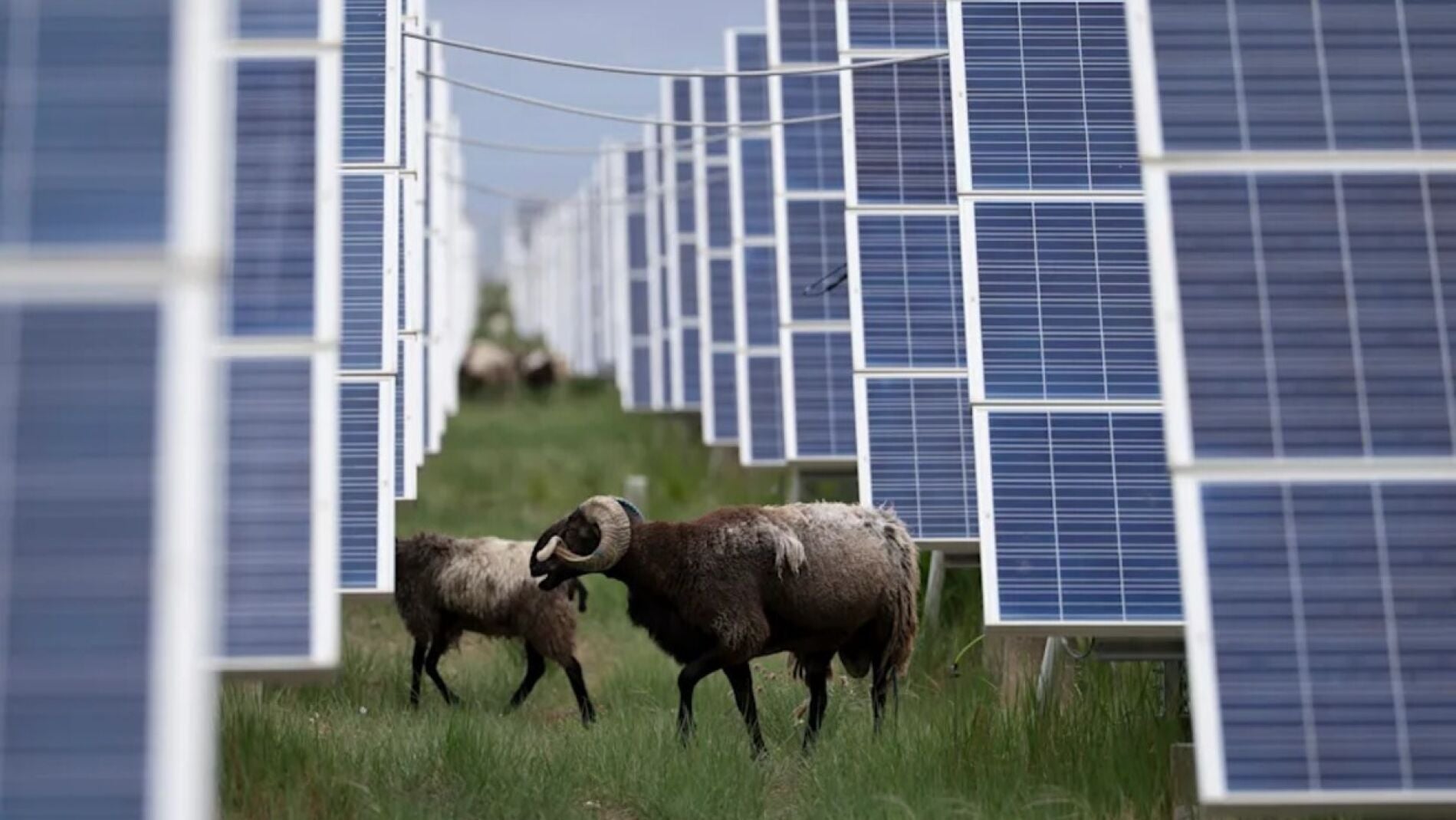
Rather than turn to herbicides or heavy machinery, local authorities reached an agreement with herders in Gonghe county to bring thousands of sheep inside the perimeter of the solar park. Controlled grazing keeps the vegetation at a safe height and avoids operational risks, folding livestock farming into the management of the energy infrastructure.
The combination of electricity generation and grazing has produced a model known as agrivoltaics, or eco-photovoltaics, in which the flocks carry out the park's vegetation maintenance naturally.
Cutting soil erosion in half
Environmental measurements show that this integration of grazing and solar power has cut soil loss from wind erosion by more than half, turning a degraded area into what researchers describe as a productive green corridor. The findings feed into wider debates about how energy infrastructure can be combined with ecological restoration.


