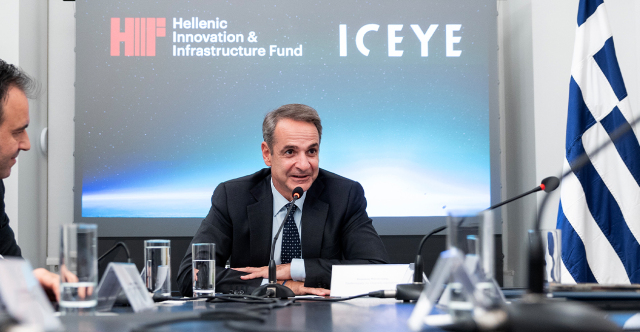
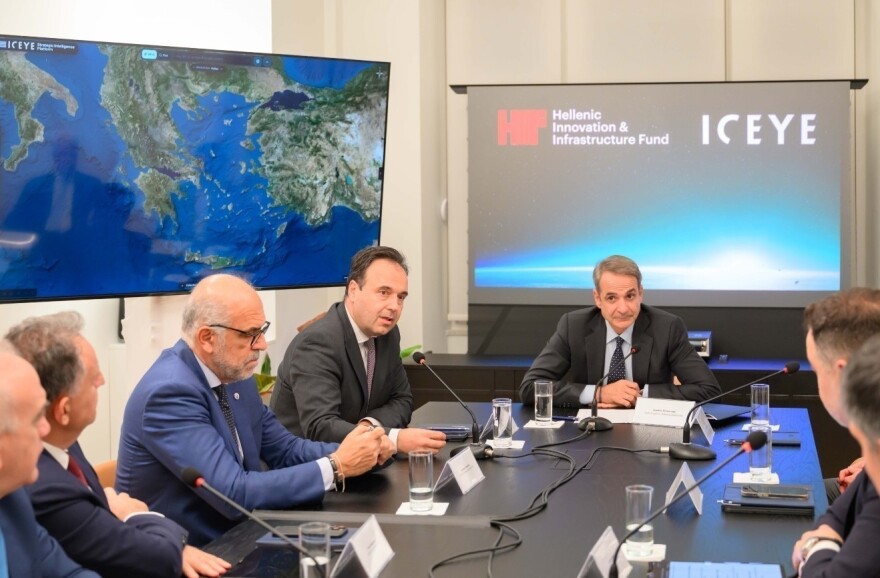
The Hellenic Innovation and Infrastructure Fund has invested 35 million euros in satellite technology company ICEYE, Greek officials announced in Athens, according to Greek media reports.
The deal represents the inaugural investment by the fund, which serves as the specialized financing arm of Greece's National Development Fund. Greek Prime Minister Kyriakos Mitsotakis attended the official presentation in Athens on Wednesday, saying the transaction demonstrates that the country's economic production model is undergoing a drastic change.
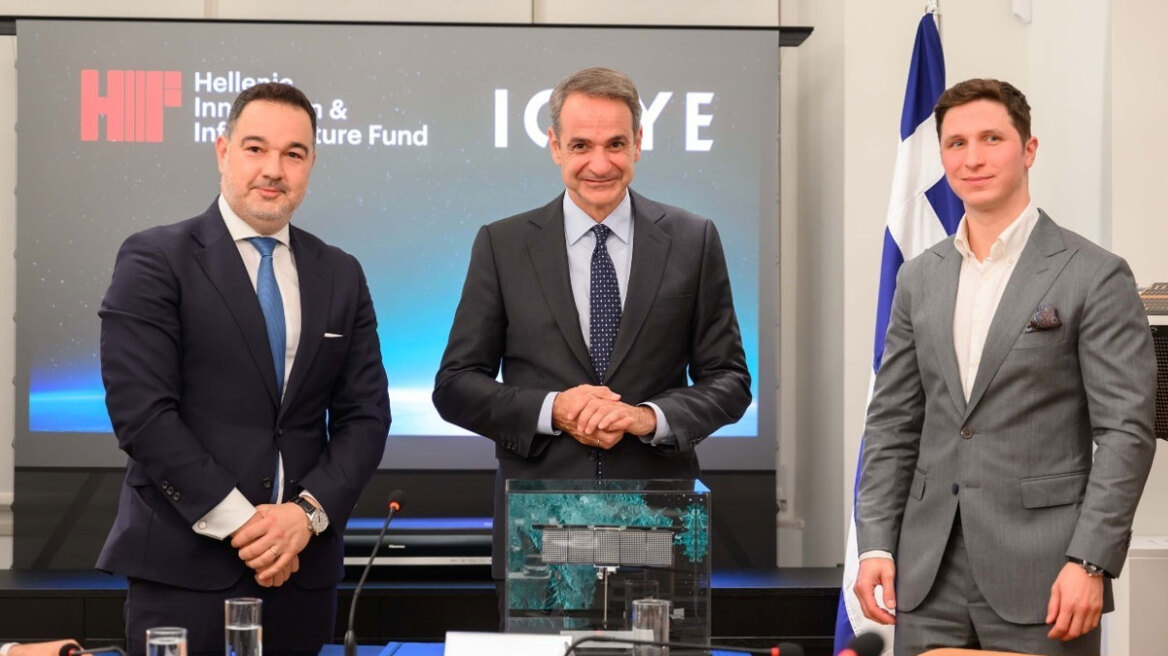
The announcement coincided with the 18th annual meeting of the International Forum of Sovereign Wealth Funds, an event hosted in the Greek capital by the Growthfund and attended by more than 200 sovereign wealth executives from around the world.
Manufacturing hub and high-tech jobs
The agreement finances ICEYE's expansion in Southeastern Europe, where the Earth observation company plans to establish its largest European production facility. The proposed plant will be equipped to handle full assembly, integration, and testing of satellites, alongside the domestic manufacturing of key subsystems.
Under full operation, the facility is scheduled to build up to 150 satellites annually. Project plans project the creation of more than 250 highly skilled jobs by 2028, supported by sustained investments in research and development.
ICEYE operates synthetic aperture radar satellites capable of capturing high-resolution imagery through clouds, smoke, and total darkness, both day and night. Government authorities use the data for national defence, maritime surveillance, border security, critical infrastructure protection, and civil disaster response during floods and wildfires.
Funding round and international backing
The Greek investment was executed through the acquisition of preferred shares as part of ICEYE's Series F primary financing round, which raised 485 million euros. The transaction agreement was signed on 30 September 2026 and finalized in October 2026.
The Series F primary round attracted major global financial institutions, including General Atlantic and private equity group EQT, the latter participating through the European Commission's Scaleup Europe Fund. Sovereign wealth funds from Qatar, Finland's Solidium, and Finnish state fund Tesi also committed capital to the round.
ICEYE's existing investor base includes asset manager BlackRock, venture firms General Catalyst, Draper, Seraphim Capital, and DNX Ventures, as well as French sovereign fund Bpifrance and Poland's BGK bank. When paired with secondary share sales, the total volume of the Series F round surpassed one billion euros.
Strategic goals for Greek industry
HIIF was established as the direct investment arm of the National Development Fund to deploy capital into sectors essential to economic modernization, including digital infrastructure, green energy, and the circular economy. Operating with an initial capital allocation of 300 million euros, the fund aims to mobilize one billion euros in total investment over the next three years by attracting private and international co-investors.
HIIF Chief Executive Officer Stelios Frangos called the ICEYE transaction a strategic step that directly reinforces domestic industry and builds advanced manufacturing capabilities. He said establishing a large-scale satellite factory inside Greece anchors the domestic space ecosystem and establishes concrete conditions to draw further global institutional capital.
Giannis Papachristou, the Chief Executive Officer of the National Development Fund, said investing in the new economy represents a central priority in shifting the organization from a passive asset holding manager to an active investor. He emphasized that directing state-backed funds into cutting-edge sectors will help retain domestic specialists and encourage Greek professionals living abroad to return home.
Upcoming tenders under HELLAS-SPACE 2.0
Minister of Digital Governance and Artificial Intelligence Dimitris Papastergiou said the transaction advances the country's broader space ambition, which began under the National Microsatellite Programme. He stated that the government intends to ensure Greek scientists can design and manufacture advanced space hardware inside their own borders.
Papastergiou revealed that the government will launch public tenders under the HELLAS-SPACE 2.0 initiative before the end of November 2026. Those tenders will cover Greek-owned optical and thermal observation satellites designed for maritime and border monitoring, environmental tracking, and detecting wildfire hotspots at night.
A second wave of procurement tenders is scheduled to follow by late December 2026. According to Papastergiou, that phase will solicit bids for microsatellites capable of detecting radio frequency signals to track ships operating without identification transponders, space safety monitoring systems, and technologies for servicing satellites directly in orbit.
Papastergiou said space is no longer a remote domain for Greece, arguing that the nation can take a leading role through sovereign infrastructure, specialized know-how, and domestic talent.
Retaining scientific talent at home
ICEYE Chief Executive Officer and co-founder Rafal Modrzewski said the partnership marks a reciprocal relationship with the Greek state, which previously engaged the company through its satellite initiatives and has now become an equity shareholder. He noted that the company's local team in Athens proved over the past two years that Greece can assemble world-class spacecraft, adding that the upcoming facility will help Europe maintain independent orbital observation.
Vasilis Chaloulakos, the Chief Executive Officer of ICEYE Hellas, credited the local engineering workforce with meeting strict technical milestones and collaborating closely with domestic institutions. He said the project allows Greek engineers to conduct cutting-edge aerospace work without moving overseas, while providing the public with enhanced security and disaster resilience.
The announcement ceremony in Athens brought together top corporate and government leaders, including Stefanos Theodoridis, Chairman of the National Development Fund, and Georgios Kofinakos, Chairman of HIIF.