Ancient Aegean elites in Bronze Age Greece wore luxury rings forged from meteoritic iron fallen from space, according to research published in the Journal of Archaeological Science.
A team of researchers conducted a five-year investigation analyzing the chemical composition of more than 100 artifacts dated between 3,800 and 3,000 years ago. Scientists focused their analysis on 91 iron items to determine whether early Mediterranean societies utilized cosmic metal before mastering terrestrial iron smelting.
The Aegean Bronze Age was dominated by advanced seafaring and mainland cultures, including the Minoans on Crete and the Mycenaeans in ancient Greece. During this era, iron was an exceptionally rare commodity because local populations lacked the furnace technology required to extract iron from earthbound ore.
Chemical analysis of royal rings
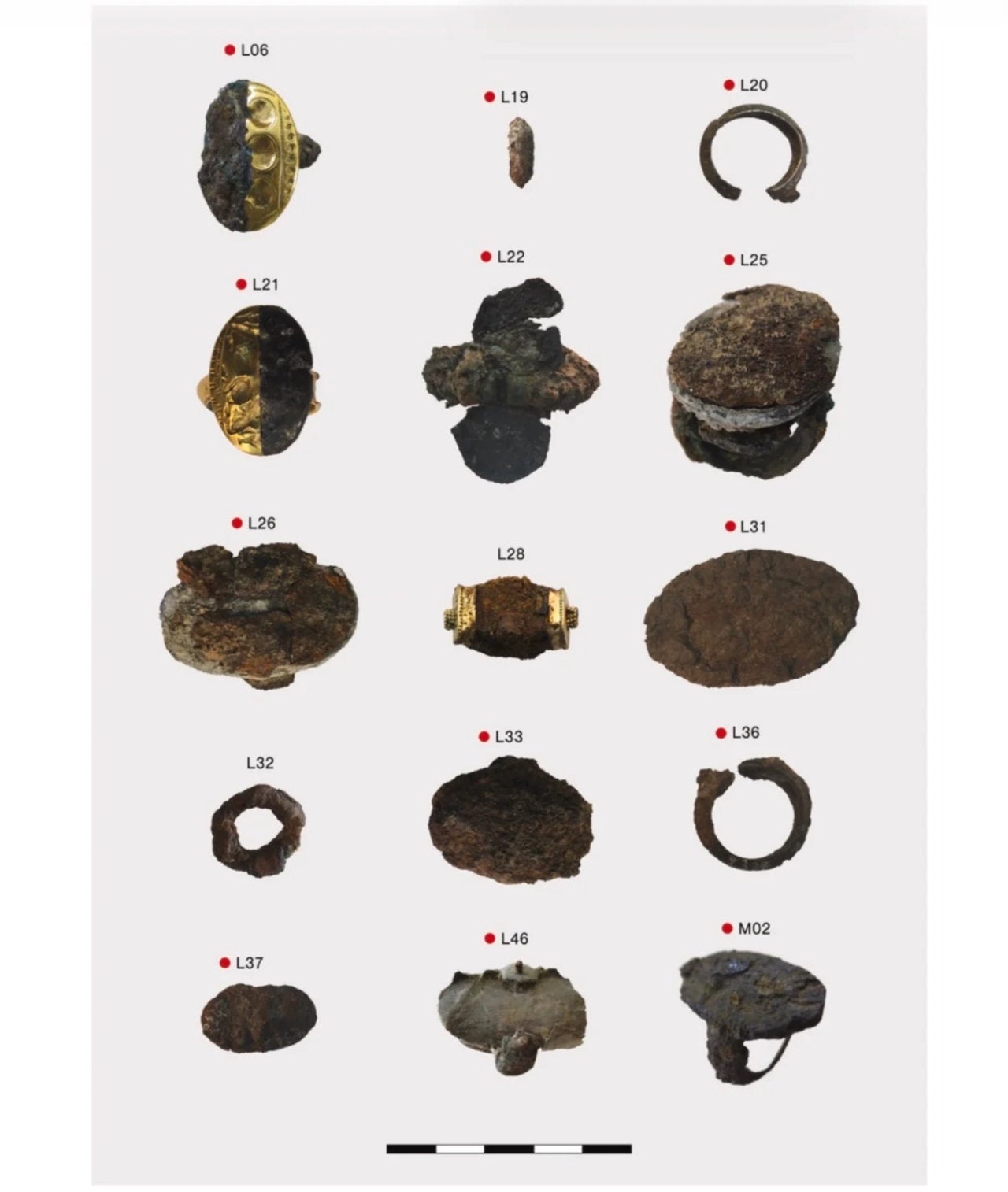
Using non-destructive X-ray fluorescence techniques, the research team discovered that 13 of the 91 iron objects contained significant levels of nickel. High nickel concentration acts as an unmistakable chemical signature of iron meteorites, distinguishing celestial metal from terrestrial ore.
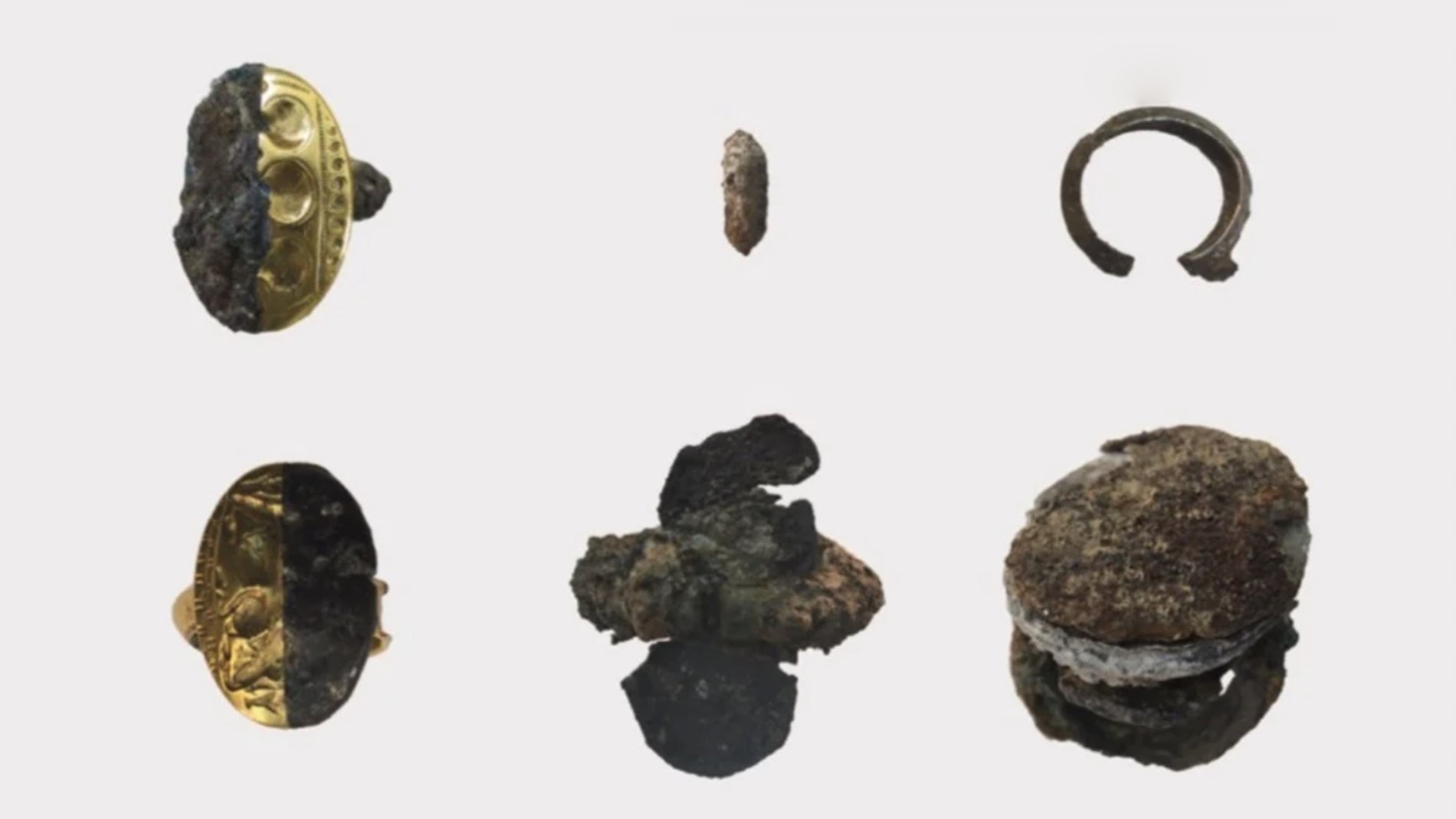
Every single one of the 13 meteoritic iron objects identified in the study was a luxury ring. Skilled artisans crafted the pieces by combining meteoritic iron with gold or silver, creating elaborate jewelry designed to set royal seals.
X-ray fluorescence spectrometry allows archaeologists to measure the elemental composition of historic items without causing physical damage. By reading the secondary X-rays emitted when an object is exposed to radiation, researchers can analyze rare museum artifacts safely.
Burial sites and status symbols
The discovery locations reinforced the social importance of cosmic metal among early Aegean elites. Archaeologists unearthed most of the rings from lavish burial grounds, including the royal tombs of Mycenae.
In one Minoan necropolis, researchers found a meteoritic iron ring still placed on the finger of what appears to have been a high priest. Scientists concluded that wearing jewelry forged from fallen meteorites served as the ultimate symbol of status and political power among ancient leaders.
Mycenae was a major center of Greek civilization situated in the northeastern Peloponnese. Its royal tombs, famed for rich grave goods, held the remains of elite leaders who ruled the region during the Late Bronze Age.
Trade routes and early smelting
The research indicated that the meteoritic iron used in the Aegean rings was likely imported from Egypt rather than sourced locally. Greece's coastal and mountainous environment, marked by high humidity and seawater, rapidly disintegrates or buries fallen meteorites, whereas arid Egyptian deserts preserve cosmic rocks for millennia.
The study also examined 78 artifacts made from earthbound iron ore. The findings revealed that local smelting of terrestrial iron began appearing in Greece around 1400 BC, reflecting a later metallurgical development compared to neighboring regions like Anatolia.
The demand for meteoritic iron rings came to an end around 1200 BC, when production ceased completely. Researchers suggested the decline was caused by supply disruptions, shifting Mediterranean trade routes, or changing fashion as the era drew to a close.