Retired Spanish Navy Admiral Juan Rodríguez Garat has warned that Morocco lacks submarines and could not survive a hypothetical war in the Strait of Gibraltar.
In an analysis published by Spanish news outlet El Debate, Garat evaluated potential conflict scenarios in North Africa and outlined strategies Rabat might employ to alter the territorial status quo. He noted that while open warfare between sovereign states remains rare in the 21st century, military doctrine requires constant preparation for improbable threats.
Garat warned that if Morocco decided to leave the Western orbit and sought to cover up internal domestic crises, leadership in Rabat could succumb to the temptation of provoking a direct conflict with Spain to divert public attention toward an external threat.
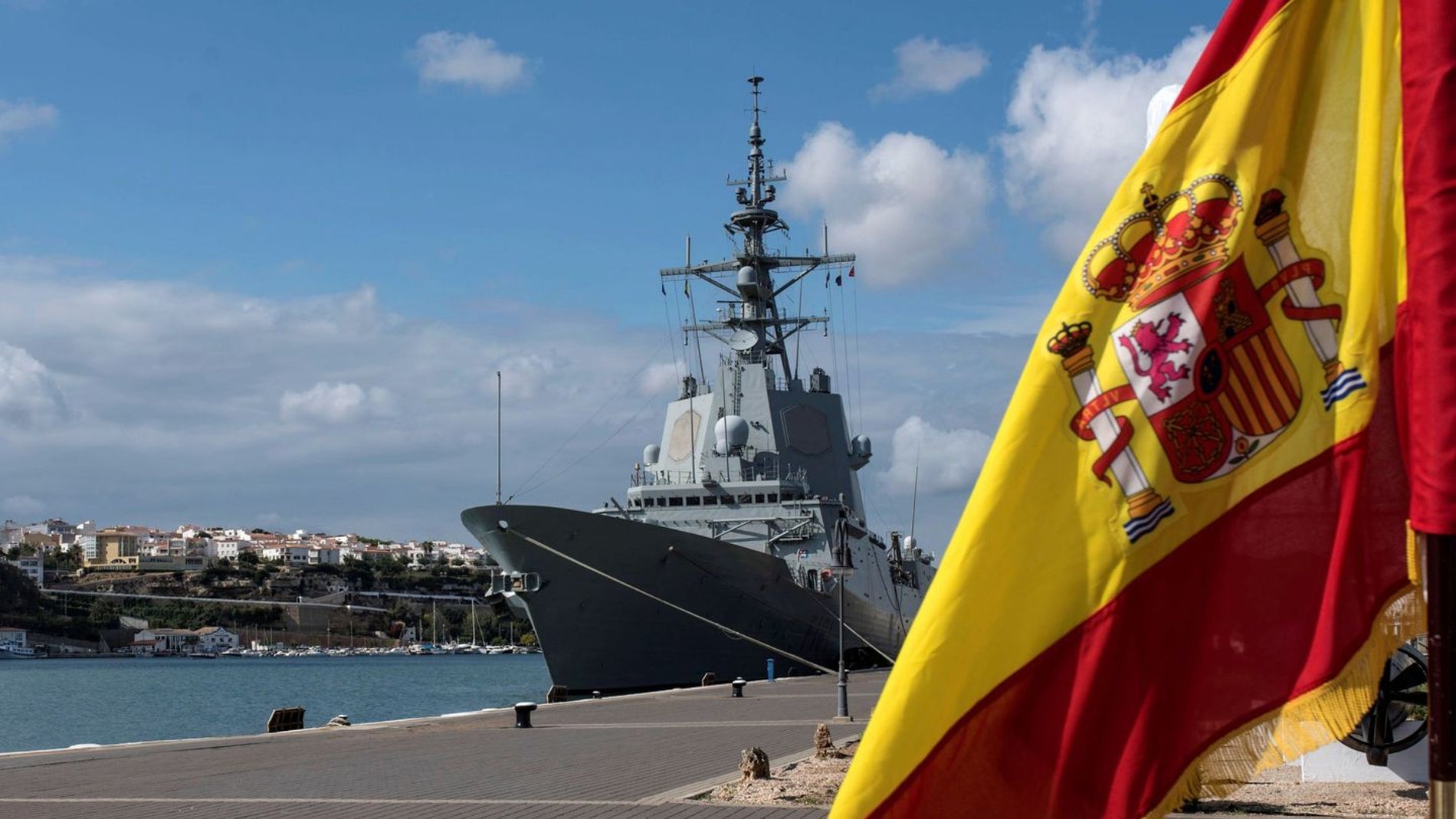
To carry out such a plan, Garat explained, Morocco would likely adopt a stratagem reminiscent of Russian President Vladimir Putin. The primary goal would be to present Morocco to the international community as the aggrieved party, buying critical time to delay external diplomatic or military intervention while establishing new territorial facts on the ground as faits accomplis.
Economic and Structural Advantage
Analyzing defense capabilities, Garat stressed that modern warfare extends far beyond front-line military engagements, developing instead into a comprehensive struggle between entire societies. In such a conflict, he stated, the balance of power leans decisively toward Europe.
Spain maintains a fully developed society supported by a relatively powerful defense industry and civilian infrastructure that is far superior to Morocco's. Garat highlighted Spain's network of hospitals, universities, and highway systems as key structural assets that are decisive in sustaining a prolonged war effort.
Economic capacity presents another major disparity between the two nations. Although official military spending figures frequently involve government cosmetic adjustments, Garat emphasized that Spain's Gross Domestic Product creates an insurmountable gap. Even though Spain allocates barely 1 percent of its GDP to the Armed Forces while Morocco spends more than 4 percent, Spain's annual defense budget remains double that of the Alawite Kingdom.
Deterrence and Regional Defense
Evaluating military strength, Garat argued that traditional metrics are no longer effective. He observed that 19th-century naval dominance, when the United Kingdom measured power by counting cannons and ironclad warships, is obsolete, as is the Cold War practice of tallying Warsaw Pact armored divisions.
In contemporary strategic doctrine, Garat explained, a nation's true military power rests on its capacity for deterrence. The Spanish Armed Forces act as the final line of defense for the Spanish autonomous cities of Ceuta and Melilla on the North African coast, with their success measured by the conflicts they prevent. He concluded that if Spain remains fully prepared for defense in North Africa, it will never need to fight there.
Underpinning his analysis, Garat cited ancient strategist Sun Tzu's principle from The Art of War, which advises that effective military defense requires not relying on the enemy's absence, but rather on building the capacity to confront them.
Regional Military Developments and Tech
Assessments of North African defense dynamics coincide with broader regional military developments and technological shifts. International Institute for Strategic Studies analyst Will Harvey-Powell noted that Algeria may have gained a technological edge over Morocco following its acquisition of Su-57 stealth fighter aircraft.
Air and naval capabilities are also advancing elsewhere in the region. The F-16 fighter jet recently underwent a technological upgrade aimed at changing its tactical role in modern combat, while the United States is accelerating preparation of the nuclear submarine USS John Warner to bolster its fleet.
Other senior military figures shared assessments on regional security. Retired Marine Infantry General Juan Chicharro Ortega stated that any exchange of military strikes with Spain would exact a very high price from Rabat, expressing doubt that such an adventure would benefit Morocco. Retired General Jesús Rafael Argumosa Pila noted that Morocco maintains a permanent strategic doctrine of territorial expansion supported by ongoing technological investment.
Spanish General Antonio Ortiz, commanding forces in Lebanon, stated that Spain's national security is protected not only within domestic borders but also through international contributions backed by advanced technology. Meanwhile, U.S. General Daniel L. Shipley reaffirmed Washington's strong relationship with Morocco, noting that Moroccan leadership at the African Maritime Forces Summit reflects a partnership built over nearly 250 years on trust and professional exchange.
Domestic News, Protests, and Weather
Beyond defense matters, several domestic developments are drawing attention across Spain. Massive public demonstrations regarding Ceuta have been organized for September 2 across multiple municipalities in Andalusia and Catalonia. Reporting by Ainara C. Mateos highlighted that the rallies are being held to address the ongoing regional migration crisis.
In legal and financial news, lawyer Raúl Gómez issued a warning regarding Agencia Tributaria regulations. He advised that if parents lend money to a child and the Spanish tax authority determines the transaction is an undisclosed financial gift, penalties can reach up to 150 percent of the amount.
On business history, Inditex founder Amancio Ortega discussed the philosophy behind his company's global success, stating that he achieved growth because he was determined to be a different kind of entrepreneur from the start.
Environmental conditions are also impacting Spain and the wider region. Italian meteorology experts, reported by F. Molinero, warned that rising Mediterranean Sea temperatures threaten European flight operations, while weather specialist H. de Miguel reported an approaching heat dome expected to bring extreme temperatures of up to 43 degrees Celsius to Spain through the weekend.