Russian signal troops operating with the Center group of forces have deployed a specialized device named Nevidimka to locate damaged fiber-optic communication lines along the Dobropolye direction in Ukraine.
The Russian Ministry of Defense confirmed the frontline deployment of the equipment, according to a report by state news agency TASS. The ministry reported that the device allows operators to detect hidden communication lines quickly, pinpoint the precise location of damaged cables, and begin repair work without delay.
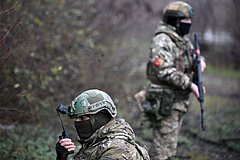
According to defense officials, the Nevidimka system simplifies routine operations for military signal personnel and reduces the total time required to restore broken network connections on the battlefield.
Detection of field network damage
Military signal units are responsible for establishing and maintaining secure command links, data infrastructure, and wired lines during active combat operations. Fiber-optic cables transmit information via light pulses along optical fibers, offering high data transmission capacity and complete immunity to electronic warfare jamming. Because physical lines can still be severed by artillery fire or ground movement, rapid detection tools allow signalmen to trace buried or concealed wires across active military sectors.
The introduction of the device highlights an increasing reliance on wire-linked systems in modern combat zones. In February, Alexey Biryukov, an instructor for Russia's Center group of forces, told the Izvestia newspaper that kamikaze drones controlled by fiber-optic cables combine the strongest features of standard first-person view drones with those of wire-guided anti-tank missile systems.
Development of tethered drone technology
Russian defense developers have also introduced specialized unmanned aerial systems to support frontline communications. In September 2025, TASS reported through the People's Front movement that Russian developers, working with support from the Kulibin Club, built the Zephyr-M drone, an unmanned aircraft capable of remaining aloft for up to 24 hours.
The Kulibin Club functions as a technology innovation hub organized under the People's Front to support frontline engineering projects and military hardware adaptations. Long-endurance unmanned aerial vehicles and tethered systems are frequently deployed as elevated signal relays, observation platforms, or network extension nodes that assist ground units in maintaining reliable communications across contested territory.