A total solar eclipse will darken approximately 40% of peninsular Spain on August 12, 2026, bringing starkly different viewing experiences across short distances. Moving just a few kilometers outside the band of totality separates a partial eclipse from a total eclipse, where the bright surface of the Sun vanishes completely. Free viewing glasses are being distributed by the Spanish government and ONCE, and all glasses used to view the event safely must meet the ISO 12312-2 standard.
The band of totality in 2026 will cross a large part of the northern half of peninsular Spain, extending from Galicia to the Mediterranean coast. Observers outside this path will experience varying levels of coverage depending on their location. In the far south near Cadiz and the Strait of Gibraltar, coverage will reach around 93%. Malaga will see nearly 94% coverage, while Granada will reach approximately 95.8%.
Madrid will sit right along the edge of totality with nearly 99.9% solar coverage. Viewers travelling just a few kilometers north of the capital will enter the 100% totality zone.
Path of Totality and Historical Rarity
The upcoming astronomical event is noteworthy because of its rarity. The eclipse on Wednesday, August 12, 2026, will be the first proper total solar eclipse visible from peninsular Spain since August 30, 1905. A hybrid eclipse crossed the northwest in 1912, featuring a very brief total phase in a few locations.
Spain will host another total eclipse on August 2, 2027, though its path of totality will only cover the extreme south of Andalusia, Ceuta, and Melilla. After 2027, no other total solar eclipse will be visible from Spain until 2053.
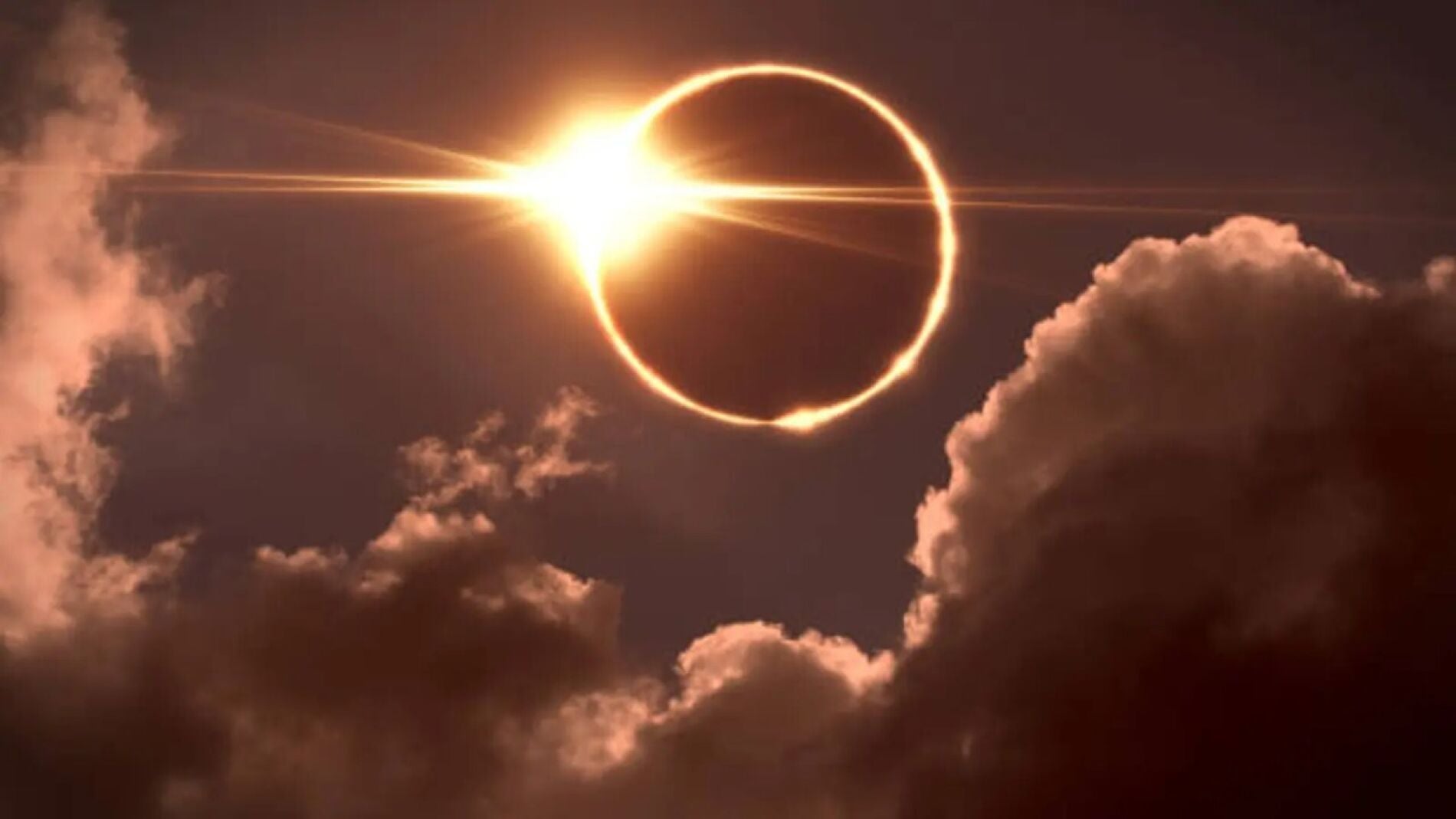
Visual Effects of the Partial and Total Phases
Even a tiny fraction of visible sun makes a massive practical difference for observers. At 99.9% coverage, a minuscule strip of the photosphere remains visible. Because the photosphere is extremely bright, this remaining light keeps the sky illuminated, prevents clear viewing of the solar corona, and requires observers to keep their protective glasses on.
The central shadow of the Moon covers observers and the photosphere completely disappears only when coverage reaches exactly 100%. People remaining outside the totality zone will see the Sun turn into a narrow solar arc while wearing homologated glasses. They will also notice unusual lighting, sharper shadows, and a drop in temperature. Protective glasses must stay on at all times outside totality.
Observers located very close to the edge of the totality band may witness Baily's beads, which are small points of light formed by solar rays passing through lunar valleys. They may also see a strip of the chromosphere, which is the reddish layer of the solar atmosphere.
Changes in Light Levels and Sunset Viewing Conditions
The difference between partial and total phases can also be measured by ground light levels. A sunny day at noon typically registers around 100,000 lux. When 99% of the Sun is hidden, ground light drops to around 1,000 lux, which is comparable to an overcast day.
During 100% totality, light levels drop to approximately 5 lux. This level of brightness is similar to the minutes right after sunset when some clarity remains in the sky.
Specific light figures will differ on August 12, 2026, because the maximum eclipse will take place close to sunset. Because the Sun will sit very low on the horizon, observers must choose a viewing location free of mountains, buildings, or trees to the west. Ambient light will already be reduced and sunlight will pass through a thicker layer of atmosphere, making the partial phase appear darker than if it occurred at noon.