A writer for the technology site MakeUseOf has explained why he has given up on wireless chargers for good, saying the convenience no longer outweighs the drawbacks he has experienced firsthand.
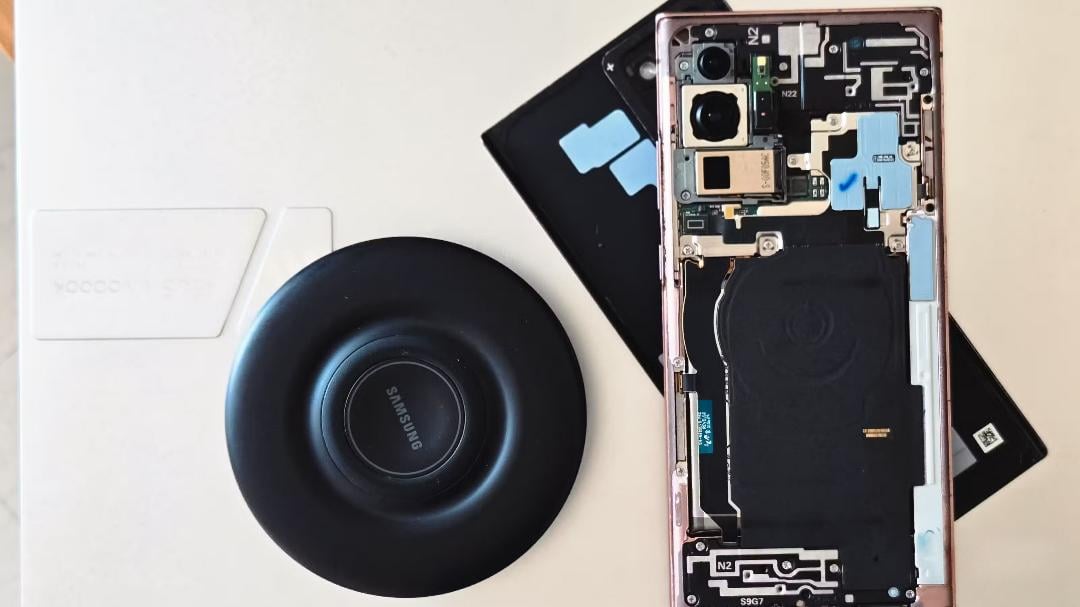
The decision followed an unpleasant discovery. After several months of using a wireless charger, the back glass panel of his Samsung Galaxy Note 20 Ultra came away from the phone's body. He believes the likely cause was overheating of the battery.
His main complaint against wireless chargers is heat. During inductive charging, some electricity is lost and converted into heat, and that heat is generated right next to the battery.
What the heat tests showed
He cited testing by iFixit, the repair and teardown company known for its device reviews, which he said illustrated the difference clearly. During wired charging, the battery temperature in the test never rose above 29 degrees Celsius. With MagSafe and Qi2 wireless charging, the temperature reached 35 degrees Celsius, and in some cases went above 40 degrees Celsius.
He believes this constant heat may have affected the battery in his Note 20 Ultra. After months of overnight charging, the battery swelled enough to push the back cover off the phone.
The problems do not end there, according to the writer. Wireless charging is also less efficient than wired charging because energy is transferred through a magnetic field between two coils rather than through a direct connection.
According to the iFixit tests, even modern MagSafe and Qi2 chargers use 36% more energy than wired charging. In the worst case, when a phone was placed slightly off center on the charging pad, it used 104% more energy and took roughly twice as long to charge.
Wireless charging costs more
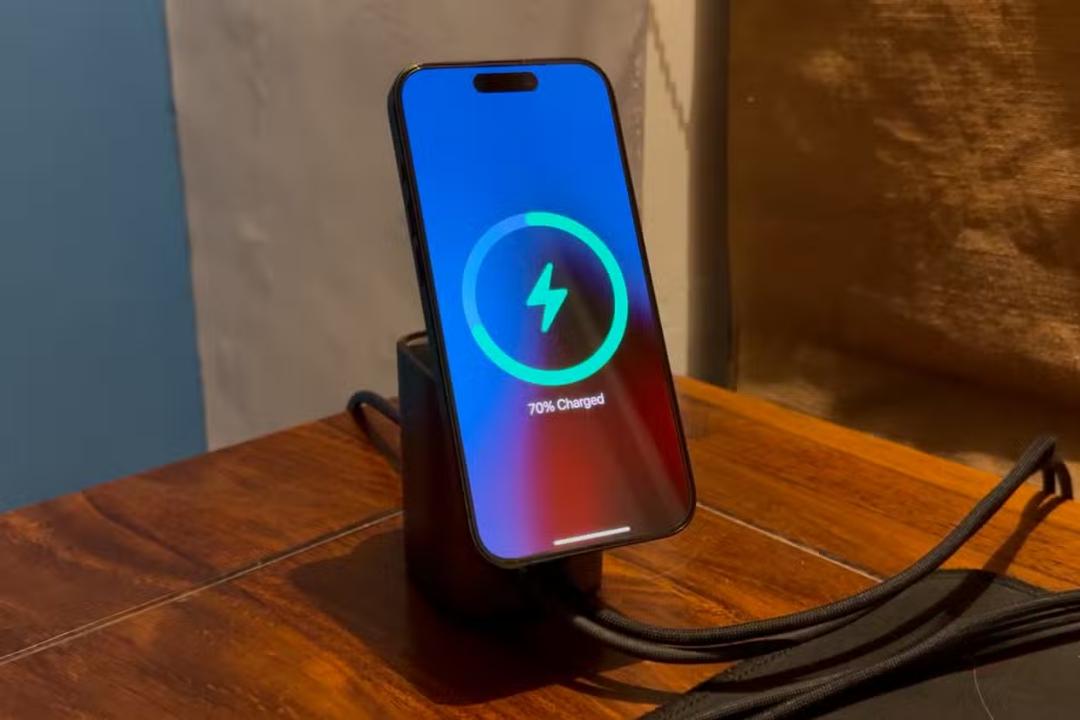
There is another argument against wireless charging: price. Samsung's own wireless chargers cost noticeably more than its wired adapters. A 15-watt Samsung wireless charging pad costs between $35 and $60, while the Wireless Charger Duo, which can charge two devices at once, costs $90.
By comparison, a genuine Samsung 25-watt wired adapter bundled with a USB-C cable can usually be found for $10 to $25. That means buyers are paying more for charging that is slower, less energy efficient and generates more heat in the phone.
The main advantage of a wireless charger is not having to plug in a cable, but the writer said that convenience is not enough to justify the extra cost.
He does not think giving up wireless charging entirely is necessary, however. He said it can still be useful in a car, where a cable creates unwanted clutter, and it can also help out an owner whose phone's USB-C port is broken. In the end, he decided to keep the wireless charger he already owns but will not buy another one.