

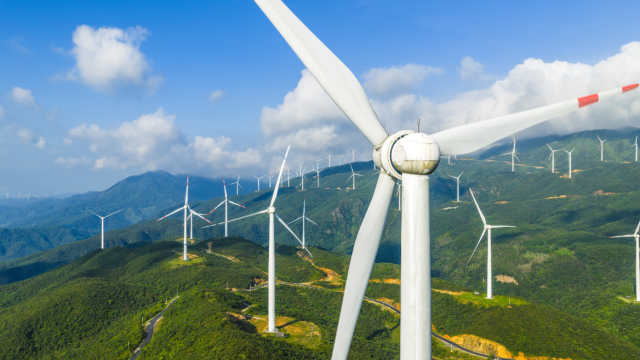
Greece has launched a new spatial planning framework imposing strict placement rules on solar and wind power projects across the country, Environment and Energy Minister Stavros Papastavrou announced on August 19, 2026.
Speaking on Greek public broadcaster ERTnews, Papastavrou said the regulations establish unified rules for renewable energy installations, energy storage batteries, and marine spatial planning while leaving previously licensed developments unaffected.
Papastavrou said Greece holds a major natural advantage because the country possesses abundant sunlight and wind. He stated that harnessing solar and wind power is a strategic priority for Greece, but emphasized that development must take place under clear and strict rules to protect both local communities and the environment.
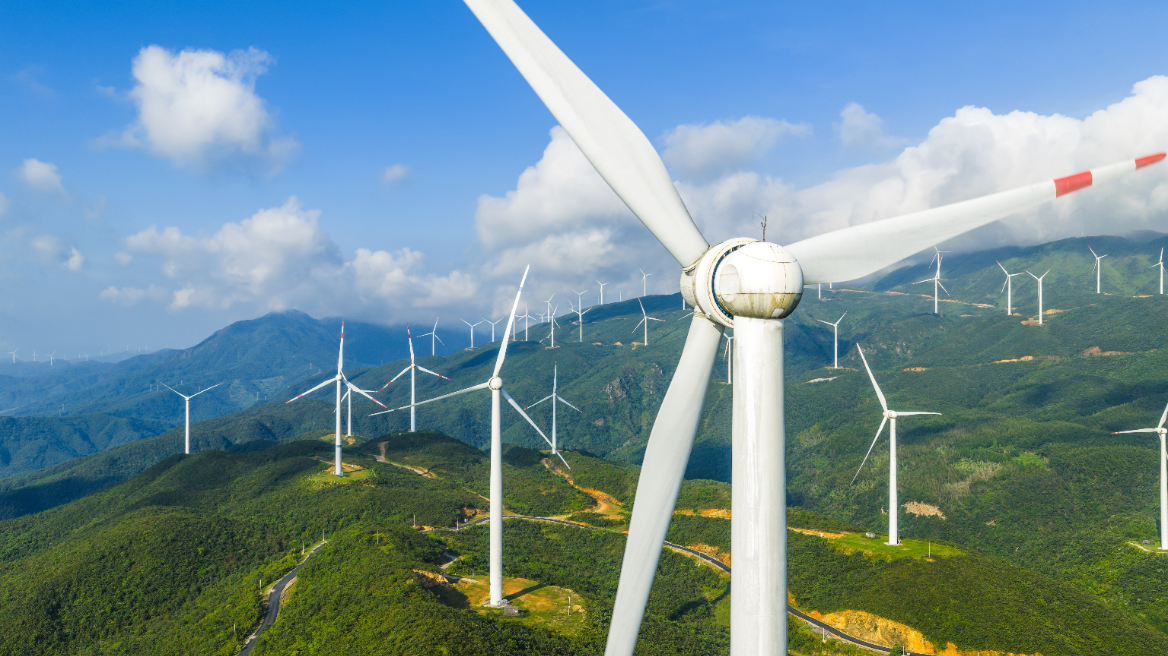
Location Restrictions for Solar and Wind Projects
Under the new rules, photovoltaic solar panels are prohibited at altitudes above 1,200 meters inside Natura 2000 environmental protection zones, forests, and designated forest lands. Natura 2000 is the European Union network of protected nature conservation sites.
The regulations also ban wind turbines from being built in the region of Attica, which surrounds the capital of Athens, as well as in the metropolitan area of Thessaloniki, the largest urban center in northern Greece.
Papastavrou explained that the objective of the framework is to maintain a balance between expanding electricity generation from solar and wind resources and safeguarding local residents and natural habitats.
The minister clarified that energy projects that have already received licensing approval will not be affected by the new restrictions. He stated that the spatial design establishes planning for the next decade and applies exclusively to new applications submitted from August 19, 2026 onward.
Energy Storage Expansion and System Stability
The updated framework covers solar panels, wind turbines, energy storage batteries, and all components of the national energy mix. Papastavrou noted that the overall goal is to build energy resilience and reduce Greece's reliance on imported natural gas and oil.
Papastavrou described energy storage as the big bet for the nation's energy system in the coming period. He reported that grid-connected battery capacity stood at 32 megawatts when the first systems were connected on April 1, 2026, and has already surpassed 500 megawatts.
The government aims to reach 1 gigawatt of installed battery capacity by the end of 2026, with a further target of 2 to 3 gigawatts during 2027 and 2028. Papastavrou stressed that battery storage is vital for maintaining the stability of the national electricity grid.
Marine Spatial Planning and National Frameworks
Greece has enacted three special spatial plans simultaneously for the first time, covering tourism, industry, and renewable energy. Papastavrou said these three frameworks operate in parallel and account for all commercial and environmental activities.
Noting that Greece has the largest number of islands of any member state in the European Union, Papastavrou said the government moved forward with marine spatial planning to organize human activities across maritime areas.
Private Electrical Networks and Grid Undergrounding
Following recent wildfires across the country, Papastavrou declared that the legal framework governing private power networks must be modernized and tightened. He announced that the Ministry of Environment and Energy will issue detailed policy announcements regarding private electrical grids in September 2026.
Regarding power distribution infrastructure managed by Hellenic Electricity Distribution Network Operator DEDDIE, Papastavrou said line undergrounding projects are progressing five to six times faster than the pace recorded before 2019. However, he noted that placing the entire national distribution network underground would carry an estimated cost of 20 billion to 25 billion euros.
International Relations and Maritime Disputes
Papastavrou addressed recent announcements from Turkey regarding proposed maritime parks in the Aegean Sea. He stated that unilateral actions by Turkey produce no legal effect and do not comply with international law.
Turning to cross-border energy infrastructure, the minister highlighted developments on August 5, 2026, concerning the Great Sea Interconnector, an undersea electricity cable designed to link the power grids of Greece, Cyprus, and Israel. He called the entry of a major French investment group into the project on August 5 a very important development, stating that the project now possesses a strong investor foundation to proceed.
Island Connections and North African Interconnections
Papastavrou outlined the timeline for connecting Greek islands to the mainland power grid. He said the island of Crete will be interconnected in 2025, while connection works for Santorini and the broader Cyclades island group are nearing completion.
Tenders are currently moving forward for connecting the Dodecanese and Northern Aegean island chains, with the government aiming for complete grid interconnection of all major islands by 2030.
Papastavrou added that plans for an electricity interconnection between Greece and Egypt are progressing. He noted that all of Europe now recognizes the strategic importance of establishing energy links with North Africa to secure cheaper electrical power.


