

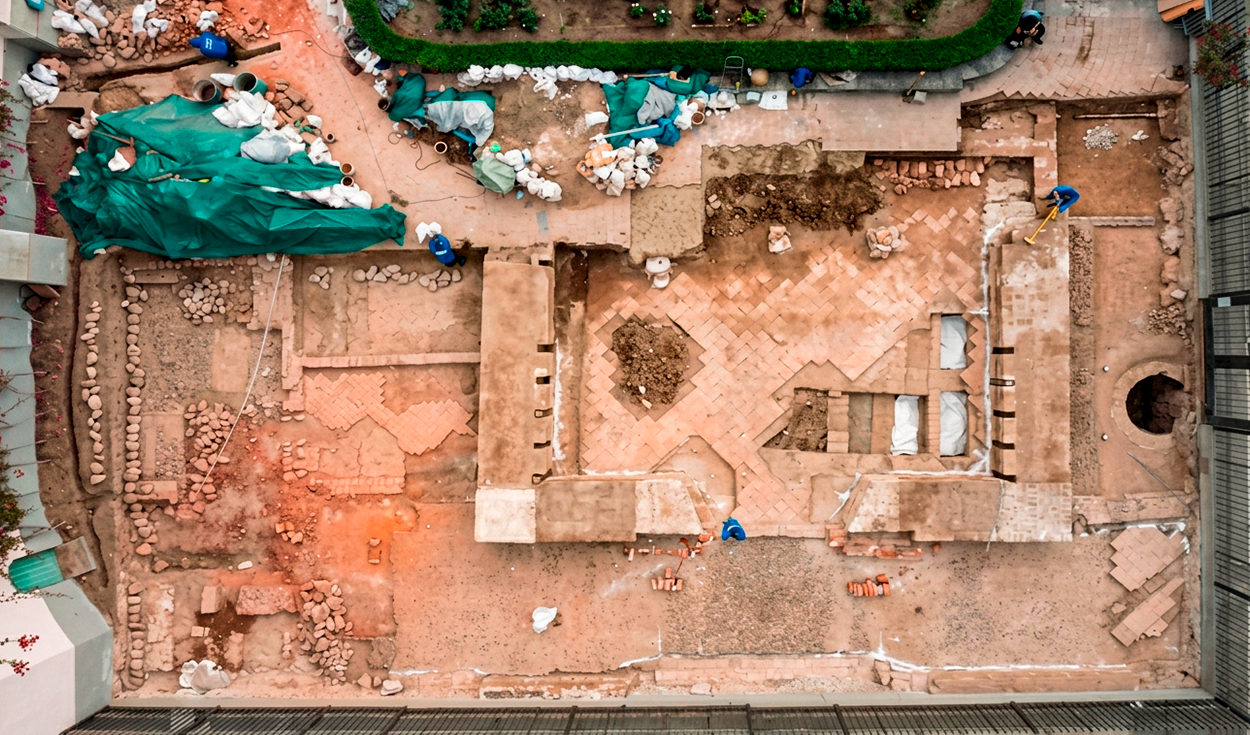
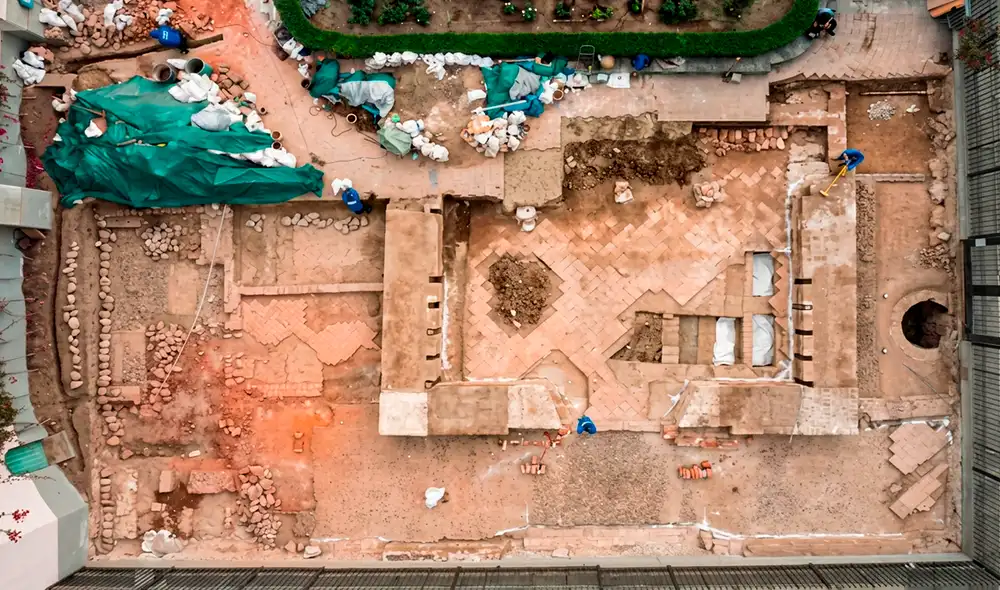
Archaeologists in Peru have discovered the 451-year-old remains of the Hospital del Espíritu Santo beneath the Sanctuary of Santa Rosa de Lima.
The excavations led by municipal heritage program Prolima uncovered structural walls, ornamental paving, human skeletons and colonial ceramic tiles in the subsoil around Tacna Avenue in the capital's historic centre.
The underground structures form part of the original urban layout of the ancient Ciudad de los Reyes, established during the early stage of the Spanish viceregal capital.
Founding of the viceregal hospital
The Hospital del Espíritu Santo was officially inaugurated on May 23, 1575, following an initiative by Greek merchant Miguel de Acosta and a collective of shipowners under the backing of Viceroy Francisco de Toledo.
Although the facility originally provided direct medical treatment to sailors and crew members, a study published by Spain's National Research Council (CSIC) confirmed that construction work began several years earlier before expanding care to wider urban populations.
Historical archives detailed by 17th-century chronicler Bernabé Cobo record that the complex housed an internal apothecary, a spacious church and three infirmary halls.
The wards were arranged so that bedridden patients could view and participate in religious mass from their beds, reflecting a combination of medical care and religious devotion during the viceregal period.
Records indicate the hospital accommodated an average of 15 to 20 convalescents at a time, with total capacity for 70 patients.
Chapel remains and human burials
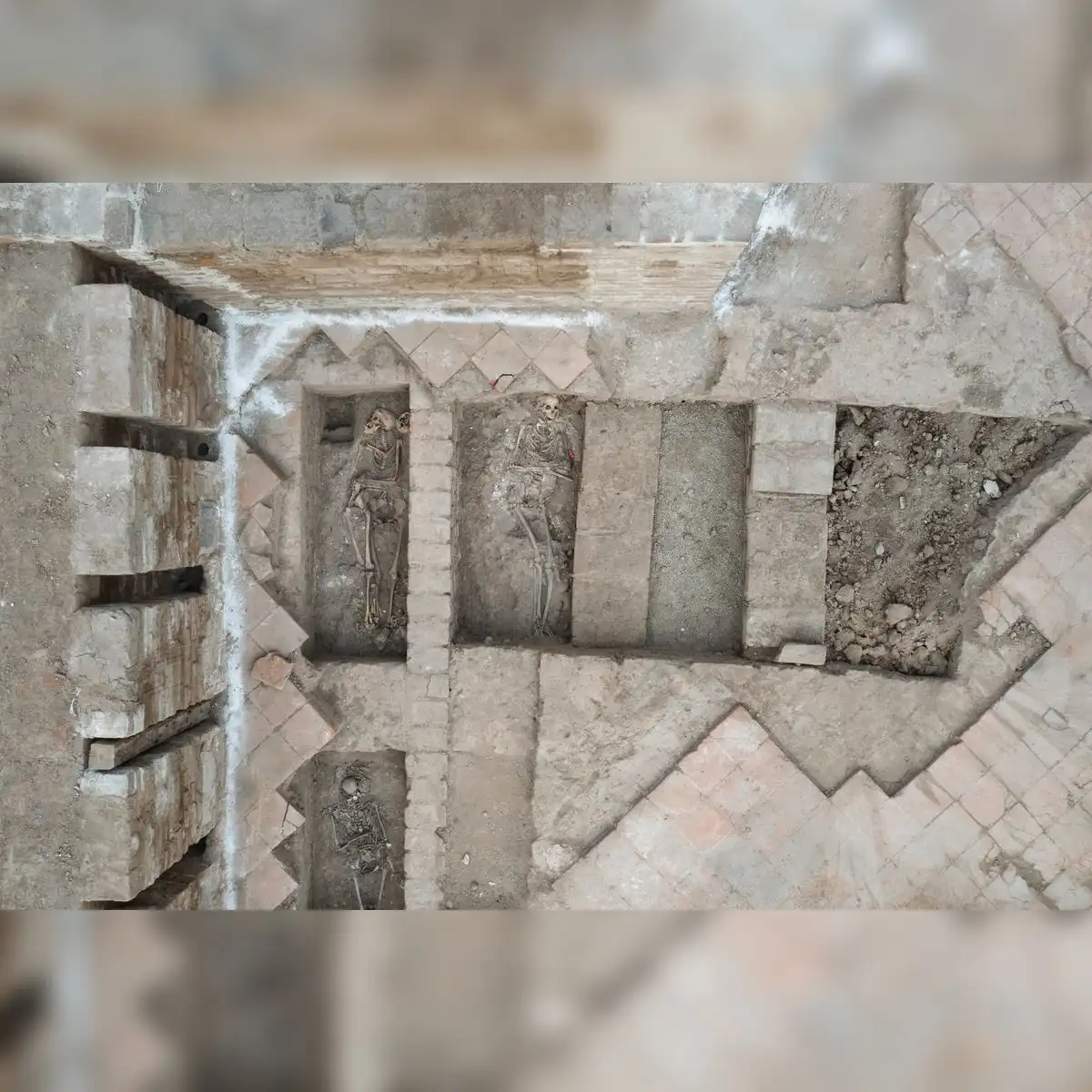
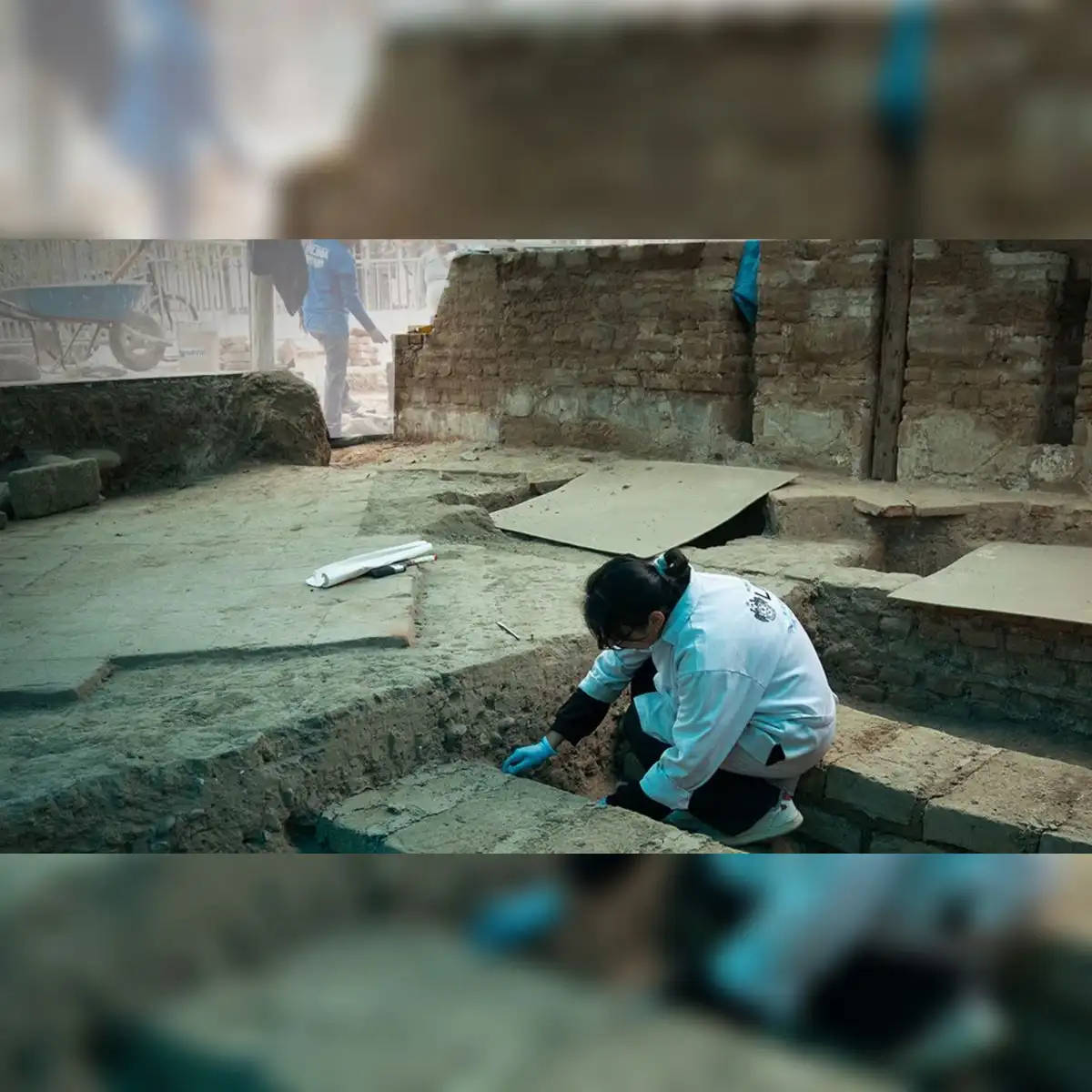
Recent digs at the site brought to light the stone, brick and adobe portal and walls of an adjacent chapel.
Beneath a floor constructed of traditional pastelero bricks, researchers discovered human skeletons buried directly in the earth as well as within niche-style funerary structures.
Diego Pariona, the Prolima archaeologist leading the research team, said that a series of burials had been recorded under the brick flooring both directly in the ground and inside niche structures.
The skeletons confirm that the religious area was used for mortuary interments during the 16th century.
Santa Rosa de Lima, born Isabel Flores de Oliva in 1586, was the first Catholic saint of the Americas, and the sanctuary built in her memory remains a major religious landmark in central Lima.
Colonial stonework and ceramic tiles
In front of the former main entrance, archaeologists uncovered an extensive cobblestone pavement featuring a circular design with an inscribed six-petal flower.
Official reports note that parts of the decorative stonework even incorporate animal bones into the ornamental pattern, providing insight into early colonial construction methods in the capital.
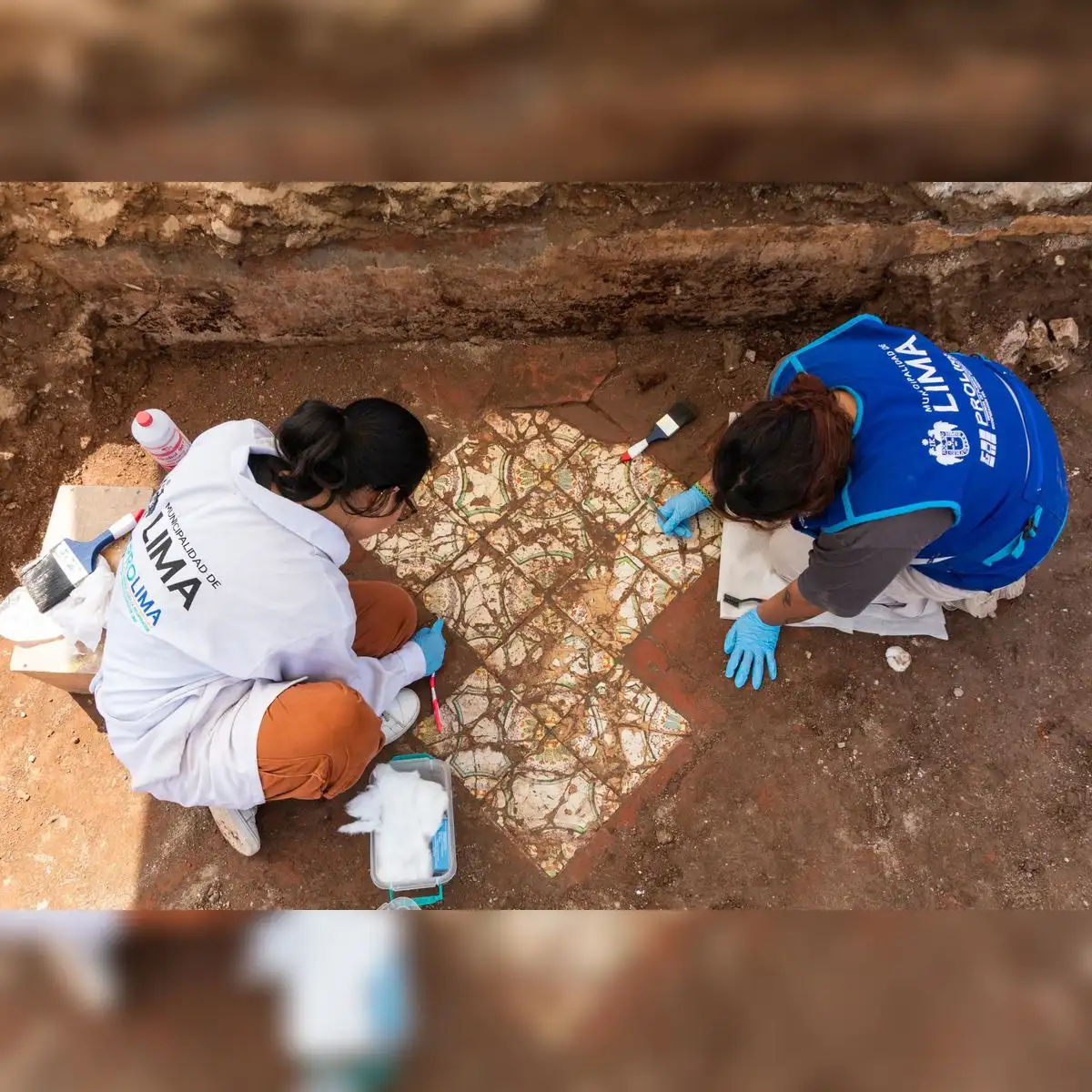
The excavation team also recovered 18th-century Valencian ceramic tiles featuring plant patterns, which are currently undergoing technical analysis, conservation and restoration.
Following its initial role as a medical facility, the building later served as a centre of instruction in mathematics, navigation and cosmography.
During Peru's Republican era, the site subsequently housed national institutions including the National Museum and the National School of Engineers.
Prolima specialists are maintaining ongoing conservation work on the recovered artifacts and walls to preserve the multi-century architectural history of the site.


