

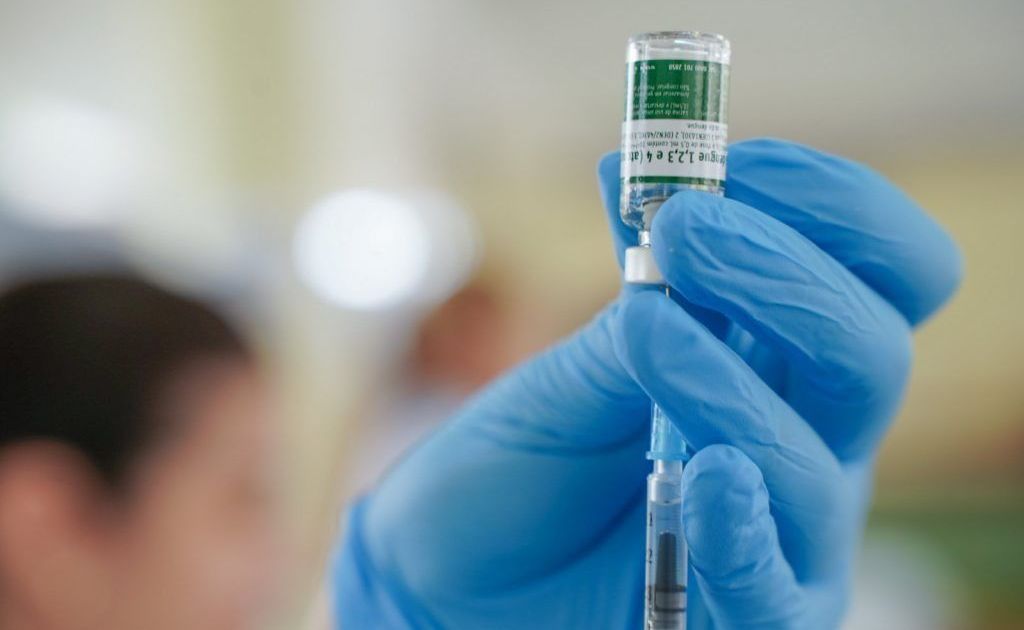
Five São Paulo Metro stations began hosting a vaccination campaign against measles, mumps and rubella on Monday, August 10, in partnership with municipal health authorities. The initiative offers free immunizations to commuters passing through major transit hubs in Brazil's largest city.
Organized alongside the São Paulo Municipal Health Secretariat, the public health drive will run through August 28 across the Corinthians-Itaquera, São Mateus, Vila Prudente, Tucuruvi and Vila Matilde stations. Metro officials stated that the initiative aims to expand access to immunization and boost overall vaccine coverage by allowing passengers to update their status during their daily commutes.
The São Paulo Metro is the main underground rail network serving the São Paulo metropolitan region. Measles, mumps and rubella are highly contagious viral diseases that can lead to serious health complications, but they are routinely prevented through the triple viral vaccine administered by public health services.
Station vaccination schedules
Vaccination services will be available at varying dates and operating hours across the five participating subway stations to accommodate transit flows:
- Corinthians-Itaquera (Line 3 Red) and São Mateus (Line 15 Silver): Vaccinations will take place on August 17, 19 and 21, from 10:00 to 20:00.
- Vila Prudente (Line 2 Green and Line 15 Silver): Services will run from August 17 to 21, operating between 10:00 and 16:00.
- Tucuruvi (Line 1 Blue): Immunization will be offered from August 10 to 14 and from August 17 to 21, between 10:00 and 16:00.
- Vila Matilde (Line 3 Red): Doses will be administered on August 27 and 28, from 10:00 to 16:00.
Record single-day dose numbers
The station drive follows record participation in the Municipal Health Secretariat's broader multi-vaccination campaign, titled Eye on the Vaccination Card 2026. On Friday, August 7, health workers administered 109,584 vaccine doses in a single day, marking the highest one-day total since the campaign launched on August 3.
The single-day total included 84,600 doses against measles and 25,000 doses of other immunizations. São Paulo municipal authorities confirmed that the August 7 turnout set a new daily benchmark for the current effort.
Since launching on August 3, the citywide campaign has delivered a total of 412,091 vaccine doses. That figure comprises 292,701 measles vaccinations and 119,390 doses targeting other conditions.
The ongoing effort forms part of a broader strategy to intensify measles immunization that municipal health officials initiated on June 27. Under this expanded campaign, measles vaccination eligibility was broadened to cover anyone aged between six months and 59 years.
In addition to the subway locations, municipal health authorities announced that vaccines remain available at local Basic Health Units, known as UBSs, from Monday through Friday between 07:00 and 19:00. On Saturdays, residents can access immunization at Integrated Ambulatory Medical Care facilities and Basic Health Units, known as AMAs and UBSs Integradas, during the same daily hours.
Statewide measles case tracking
The immunization drive comes as health authorities monitor an increase in measles infections across the state of São Paulo. According to the latest update from the State Health Secretariat, the state has recorded 23 confirmed measles cases in 2026.
State health officials reported that 16 of the 23 infected patients had no record of prior vaccination or had failed to complete their required vaccination schedule. Cases have been identified in the state capital of São Paulo, as well as in the neighboring municipalities of São Bernardo do Campo and Guarulhos.
The State Health Secretariat specified that two of the 23 confirmed cases were imported from outside the area. The remaining cases are linked to imported transmission, although health officials indicated that the exact source of infection has not yet been determined.


