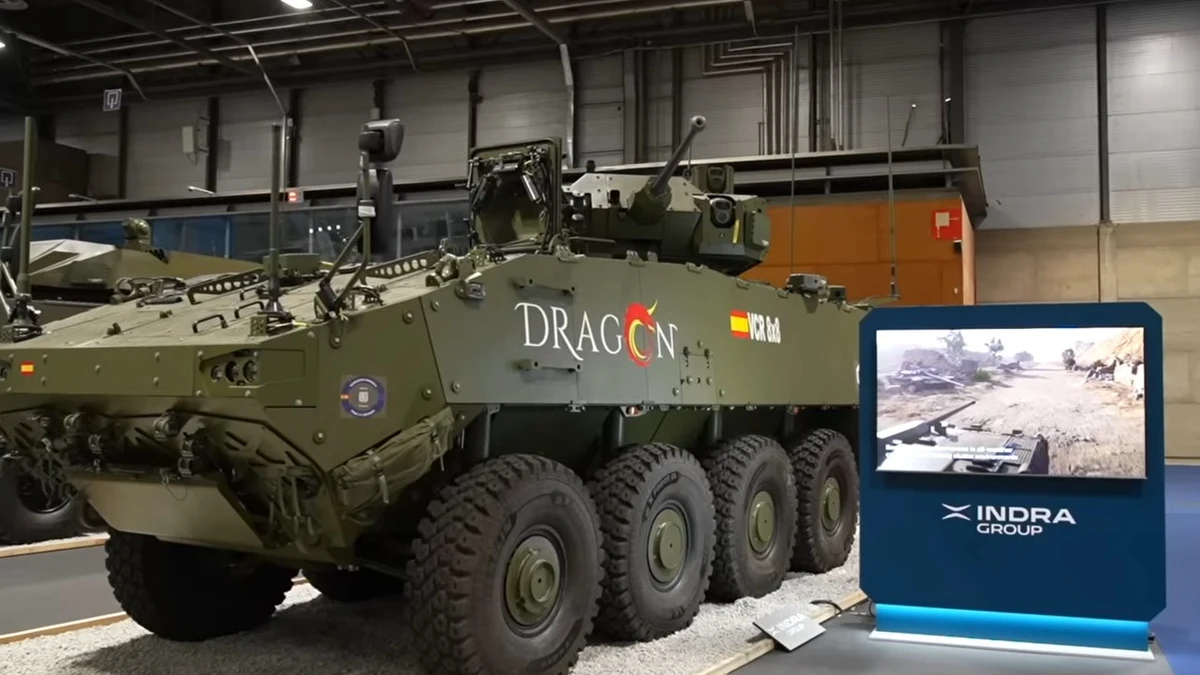
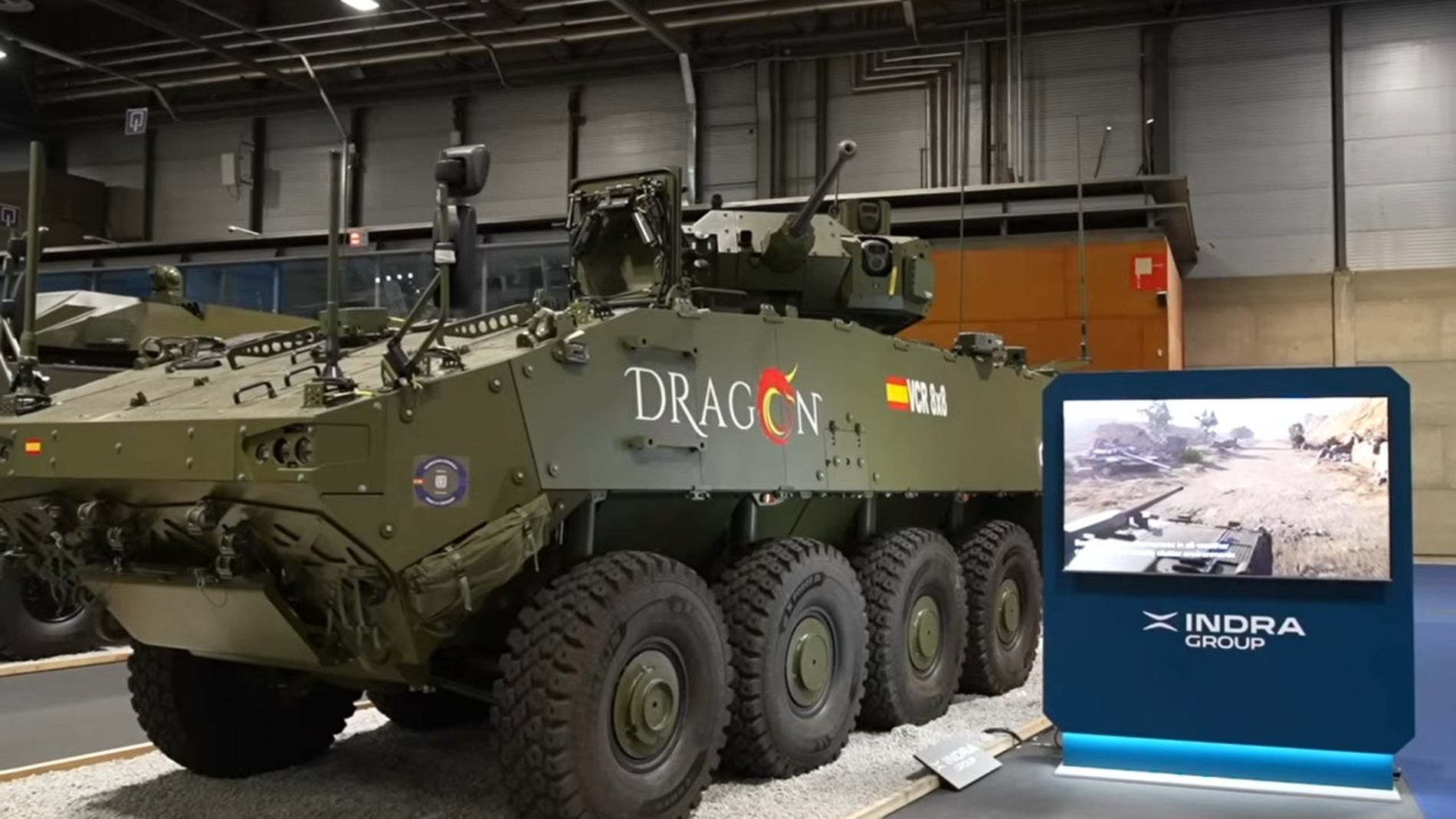
The Spanish Army has begun receiving its first Dragón 8x8 armored vehicles, but the new fleet has arrived with a gap in its firepower. The Guardian 30 turret fitted to the infantry combat version was designed to pair a 30-millimeter cannon with two Spike LR2 anti-tank missiles made by the Israeli company Rafael, and that missile has now been dropped from the government's plans.
In mid-January 2026, the Legion received the first operational batch of the vehicle at its base in Viator, Almería, roughly forty units. It marked the real start of a program that has racked up delays and is expected, in the long run, to deliver close to a thousand armored vehicles.
Polish analyst Damian Ratka, writing in the defense outlet Defence24 as he reviewed the delivery, said Spain's Ministry of Defense still had to resolve another problem linked to the breakdown of cooperation with Israel. His assessment, published on January 20, 2026, came down to two steps: Defense has to choose a new missile supplier, and then integrate that new weapon into the turret.
A Launcher Without an Assigned Missile
Ratka's analysis noted that the unmanned Guardian 30 turret, built by Escribano Mechanical & Engineering, carries a Mk44S Bushmaster II 30-millimeter cannon along with a double launcher designed for Spike LR or LR2 missiles.
That integration had already been completed. In June 2022, Escribano and Pap Tecnos, the Spanish subsidiary of Rafael, fired the first Spike LR2 missile launched in Spain from a remote weapons station mounted on that same turret. On October 3, 2023, Spain's Council of Ministers authorized a contract worth about 285 million euros with Pap Tecnos for 168 firing posts and 1,680 missiles.
That contract collapsed in June 2025, when the Defense Ministry ordered the manufacturing license revoked. Government spokesperson Pilar Alegría set a goal of a total disconnection from Israeli military technology. Among the alternatives mentioned at the time was the American Javelin missile, a weapon that Lieutenant General Francisco Gan believes Spain would need in large numbers.
Two Tasks Still Pending
Switching missiles means repeating much of the earlier work. As a point of comparison, integrating the Spike missile into the Samson 30 turret, another candidate considered for the program, took more than two years of testing before the first shot was fired, giving a sense of what starting over with a different weapon would involve.
Jorge Estévez-Bujez, director of Defense and Security, questioned how the Dragón deliveries have been presented, saying that what is still pending full military acceptance cannot be sold as an industrial success. Retired Major General Rafael Dávila was also critical, saying the Dragón 8x8 combat vehicle has accumulated embarrassing delays that reflect poorly on Spain's defense industry.
Production Continues Despite the Delays
Manufacturing of the vehicle is nonetheless moving forward. According to Ratka's count, General Dynamics European Land Systems-Santa Bárbara Sistemas built 127 Dragón vehicles in 2025, with around a hundred more expected before the end of 2026.
The Dragón is set to replace the BMR-M1, the VEC-M1 cavalry vehicle and the MRAP RG-31, a renewal that fits into the broader plan for the Spanish Army of 2035.
How the Dragón Compares
On paper, the vehicle has strong credentials. It is derived from the Piranha V family used by other European armies, and former British soldier Sergio Miller has compared it to Britain's Boxer vehicle. The Dragón reaches 105 kilometers per hour, has a range of 550 kilometers and, according to its manufacturer, its hull can withstand 14.5-millimeter armor-piercing rounds from any angle, in a market where German competitors are also unveiling new models.
Ratka did not predict which missile would eventually fill the gap left by the Spike. That choice, and however long integrating it takes, will determine when the Dragón finally has the full firepower it was designed to carry.
What happens next
Spain has yet to choose a replacement missile for the Dragón's turret; the choice and the time needed to integrate it will determine when the vehicle reaches its full designed firepower.
Test yourself
Why is the Dragón's Guardian 30 turret missing its intended missile?
Where did the Spanish Army's Legion receive its first Dragón vehicles?
How many Dragón vehicles did General Dynamics European Land Systems-Santa Bárbara Sistemas build in 2025, according to Damian Ratka?
Have your say
Should Spain prioritize speed or full capability when choosing a new missile for the Dragón?
Where it happened
Viator, Spain