

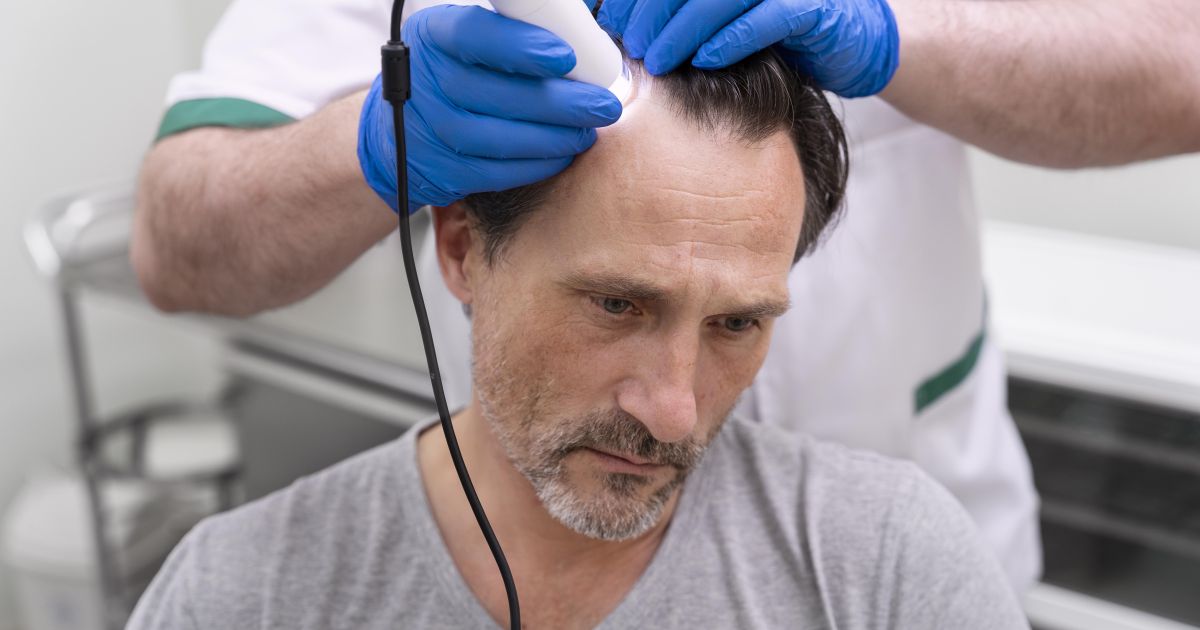
Dermatologist Letícia Nanci of Hospital Sírio-Libanês has advised patients that hair transplants are not the only or initial option for hair loss during an appearance on the television program CNN Sinais Vitais with Dr. Roberto Kalil.
Nanci explained that the management of androgenetic alopecia, commonly known as pattern baldness, must not rely on a single therapy. She said combining multiple treatment methods offers the most effective approach, with specific therapies selected based on a patient's age and sex.
Androgenetic alopecia is a common genetic condition influenced by hormone levels that causes hair follicles to shrink, producing shorter and finer hair over time. Hospital Sírio-Libanês, located in São Paulo, is one of the premier private healthcare facilities in Latin America, while CNN Sinais Vitais is a medical news program hosted by Brazilian cardiologist Roberto Kalil.
According to Nanci, initial non-surgical options include topical medications, oral drugs, and nutritional supplements, which are particularly useful when hair shedding is linked to underlying nutrient deficiencies.
She also cited clinical procedures backed by scientific research, specifically microinfusion of medication into the skin, known as MMP, and laser treatment. Nanci stated that lasers are genuinely effective for hair retention, provided that therapy is guided by an accurate medical diagnosis and correct indication.
Microinfusion of medication into the skin involves using microneedles to introduce active substances directly into the scalp dermis. Low-level laser therapy uses light energy to enhance cellular metabolism and blood circulation around hair follicles, encouraging healthier hair growth.
Continued treatment after hair transplantation
Addressing surgical interventions, Nanci explained that although hair transplants deliver a more pronounced cosmetic outcome, particularly for male patients, surgery does not eliminate the need for ongoing medical care. She stressed that surgical and non-surgical therapies must be associated rather than treated as alternatives.
Hair transplant surgery involves moving healthy hair follicles from donor regions on the scalp to thinning areas. However, Nanci pointed out that untreated hair follicles surrounding the transplanted area remain subject to progressive thinning and atrophy regardless of whether a patient has undergone surgery.
Because baldness is a chronic medical condition, Nanci emphasized that treatment serves an essential preventative function through continuous medication and routine clinical procedures. Asked whether hair loss can be reversed, she stated that the condition can be controlled when patients maintain consistent medical follow-up.


