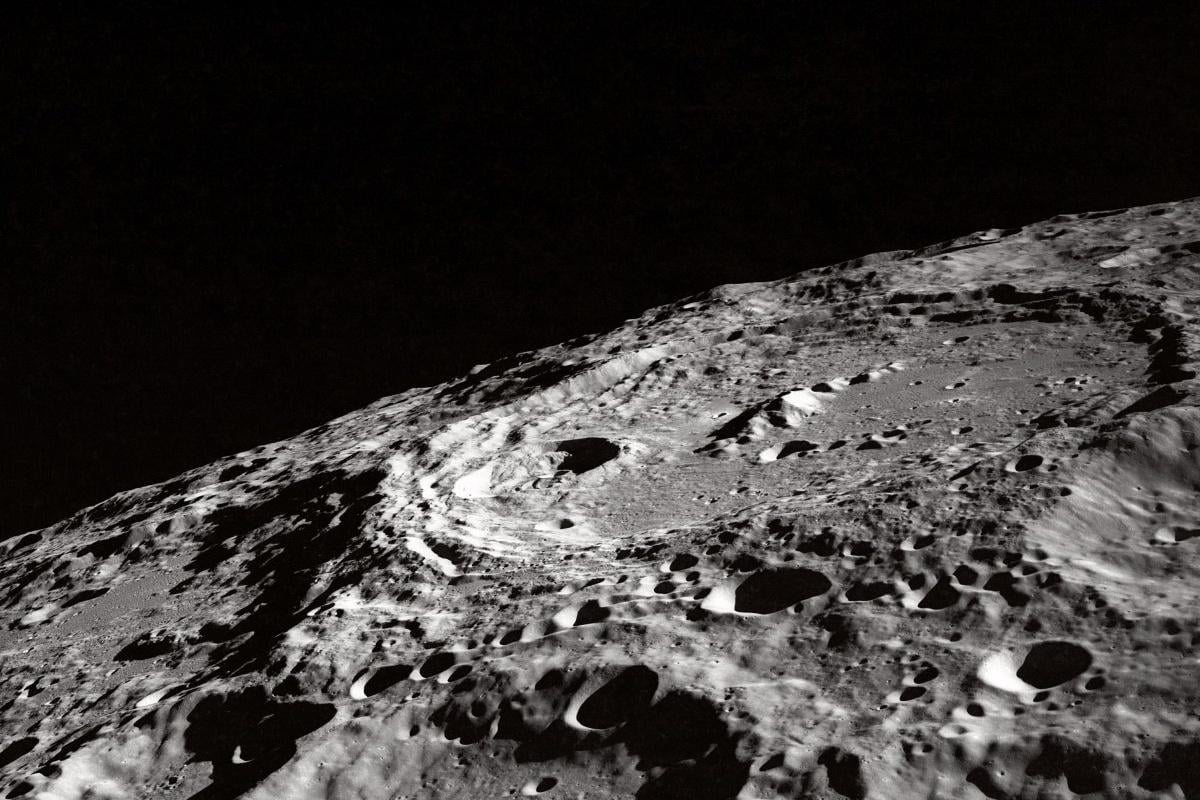
A SpaceX Falcon 9 upper stage rocket crashed into the Moon this week, kicking up a massive dust cloud observed by astronomers in Chile. The collision provided scientists with valuable data about the chemical composition of the lunar surface, according to a report by The Guardian.
The rocket fragment struck the surface at a speed of about 8,690 km/h. Instruments on the European Southern Observatory's large telescope in Chile recorded spectral lines indicating sodium and lithium gases within the giant dust plume. These chemical signatures remained visible for only five to ten minutes after impact.
Carl Schmidt, an astronomer at Boston University's Center for Space Physics, said the plume expanded to several tens of kilometers. The impact occurred near the lunar terminator, the boundary between the illuminated and dark sides of the Moon. Sunbeams briefly lit up the rising dust, allowing researchers to analyze its contents even though almost no one witnessed the exact moment of impact.
Chemical signals and observation challenges
Schmidt noted that the sodium likely originated from lunar soil, while the lithium traces probably came from the rocket stage itself. He cautioned against drawing final conclusions, stating that the analysis was very rough and the observation was not ideal. He added that he wanted to share the initial results quickly and expects scientists to reveal more details over time.
Australian astrophysicist Sara Webb estimated that the impact force likely created a new crater about 20 meters in diameter and five meters deep. She noted that while researchers expected a large dust cloud, watching the event proved harder than anticipated. Webb said that despite having multiple telescopes and many people observing the Moon, no one captured clear images or video of the collision moment.
Future lunar impact analysis
Previous research cited by the publication notes that scientist Benjamin Fernando of the Los Alamos National Laboratory in the United States highlighted how such crashes offer valuable data. Fernando said these impacts help future seismic studies of the Moon and assist in evaluating risks from artificial space debris, which is critical for NASA plans to build a long-term human presence there.
In the coming days, NASA plans to use its Lunar Reconnaissance Orbiter to take photos of the crash site. South Korea's Pathfinder Lunar Orbiter will also attempt to photograph the location, with scientists hoping the spacecraft images will reveal both the rocket debris and the new crater.