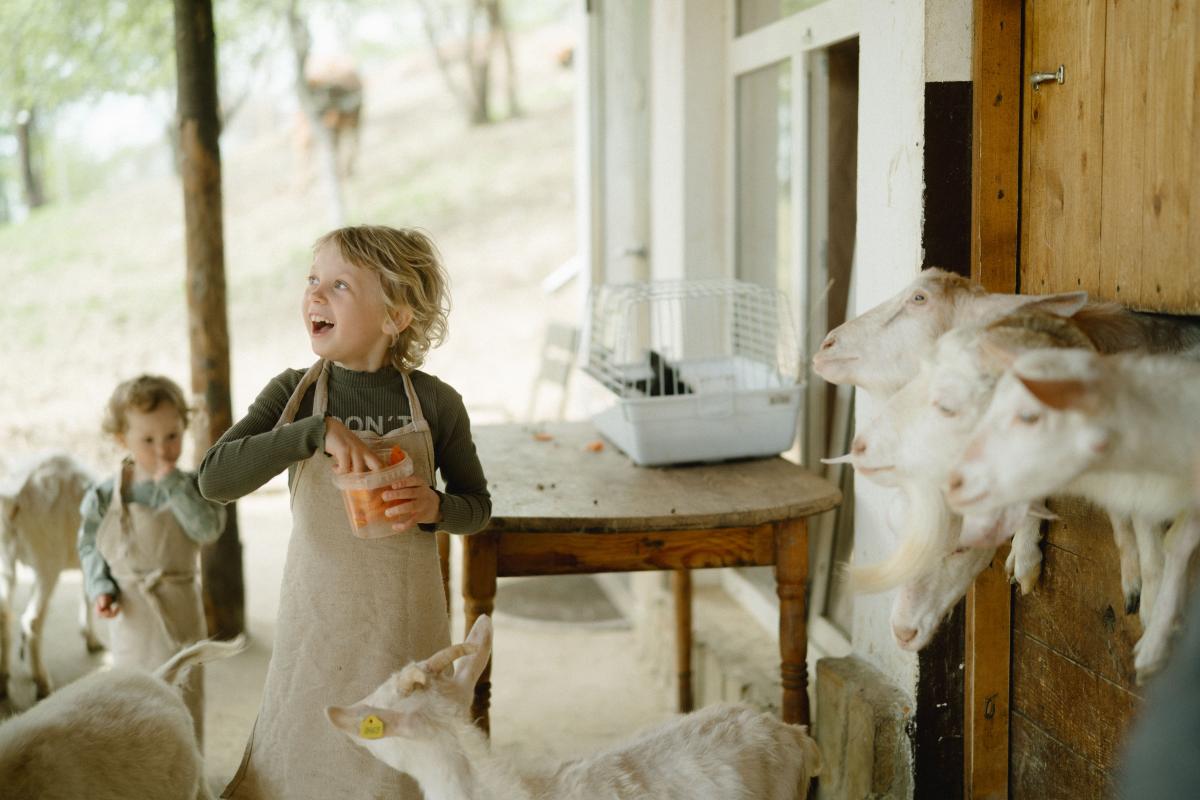
Children who grow up on farms and come into contact with microorganisms from cows are significantly less likely to suffer from asthma, allergies and eczema, according to a new study by German scientists reported by Science Alert.
Researchers identified nine species of bacteria that may explain the so-called "farm effect", the phenomenon in which children from rural areas develop allergic diseases far less often than their peers in cities.
The hygiene hypothesis
Scientists have argued for decades that contact with microorganisms is necessary for the immune system to develop properly. This idea became known as the hygiene hypothesis, first proposed after researchers noticed a sharp rise in allergies, asthma and hay fever in developed Western countries, a trend that did not appear among children raised on farms.
Epidemiologist Markus Ege of the Institute of Asthma and Allergy Prevention at Helmholtz Munich, a German research centre, said girls and boys who grow up on farms and are exposed to a greater variety of microorganisms are much less likely to develop these problems.
The team now says it has been able to pinpoint the specific bacteria behind the effect, including Romboutsia timonensis and Glutamicibacter arilaitensis.
Dust from mattresses and cowsheds
For the study, scientists analysed dust samples from the mattresses of 1,018 schoolchildren from rural communities in southern Germany. They also took air samples from cowsheds on the farms where 47 of those children lived.
The nine protective bacteria species made up 6% of all microorganisms found in the mattress dust, compared with 25% in the cowshed air. Children with the greatest exposure to these microorganisms, particularly those living on farms, had a significantly lower risk of developing asthma in childhood.
The bacteria originate in the gut of cows and enter the animals' manure. From there they can rise into the air of the cowshed along with dust. Children who spend time near cows breathe in these microorganisms and then carry them into their own homes, which is why traces of the bacteria were also found on the children's mattresses.
How the bacteria may protect against asthma
According to the researchers, the level of exposure to the bacteria plays a key role. The microorganisms produce metabolites that activate a receptor called AhR, which affects the immune system and the expression of genes.
The study authors explained that a high level of AhR activation is harmful, while a moderate level, such as that produced by inhaling bacterial metabolites in a cowshed, is beneficial. They said moderate activation of the receptor triggers a strong anti-inflammatory response that can help prevent the development of asthma and allergies.
Ege said the new study allowed the team to make a much stronger case, because they were able to identify the individual links in the proposed causal chain: the bacteria themselves, the corresponding microbial metabolites, and the human receptors involved.
More research needed
The authors stressed that further experiments are needed to establish the exact mechanisms behind the farm effect. Because the study is observational, they said, it shows a strong association but cannot conclusively prove that contact with these microorganisms is the direct cause of the protective effect.